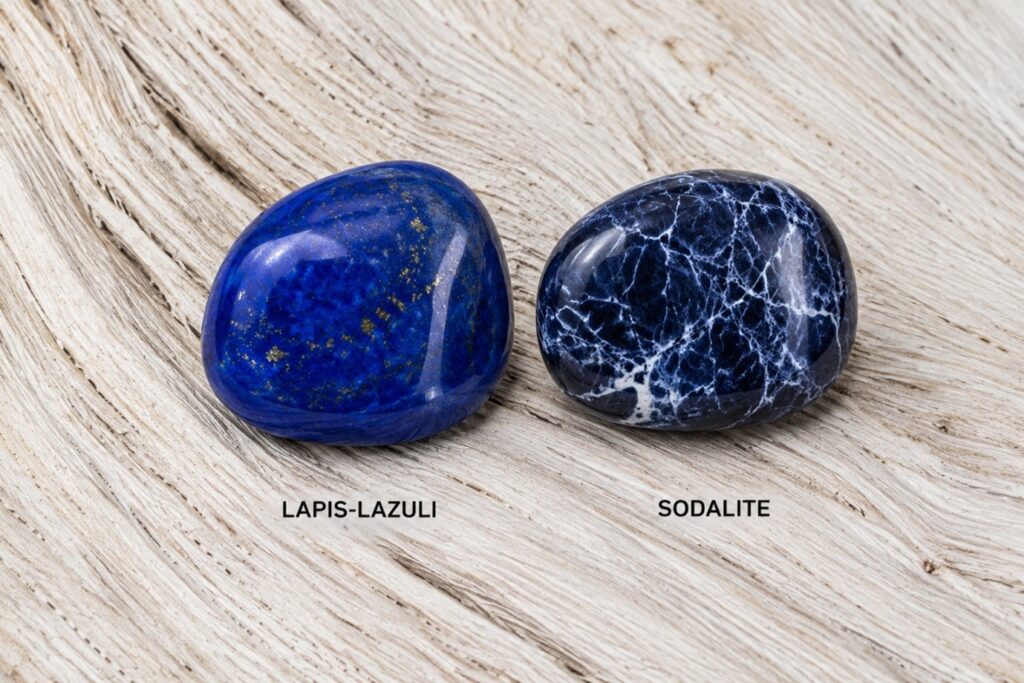
Why these two stones are often confused Lapis lazuli and sodalite are two blue stones that look remarkably similar at first glance. Yet they are two very different minerals. The confusion mainly stems from their color: both display shades of deep blue that can sometimes appear very similar to the untrained eye. However, lapis lazuli […]
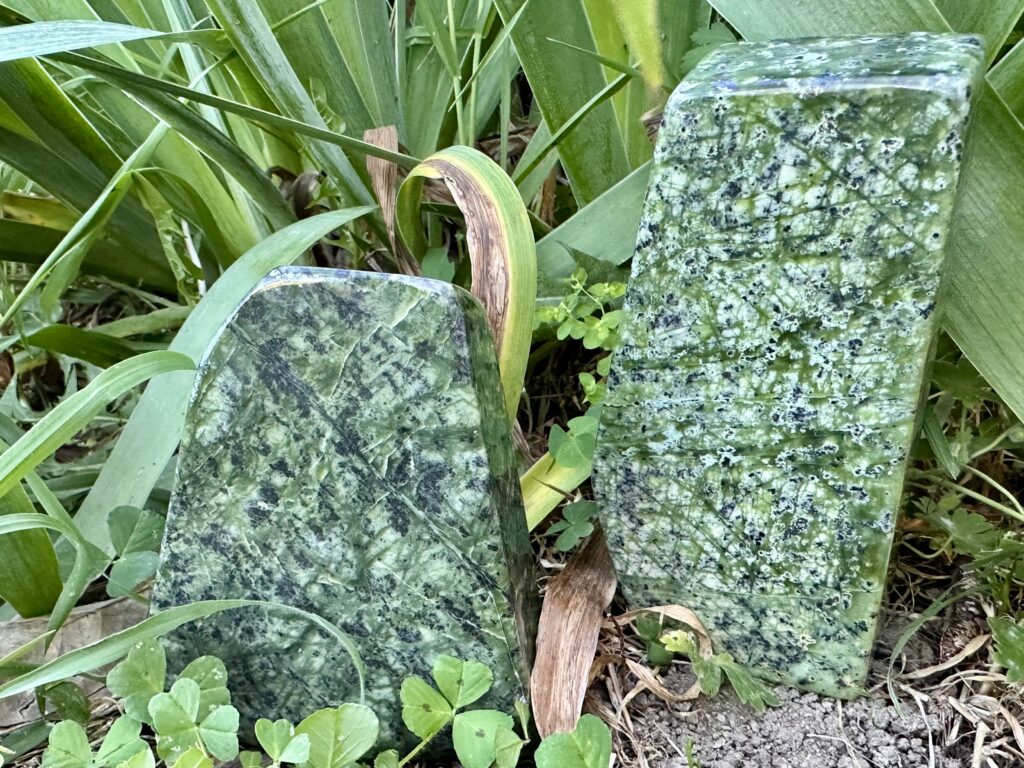
Jungle nephrite, also known as “jungle jade”, stands out for its atypical mineral composition. It’s a natural gemstone that brings together two materials that are rarely found together: nephrite and serpentine. Its shades of green, crossed with lighter or darker areas, evoke dense vegetation—like a jungle. A stone with two components Nephrite jade is a […]
A stone born of fire and time The “Swedish Blue“, also known as “Swedish Slag blue” or “Bergslagen”, is one of a kind. It comes from the remains of medieval foundries located in the Bergslagen region of Sweden. It is the result of centuries of interaction between metallic minerals, extreme heat, and the passage of […]
Septaria, nicknamed the “dragon stone,” is worthy of any cabinet of curiosities. The Odin Minéraux team particularly appreciates Septaria when it is fractured, revealing its crystallizations. The name septaria comes from the radial fissures that form internal partitions within the stone, giving it a unique and intriguing structure. This term actually refers to a complex […]
Here at Odin Minerals, we love mineral curiosities, rare and uncommon stones. Today, we want to share with you our interest in ammolite, which stands out for its fascinating color spectrum, origins, and history. As majestic as opal, ammolite boasts vibrant, almost metallic colors, ranging from green, orange, and red to blue and purple. Ammolite […]
Each stone, due to its composition and hardness, requires specific maintenance. If you want your stones to keep their original shine, it’s important to take care of them. Below, we present the main criteria to take into consideration: STONE HARDNESS The Mohs scale is one of the most widely used scales for evaluating the hardness […]


