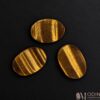


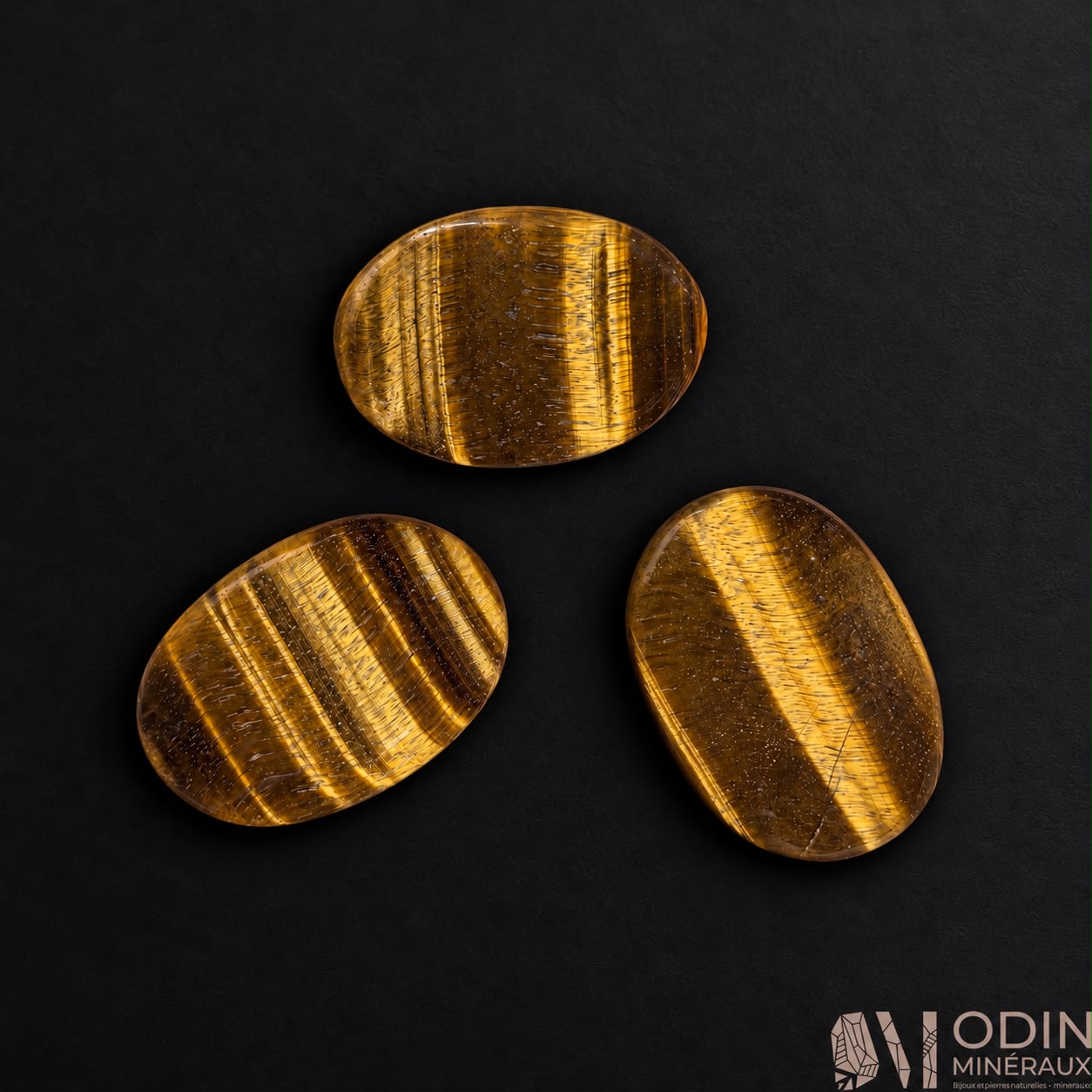
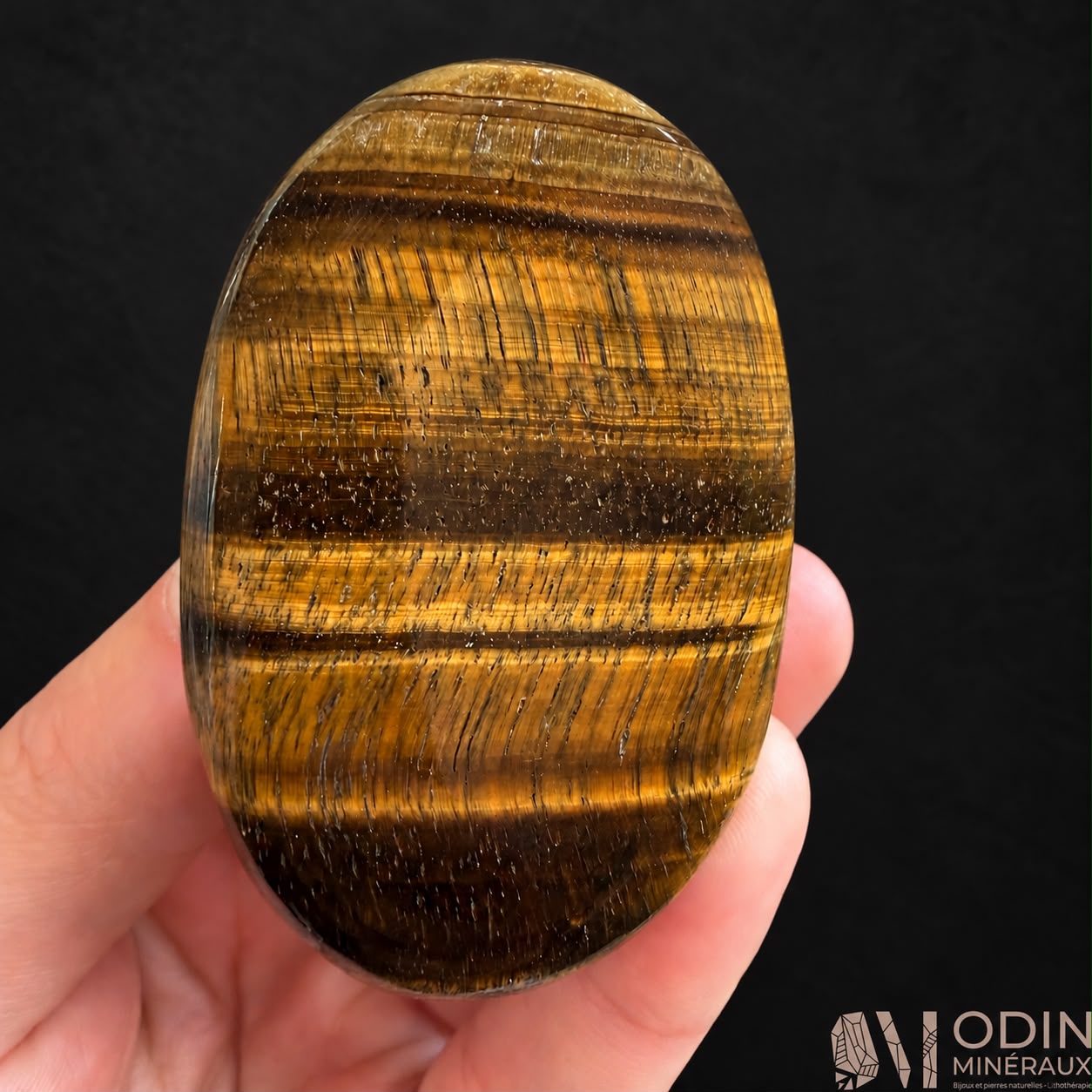
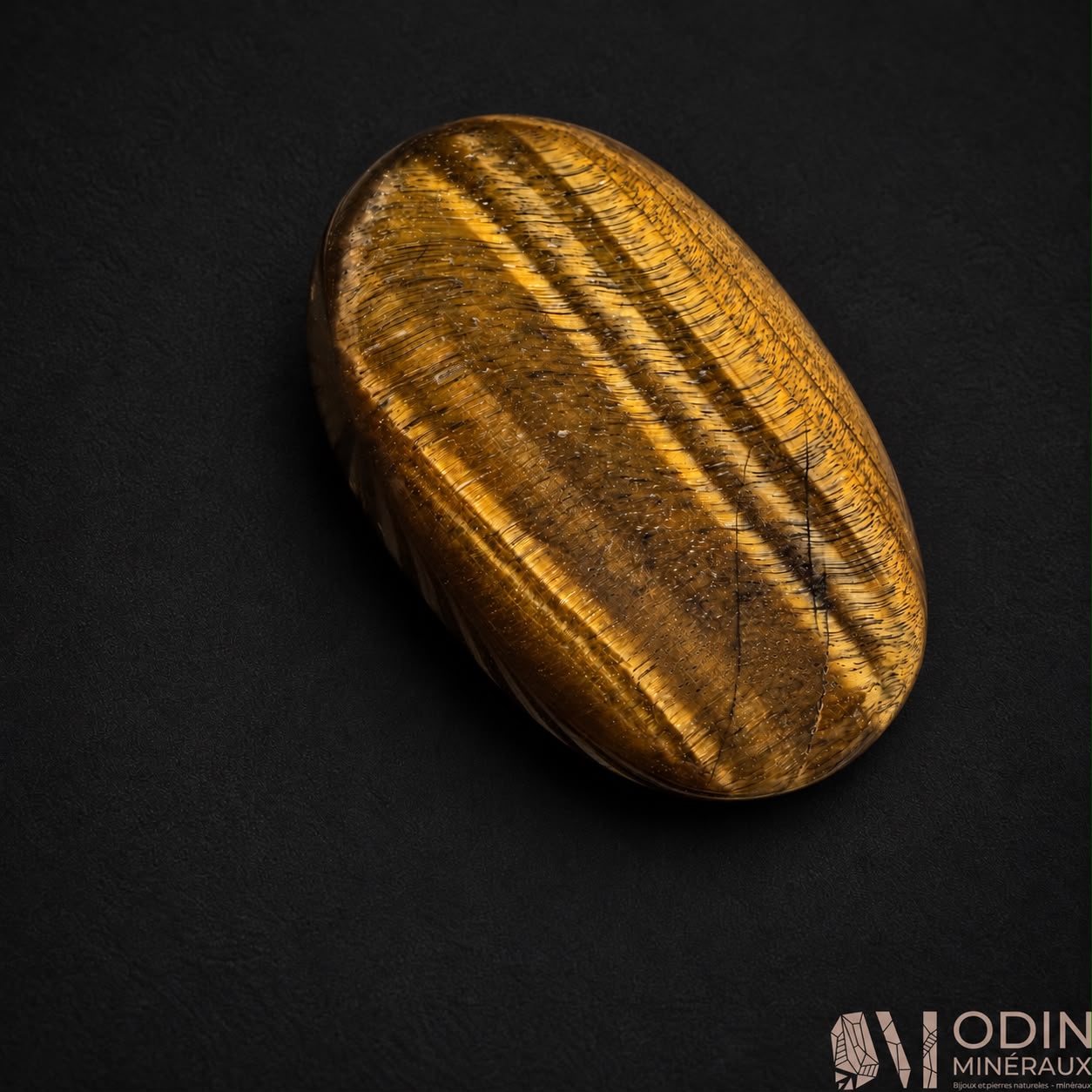
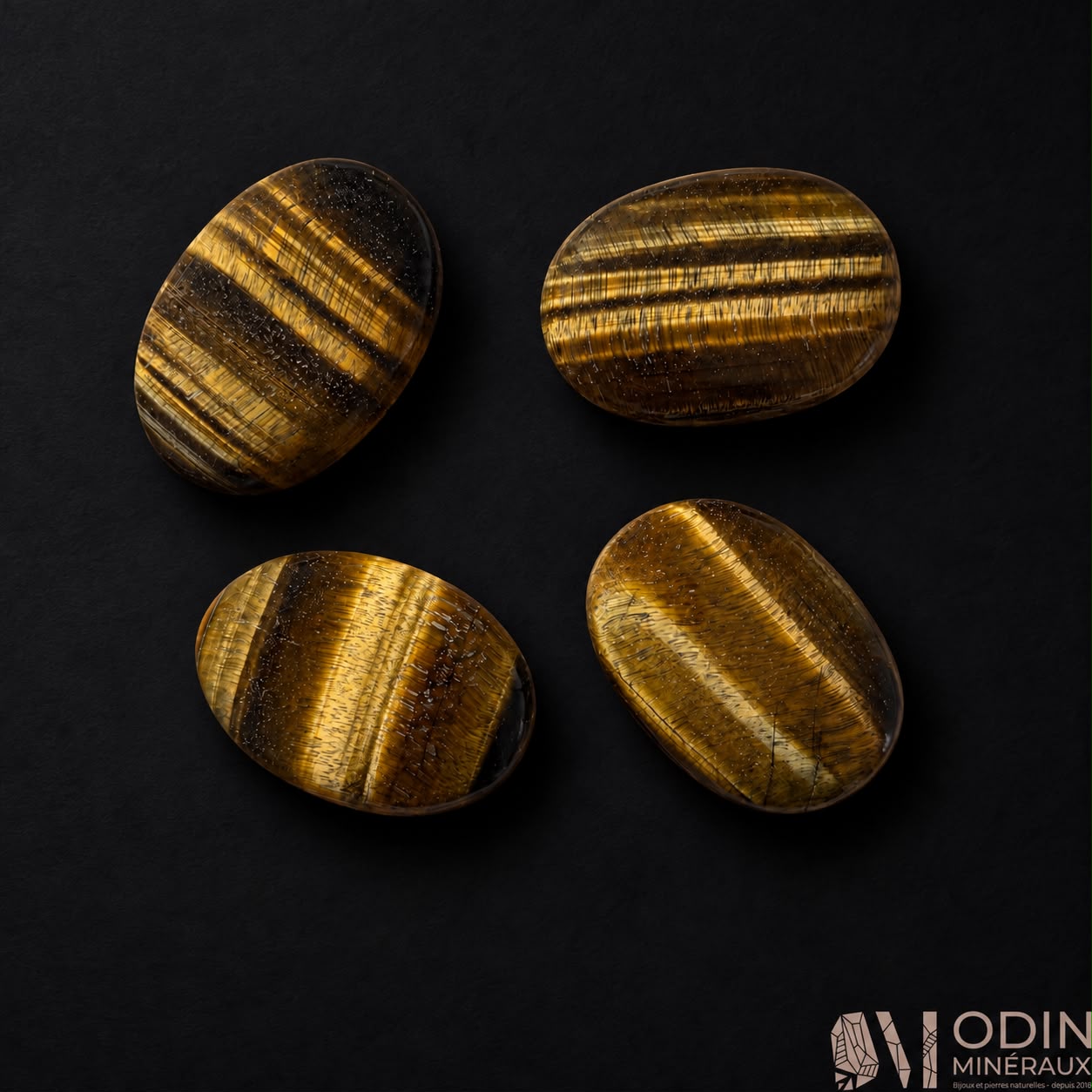
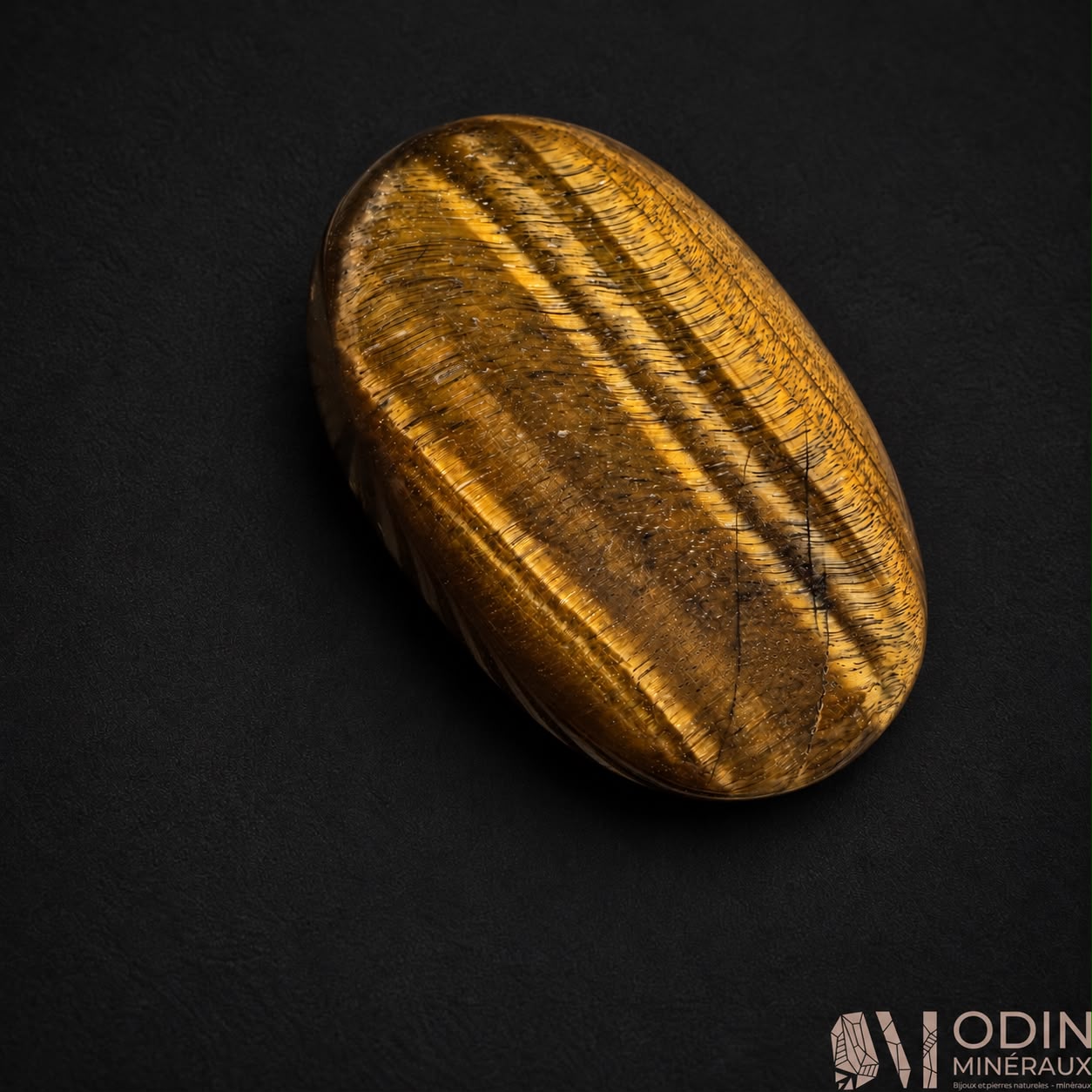
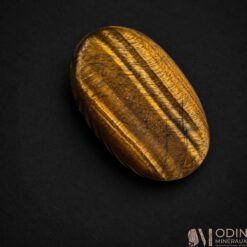
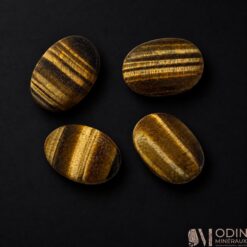
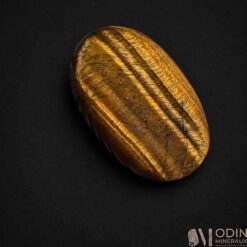
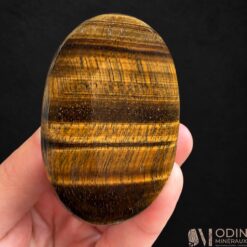
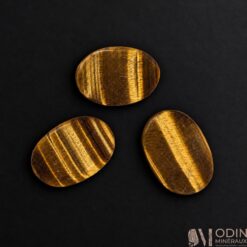
Premium quality tiger’s eye palm stone, 6 to 7 cm
24,00 € incl. VAT
Discover our premium quality natural tiger’s eye palm stone, measuring 6 to 7 cm. Admire its magnificent chatoyancy with golden-yellow, honey-brown, and bronze reflections that seem to move with the light.
Each stone is unique, with its own patterns and color variations, making it a lovely decorative piece.
In stock
Stone(s): Tiger’s Eye Quartz
Color: brown with golden-yellow chatoyant reflections
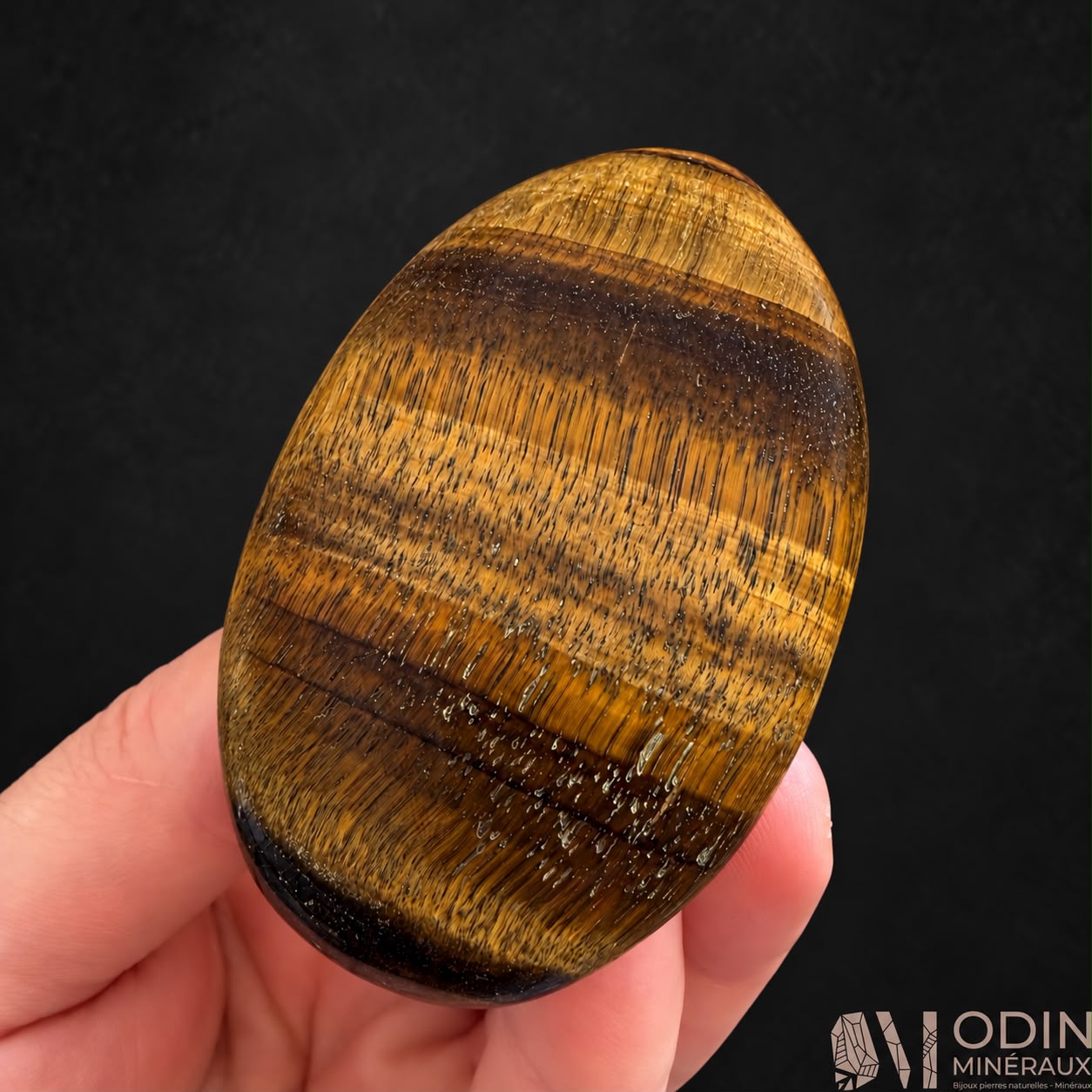
Dimensions: 6-7 cm x 4-5 cm
Approximate weight: 90g – 140g
Number of stones: sold individually
Shape: palm stone
Non-contractual photos.
Classification: quartz group
Mohs hardness: 7
Density: 2.64-2.71
Origin: South Africa
Care instructions: Tiger’s eye is not a fragile stone. No specific maintenance required.
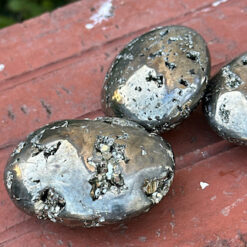
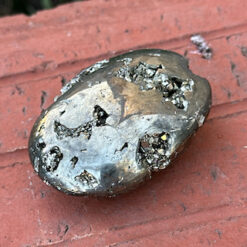
Premium tiger’s eye pebble, 6 to 7 cm, close-up
Tiger’s eye is a fibrous quartz (SiO2) whose shimmering golden-brown bands come from silicified fibers colored by iron oxides. The moving sheen on its surface is called chatoyancy.
Specs listed on the sheet: pebble shape, 6–7 cm x 4–5 cm, weight 90 g–140 g.
Find other items in the Pebbles category.
ORIGINS AND MINERALOGY
Tiger’s eye: origin, formation, and mineralogical properties
➤ Origin & formation of tiger’s eye
Tiger’s eye is a natural variety of quartz, belonging to the silicate family, specifically the tectosilicate group. Recognizable by its beautiful brown and golden-yellow shades, it is distinguished by a remarkable optical phenomenon called chatoyancy, which gives it silky reflections that appear to move across the stone’s surface depending on the light’s orientation.
Composed mainly of silicon dioxide (SiO₂), tiger’s eye owes its unique appearance to an internal structure combining quartz and fibrous mineral inclusions.
Its formation is closely linked to the presence of crocidolite, a fibrous variety of the amphibole called riebeckite, found notably in certain ancient iron-rich geological formations.
For a long time, mineralogists believed that tiger’s eye resulted solely from the progressive replacement of crocidolite fibers by silica, while maintaining their original orientation.
However, more recent research has proposed a more complex mechanism involving the simultaneous growth of quartz and amphibole fibers within rock fissures, driven by silica-rich fluids.
The gradual alteration of iron-rich minerals then contributes to the appearance of the golden, brown, and copper tones characteristic of tiger’s eye.
It is this association between fibrous structure, quartz crystallization, and the transformation of iron compounds that explains the stone’s distinctive look.
The chatoyancy phenomenon: why does tiger’s eye shine?
Chatoyancy is the most remarkable optical characteristic of tiger’s eye.
It results from the interaction of light with numerous fibrous inclusions oriented in substantially parallel directions within the quartz.
When the stone is moved under a light source, certain bands reflect more light than others, creating a silky, mobile effect.
This phenomenon produces the famous golden-yellow, honey-brown, and bronze chatoyant reflections, evoking the glint of a tiger’s gaze.
Unlike iridescence, which involves changing colors due to certain optical phenomena, chatoyancy manifests primarily as the apparent movement of a light band.
Polishing particularly highlights this property. This is why tiger’s eye is highly valued as polished palm stones, cabochons, spheres, bracelets, and decorative stones.
Each specimen has a unique arrangement of fibers and shades, making its patterns naturally one-of-a-kind.
Mineralogical characteristics
- Mineral family: silicates, tectosilicate group
- Variety: quartz with fibrous inclusions
- Main chemical composition: silicon dioxide (SiO₂)
- Crystal system: trigonal, corresponding to quartz
- Hardness: approx. 7 on the Mohs scale
- Density: generally between 2.64 and 2.71, varying with inclusions
- Luster: vitreous to silky
- Optical effect: chatoyancy
- Transparency: generally opaque, sometimes slightly translucent on thin edges
- Color: brown with golden-yellow chatoyant reflections, with shades of honey-brown, bronze, and dark brown
- Cleavage: none
- Fracture: irregular to conchoidal depending on structure
- Morphology: massive aggregates with oriented fibrous structure
Tiger’s eye offers good scratch resistance thanks to its hardness, making it particularly popular in jewelry and for creating polished objects.
Its beauty relies mainly on the intensity of its chatoyancy, the harmony of its colors, and the natural orientation of its internal structures.
Main tiger’s eye deposits
Tiger’s eye is found in several regions worldwide, primarily within ancient geological formations associated with iron-rich rocks.
Among the best-known sources are:
- South Africa: the deposits in the Northern Cape province, particularly in the Prieska and Griqualand West regions, are among the most famous. They are known for stones with brown and golden hues, showing particularly pronounced chatoyancy.
- Australia: Western Australia, especially the Pilbara region, holds significant iron-rich formations containing tiger’s eye. Some specimens show natural associations of chatoyant quartz and iron-rich minerals.
- Namibia: certain geological formations host chatoyant quartz and related fibrous minerals.
- China: several locations show occurrences of chatoyant-structured quartz.
- United States: more localized occurrences are also recorded, particularly in certain mineralogical formations of the American West.
South Africa and Australia are the two reference regions for the study and mining of natural tiger’s eye.
Stone characteristics vary according to local geological conditions: color intensity, band regularity, fiber orientation, and chatoyancy quality.
Tiger’s eye, hawk’s eye, and bull’s eye: what are the differences?
These names refer to closely related materials but with different visual characteristics.
- Tiger’s eye: characterized by golden-yellow to brown tones, resulting notably from the alteration of iron-rich minerals.
- Hawk’s eye: generally blue-gray to dark blue, it retains more of the original mineral fiber coloration.
- Bull’s eye: a trade name used for reddish-brown varieties, whose coloring can result from heat treatment.
These stones are valued for their chatoyant effects, but their colors and certain formation or treatment details may differ.
It is important to note that particularly intense or unusual colors observed in some commercialized chatoyant quartz may result from artificial treatments.
➤ Discovery & history through the ages
🌍 Historical origins: a stone revealed by naturalist explorations
While stones with unique reflections sparked interest in many ancient civilizations, historical references allowing for the precise identification of tiger’s eye remain relatively recent.
The first documented observations of this stone date back to the late 18th century, during naturalist explorations in Southern Africa.
In 1784, French traveler François Levaillant observed a stone with unusual reflections and a golden light band near the Orange River.
This description is one of the first known accounts of this material.
At that time, knowledge of the composition and formation mechanisms of chatoyant stones was still limited.
🏛️ 19th Century: scientific discovery and the development of mineralogy
In the early 19th century, exploration of Southern African geological formations allowed for better documentation of the fibrous minerals and chatoyant quartz found in the region.
Naturalists and researchers, including Martin Hinrich Lichtenstein and Martin Heinrich Klaproth, contributed to the study of mineral materials associated with these deposits.
The development of mineralogy and observation techniques gradually led to a better understanding of tiger’s eye’s peculiarities.
During the 19th century, this stone also caught the attention of lapidaries, who discovered the potential of its internal structure for creating jewelry and decorative objects.
Polishing then revealed the full depth of its golden reflections.
🔬 Modern Era: a stone studied for its optical structure
Advances in petrography, crystallography, and microscopy allow for more precise study of the formation and organization of tiger’s eye’s fibrous inclusions.
In 2003, scientific work proposed a new interpretation of its formation, challenging the traditional explanation based exclusively on the replacement of crocidolite by quartz.
This research contributes to enriching our understanding of this mineral and the mechanisms responsible for its remarkable chatoyancy effect.
Today, natural tiger’s eye remains a highly sought-after stone in mineralogy, jewelry, and decoration.
Its warm shades, durability, and luminous reflections make it a particularly popular material for polished palm stones, jewelry, carved objects, and collector’s pieces.
➤ Caring for tiger’s eye: natural stones and jewelry
Tiger’s eye is a relatively durable stone with a hardness of about 7 on the Mohs scale.
Proper care nevertheless helps preserve its polish, silky luster, and the intensity of its chatoyant reflections.
Caring for palm stones and polished minerals
To clean a tiger’s eye palm stone, use a soft, slightly damp cloth or lukewarm water if necessary.
Then dry the stone carefully with a clean, non-abrasive cloth.
Avoid harsh chemicals, significant impacts, and sudden temperature changes.
These precautions help preserve the quality of the polish and the mineral’s natural optical properties.
Caring for tiger’s eye jewelry
For bracelets, necklaces, and other tiger’s eye jewelry, opt for gentle cleaning with a clean, slightly damp cloth.
Avoid prolonged immersion, especially when jewelry features elastic cord, metal elements, or glued components.
It is also recommended to limit contact with perfumes, household products, and cosmetics.
➤ Well-being & energies: the symbolism of tiger’s eye
In contemporary lithotherapy traditions, tiger’s eye is primarily associated with protection, courage, and self-confidence.
Its golden reflections and appearance evoking a feline’s gaze give it strong symbolism of vigilance, determination, and inner strength.
Certain traditional beliefs attribute to it a role of symbolic protection against negative influences.
According to lithotherapy practices, tiger’s eye is particularly valued for:
- Protection: it symbolizes a shield against negative energies and external influences.
- Courage: it is associated with determination and the ability to face difficult situations.
- Self-confidence: it represents assurance, self-assertion, and willpower.
- Emotional balance: it is traditionally associated with inner stability and the search for serenity.
- Concentration: it symbolizes mental clarity and discernment.
- Vitality: its golden tones evoke energy, motivation, and dynamism.
Tiger’s eye is mainly associated with the solar plexus chakra, traditionally linked to willpower, personal confidence, and self-assertion.
In some symbolic practices, it is also common to place a tiger’s eye at the entrance of a home to represent the protection of the household.
Disclaimer: the energetic properties mentioned are based on lithotherapy beliefs. They are not scientifically proven. The use of minerals for well-being purposes does not constitute medical treatment and cannot replace medical advice or follow-up.
Cleansing and recharging tiger’s eye in lithotherapy
In lithotherapy traditions, cleansing and recharging correspond to symbolic rituals, distinct from the physical maintenance of the mineral.
Cleansing:
Tiger’s eye can be symbolically cleansed by smudging with white sage or palo santo.
Burn a sage stick or palo santo, then gently pass your stone near the smoke without exposing it directly to the flame.
Ensure this is done in a well-ventilated room.
Recharging:
In lithotherapy, tiger’s eye is traditionally associated with sunlight.
It is common to place it for a few hours in a bright spot, favoring gentle exposure and avoiding excessive temperatures.
Other symbolic practices involve placing the stone:
- In a quartz geode
- On a quartz cluster
- On an amethyst druse
- On a selenite plate
These practices belong to lithotherapy traditions and do not alter the physical or chemical properties of the mineral.
Expédition : 48 à 72 heures, hors week-ends et jours fériés, après confirmation du paiement.
Livraison offerte dès 60 € en France métropolitaine.
Droit de rétractation : 14 jours pour nous signaler votre décision.
You may also like…


Fluorescent Minerals


Massage Wands, Pebbles, and Sticks


Purification and recharging


Related products


Massage Wands, Pebbles, and Sticks


Massage Wands, Pebbles, and Sticks

Minerals