



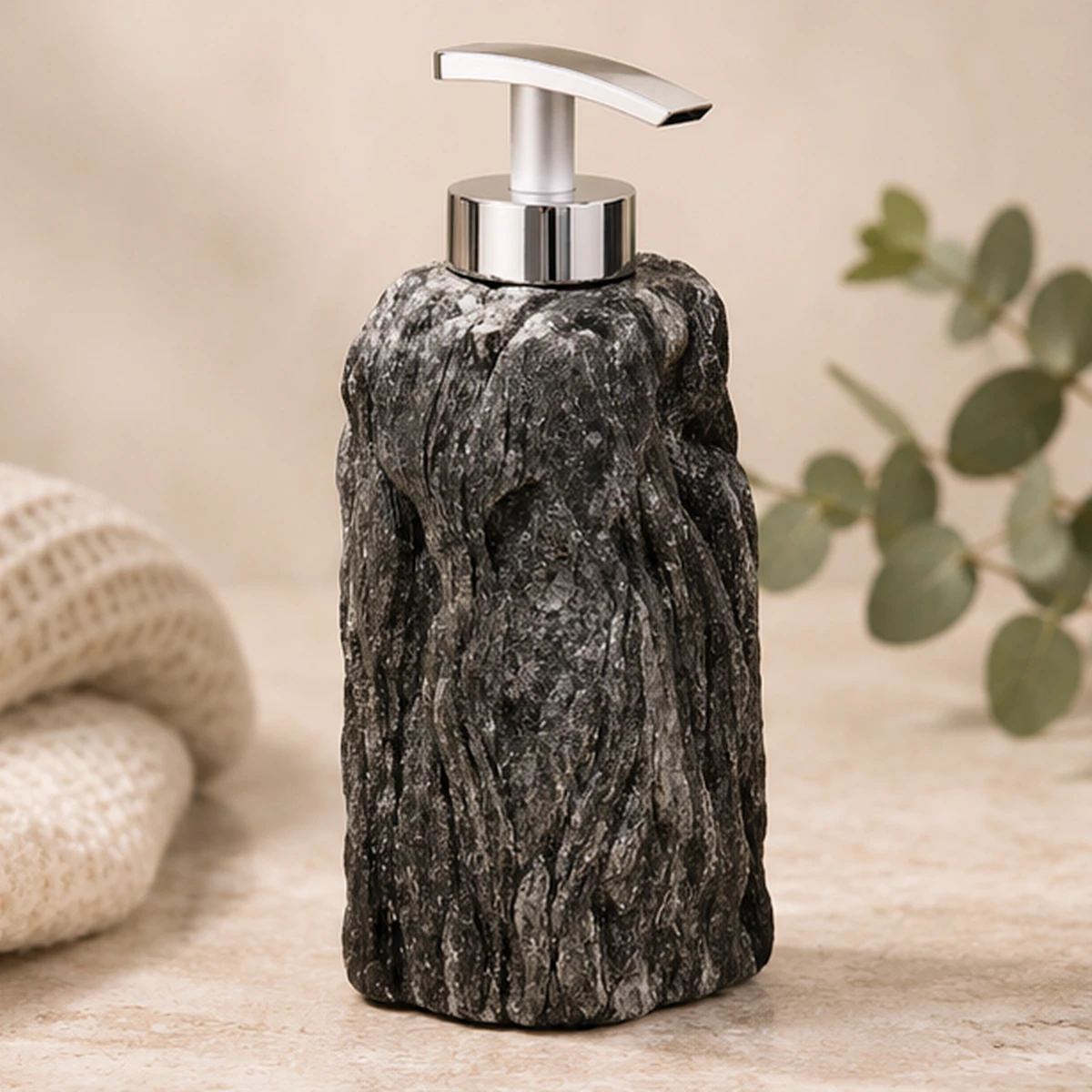
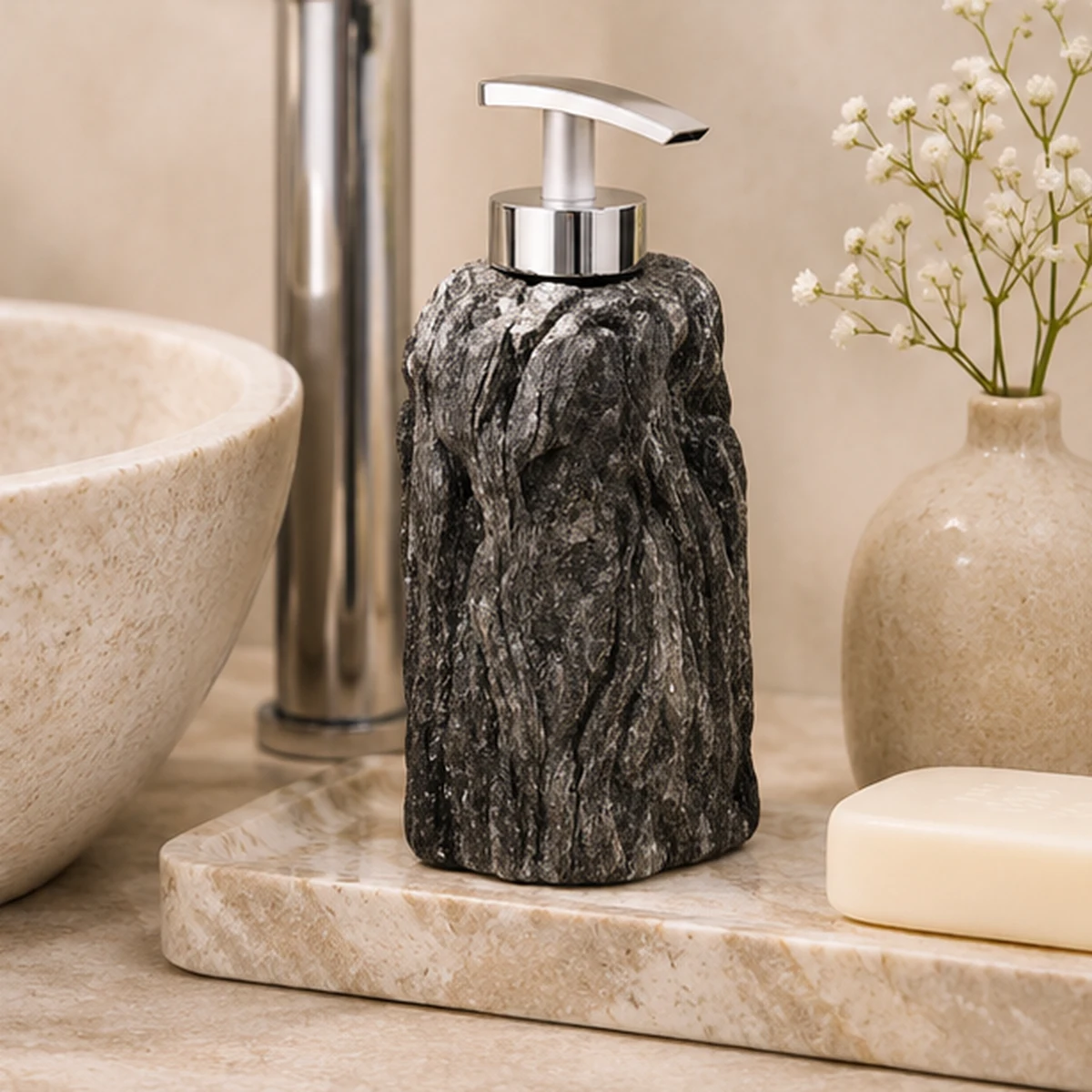
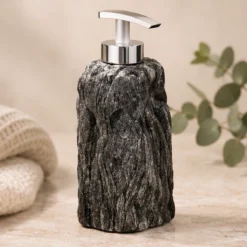
Black mica soap dispenser
54,00 € incl. VAT
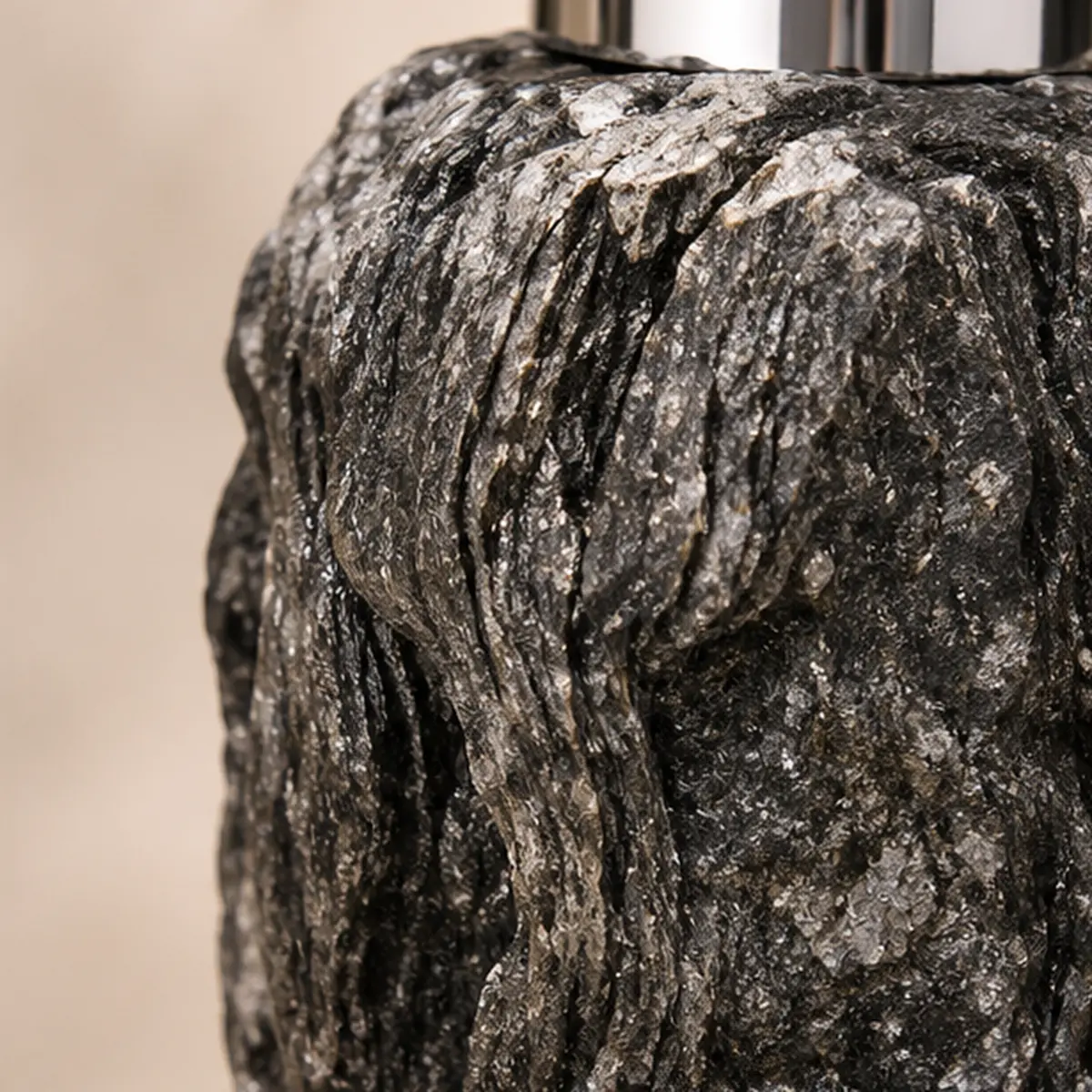
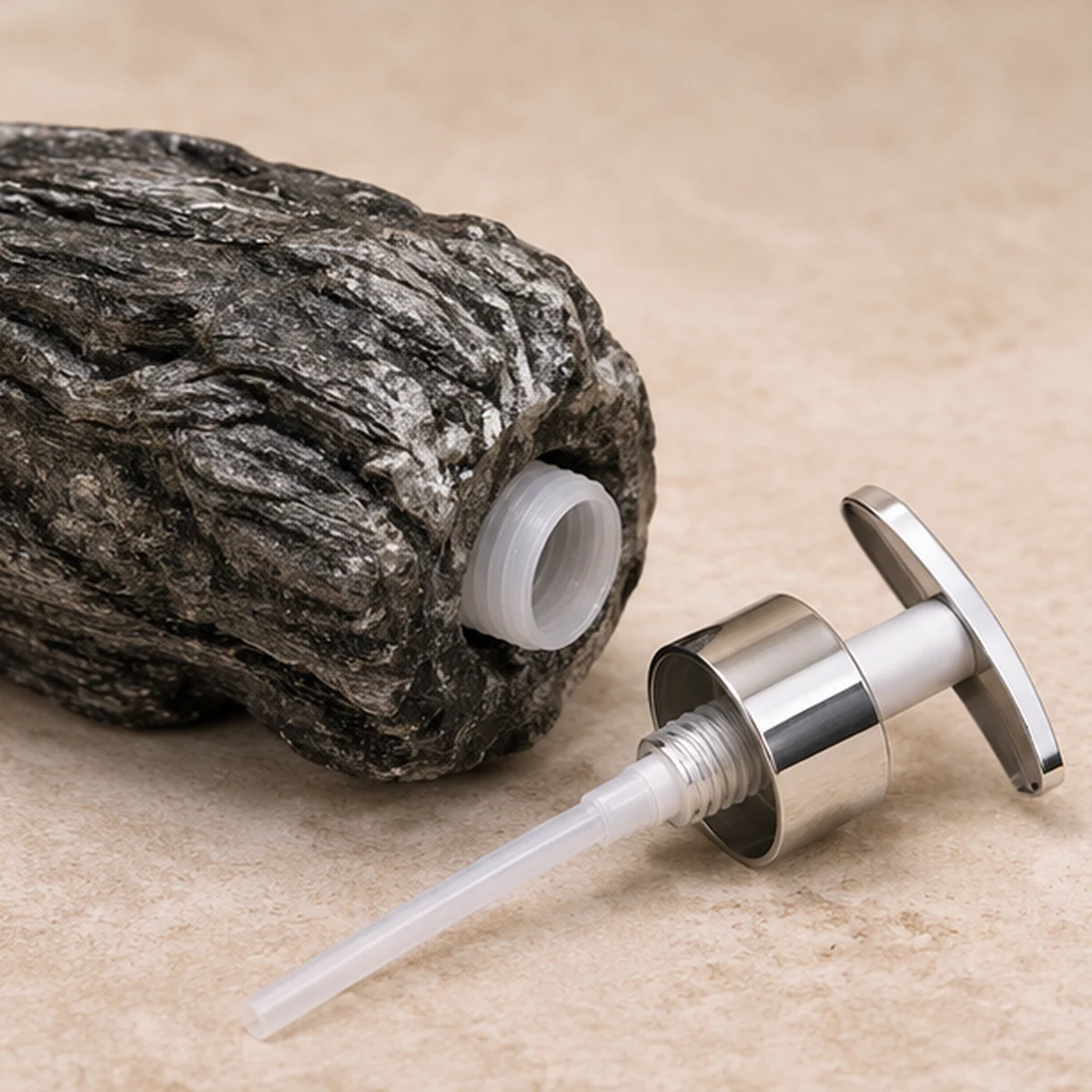
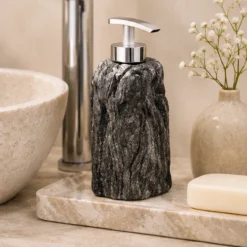
Black mica soap dispenser. With its silvery highlights, this piece adds an elegant, mineral touch to your bathroom or kitchen.
In stock
Stone(s): black mica
Color: gray-black, with silvery metallic reflections
Dimensions: H 15 cm – Base: approx. 8 cm
Approximate weight: 1.5 to 1.7 kg
Number of pieces: sold individually
Shape: freeform
Photos are non-contractual.
Classification: silicate group
Mohs hardness: 2.5 to 3
Density: between 2.7 and 3.3
Origin: Brazil
Care instructions: No specific care required. If you want to clean it, use a soft cloth. As mica is a naturally friable mineral, avoid impacts and excessive rubbing to preserve its structure.
Black mica soap dispenser: mineralogical reference points
Black mica, or biotite, is a potassium, iron and magnesium phyllosilicate that splits into thin sheets. Its hardness is 2.5 to 3 on the Mohs scale.
Features listed on the sheet: freeform shape, H 15 cm – Base: approx. 8 cm, weight 1.5 to 1.7 kg.
Other similar items can be found in the Decoration category.
ORIGINS AND MINERALOGY
Black mica: origin, formation and mineralogical properties
➤ Origin & formation of black mica
The black mica refers to naturally dark-colored micas, belonging to the phyllosilicates family, a group of minerals characterized by a sheet-like crystal structure. Black micas are notably represented by minerals from the biotite group, with shades ranging from dark brown to deep black.
Their composition mainly contains silicon, oxygen and aluminum, along with varying proportions of iron, magnesium and potassium. The presence of iron notably contributes to the dark coloration of many species.
Black mica forms in different geological environments. It appears during the cooling of certain magmas, particularly in granitic rocks and pegmatites, but also during metamorphism, when rocks undergo transformations under high temperatures and pressures.
It is therefore common to find black micas in granites, gneisses and mica schists, where their crystals contribute to the rock’s dark, shiny or layered appearance.
What makes mica special is the way its atoms are arranged in stacked layers. This structure gives it perfect basal cleavage, allowing the mineral to naturally split into very thin sheets.
Depending on crystallization conditions, black mica can form small crystals scattered through the rock or larger sheet-like aggregates.
Mineralogical characteristics
- Mineral family: silicates, phyllosilicate group
- Chemical composition: aluminosilicates with variable composition, generally rich in iron and magnesium for common black micas
- Crystal system: mainly monoclinic
- Hardness: generally 2.5 to 3 on the Mohs scale for biotite-type black micas
- Density: generally between 2.7 and 3.3 depending on the species
- Luster: vitreous to pearly, sometimes with a metallic look
- Transparency: opaque in thick crystals, translucent in very thin sheets depending on the species
- Color: black, black-brown, anthracite grey
- Cleavage: perfect basal cleavage
- Morphology: tabular crystals, plates, sheets or lamellar aggregates
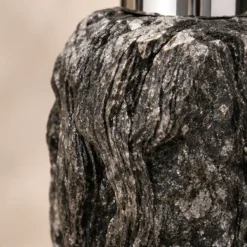
Natural black mica stands out for its silvery, brown or metallic highlights, especially visible when light reflects off the cleavage surfaces.
This layered structure is one of its most remarkable mineralogical features. It also explains its relative fragility to impacts and rubbing.
Main black mica deposits
Black micas are found in many geological formations around the world. Regions known for mica deposits include:
- Brazil: the granitic and pegmatitic formations of Minas Gerais contain various natural micas.
- Madagascar: known for its pegmatitic formations and mica deposits, notably phlogopite.
- India: a country historically associated with mica mining, especially in the Jharkhand and Bihar regions.
- United States: granitic and metamorphic formations, notably in North Carolina, contain different mica species.
- Russia: large geological complexes feature many mica deposits.
- France: granites and metamorphic rocks in Brittany, the Massif Central and the Alps often contain black micas.
Color, luster, crystal size and their arrangement vary depending on chemical composition and the geological conditions of formation.
➤ Discovery & history through the ages
🌍 Antiquity: a mineral with unique highlights
Micas have been known for several millennia and were used by different civilizations for their shine and their ability to split into thin plates.
In North America, people of the Hopewell culture shaped mica sheets to create ornaments and decorative objects.
In Mesoamerica, mica plates were also found at the archaeological site of Teotihuacan, showing early use of this material.
These discoveries concern the mica family as a whole, without always making it possible to identify the mineral variety used.
🏛️ Middle Ages & Renaissance: a material with remarkable properties
Over the centuries, some mica varieties—mainly light micas like muscovite—were used to make heat-resistant transparent surfaces.
In Russia, thin muscovite plates were used to fit certain windows and lanterns. This material was known as Muscovy glass.
Black micas, generally more opaque, did not have the same transparency qualities, but shared several structural characteristics of this mineral family.
🔬 Modern era: from mineralogy to industrial applications
The development of mineralogy and crystallography gradually made it possible to better understand the atomic structure of micas and their physical properties.
The lamellar structure, heat resistance and electrical insulation qualities of certain species explain their importance in industry.
In the 19th and 20th centuries, micas became sought-after materials for manufacturing electrical components and technical equipment.
Today, micas are used in various sectors, including electronics, insulating materials, coatings and certain industrial applications.
In collectible mineralogy, black micas are appreciated for their crystal structure, their characteristic highlights, and their association with other minerals in natural rocks.
➤ Caring for black mica: minerals and decorative objects
Natural black mica requires some precautions due to its layered structure and relatively low hardness.
Its sheets can detach with repeated rubbing or overly vigorous handling.
Caring for raw minerals
To clean a raw black mica specimen, use a very soft brush or a soft, dry cloth.
Avoid stiff brushes, pressure cleaning and prolonged soaking, especially when the sheets are exposed.
It’s recommended to handle the crystals carefully to preserve their natural structure.
Caring for black mica decorative objects
For decorative objects and accessories made from black mica, use a soft, slightly damp cloth, without abrasive products.
Bathroom items like soap dispensers may need regular cleaning to remove soap marks and surface deposits.
Avoid harsh limescale removers, acidic detergents and abrasive sponges that could damage surfaces or metal parts.
Dry thoroughly after cleaning. Metal parts and mechanisms should be maintained according to their materials and specific recommendations.
➤ Wellbeing & energies: the symbolism of black mica
In contemporary lithotherapy traditions, black mica is sometimes associated with stability, inner reflection and gaining perspective.
Its dark grey color and structure made up of multiple layers inspire symbolism linked to introspection, self-knowledge and personal transformation.
According to lithotherapy beliefs, black mica is said to be appreciated in particular for:
- Grounding: it is said to symbolize stability and the feeling of being more connected to the present.
- Symbolic protection: some traditions associate it with the ability to step back from outside influences.
- Self-knowledge: its layered structure is said to evoke introspection and understanding your emotions.
- Letting go: it is said to be associated with the ability to detach from certain worries.
- Inner clarity: it is said to represent discernment and balance in decision-making.
Black mica can also be appreciated in mineral arrangements and meditation spaces, for its natural look and symbolism.
Warning: the energetic properties mentioned are based on lithotherapy beliefs. They are not scientifically proven. Using minerals for wellbeing purposes is not a medical treatment and cannot replace medical advice or follow-up.
➤ Cleansing and recharging black mica in lithotherapy
In lithotherapy practices, cleansing and recharging black mica are symbolic rituals.
These practices should be distinguished from physical care of the mineral.
Cleansing black mica jewelry
Smudging with white sage or palo santo is a practice traditionally used in lithotherapy.
Burn a sage stick or palo santo, then gently pass your jewelry near the smoke, without exposing it directly to the flame.
Always do this in a well-ventilated space.
Cleansing black mica minerals
For crystals and raw specimens, gentle smudging allows for a symbolic ritual without immersing in water.
Place the mineral on a stable surface and lightly waft the smoke nearby, without exposing the sheets directly to heat.
This practice does not change mica’s physical or mineralogical properties.
Recharging black mica
In lithotherapy traditions, black mica can be placed in a calm, bright environment.
Choose soft, indirect natural light, away from excessive temperatures.
Other symbolic practices involve placing black mica:
- Near a quartz geode
- On a selenite plate, if the piece is stable enough
- In a calm space dedicated to meditation
These practices are based on traditional lithotherapy uses and do not change the mineral’s physical or chemical properties.
Expédition : 48 à 72 heures, hors week-ends et jours fériés, après confirmation du paiement.
Livraison offerte dès 60 € en France métropolitaine.
Droit de rétractation : 14 jours pour nous signaler votre décision.
You may also like…


Related products