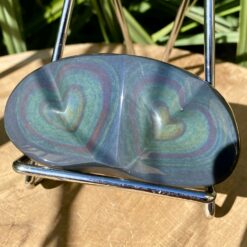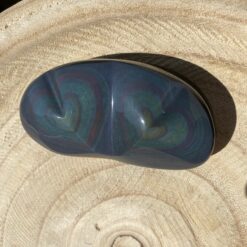




Orange calcite heart-shaped palm stone
24,00 € incl. VAT
Heart-shaped orange calcite palm stone, approx. 5 cm.
In stock
Color: orange
Dimensions: approx. 50 mm x 50 mm
Approximate weight: 107 g
Shape: polished, heart
Photos not contractual
Classification: calcite group
Mohs hardness: 3
Density: 2.6–2.8
Origin: United States, Mexico, Brazil
Care advice: Calcites are fairly soft. Avoid contact with other stones, as they could break or chip.
Heart-shaped orange calcite pebble, in detail
Calcite is a calcium carbonate (CaCO3) with a Mohs hardness of 3. It effervesces upon contact with an acid, even a weak one, and has perfect cleavage in three directions.
Features listed on the sheet: polished shape, heart, approx. 50mm x 50mm, weight 107 g.
To compare with other models, consult the Heart category.
Origins and minéralogy
Calcite is a mineral in the carbonate family, made mainly of calcium carbonate (CaCO₃). It’s one of the most abundant minerals on Earth, often found in geological formations such as limestone, marble, and even in cave stalactites and stalagmites. It can take various crystal forms, and its color varies depending on impurities, ranging from white to yellow, blue, green, or even pink. Its hardness (3 on the Mohs scale) and its solubility in acids (such as hydrochloric acid) are two of its most characteristic properties.
The use of calcite by ancient civilizations goes back several millennia. In Ancient Egypt, calcite (in the form of selenite, a translucent variety) was mainly used to make vases and statues. The Egyptians particularly valued its ability to let light pass through, making it ideal for creating sacred objects or vessels used in funerary rituals. Calcite was also used to make writing tablets. These, used in religious or administrative contexts, were prized for their durability.
In Mesopotamia, calcite was used to make sculptures and reliefs. In particular, white calcite was carved to create commemorative steles and devotional objects.
The Greeks and Romans, fascinated by the beauty of calcite, used it in the construction of temples and buildings. Marble, which is essentially crystallized calcite, was a material of choice for sculpture, as shown by famous Greek statues. The use of marble in the construction of public monuments (for example, the columns of the Parthenon) shows the importance of this mineral in the architecture of these civilizations.
The Romans, for their part, mastered petrification techniques and used calcite in the construction of roads and aqueducts, in particular thanks to its ability to bind with other minerals to form a durable cement. Their Roman mortar technique used forms of calcite, lime, and volcanic ash.
In the Middle Ages, calcite—especially marble—was still used in the construction of cathedrals and churches. Many religious sculptures and decorative elements were made from this material, whether statues of saints, baptismal fonts, or capitals.
During the Renaissance, interest in marble sculpture came back in force, with artists like Michelangelo using this stone to create some of their most famous works. Calcite, in the form of marble, became a symbol of beauty and purity, and transforming it into refined sculptures was seen as a way to bring humans closer to the divine.
With the advent of the Industrial Revolution and increased production capacity, calcite found new applications. In cement manufacturing, calcite is used as a key component, as it can be heated to high temperatures to produce lime, a fundamental ingredient in cement preparation. This use was crucial to the development of modern infrastructure, such as buildings, roads, and bridges.
In chemistry and the pharmaceutical industry, calcite is used as a filler in products like paints, plastics, and even medicines (as an antacid). Its role in modern industries reflects its abundance and versatility.
Summary of the main uses of calcite:
- Antiquity: Religious sculpture, ritual objects, vases.
- Ancient Greece and Rome: Marble for building monuments and sculptures.
- Middle Ages: Church construction, religious sculptures.
- Renaissance: Marble art and sculpture, monuments.
- Industrial and modern era: Cement manufacturing, chemicals, filler in various industrial products.
In crystal healing, calcite is considered an amplifier and an energy purifier. Placed in a room, it is said to drive away all negative energies. Calcite is a stone of emotional balance, peace, and serenity. It helps restore the balance of Yin and Yang. It supports stabilization.
Orange calcite symbolizes energy and vitality. It’s also the stone of optimism. It helps balance emotions and transcend psychological suffering.
Blue calcite is a relaxation stone. It encourages you to live in harmony, forget, and dispel stress. Used on the throat chakra, it supports communication.
Golden calcite is used on the crown chakra. It supports spiritual development, communication with the higher realm, and meditation.
Yellow calcite, like orange calcite, is a stone of energy and vitality. Used in meditation, it is said to induce deep relaxation. It’s used on the crown chakra and the solar plexus chakra.
Green calcite is a stone of soothing, serenity, and mental balance.
Optical calcite or Iceland spar is a calcite crystal with an intriguing feature: it splits a light ray into two distinct beams. This phenomenon is due to its particular crystal structure, which differs from standard calcite crystals. In optical calcite, the light entering the crystal is refracted (i.e., bent) in two different places, creating two distinct images of the observed object. This phenomenon is called birefringence or double refraction.
Unlike an isotropic crystal (like glass), which refracts light uniformly, optical calcite creates two distinct paths for light, each with a different speed depending on the crystal’s orientation.
Optical calcite is often associated with spiritual elevation and mental clarity. Its power to split light symbolizes the ability to dispel inner darkness and illuminate the mind. Those who use it in crystal healing report improved concentration, reduced mental confusion, and better spiritual understanding. The crystal is said to act as an amplifier of inner light, bringing clearer ideas and greater vision on the spiritual path.
This mineral is also known for its ability to purify the energy around you and open the upper chakras, especially the crown chakra. It is said to promote connection with higher energies and can help you receive spiritual or intuitive messages.
Warning: This product is not intended for therapeutic use and cannot replace medical treatment.
Cleansing and recharging:
Purification:
Calcite can be cleansed by soaking it in water for a few minutes.
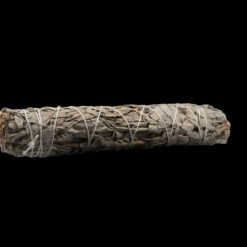
It can also be cleansed by smoke cleansing with a palo santo stick or white sage. Light the palo santo or sage and pass your stone/jewelry through the smoke. Don’t forget to air out the room well after smoke cleansing.
Recharging:
Calcite can be recharged in sunlight. It can also be placed in a quartz geode or on a quartz cluster (druze).
Expédition : 48 à 72 heures, hors week-ends et jours fériés, après confirmation du paiement.
Livraison offerte dès 60 € en France métropolitaine.
Droit de rétractation : 14 jours pour nous signaler votre décision.
You may also like…
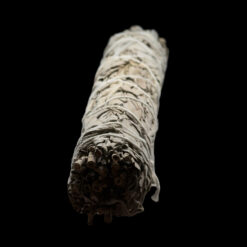
Purification and recharging
Related products