


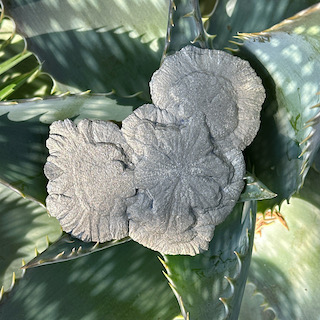
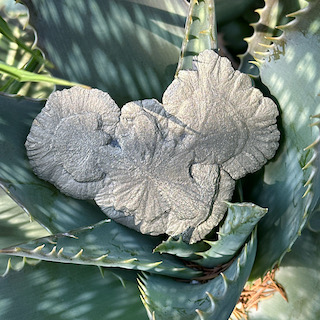
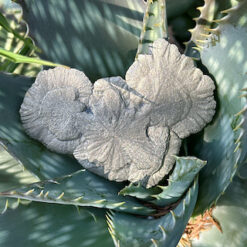
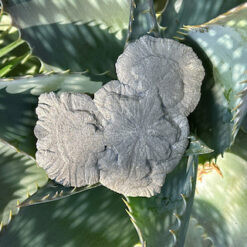
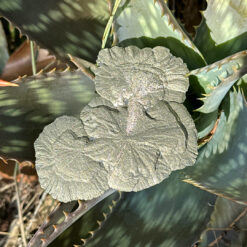
Natural pyrite sun
120,00 € incl. VAT
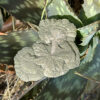
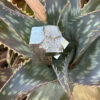
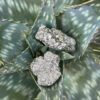
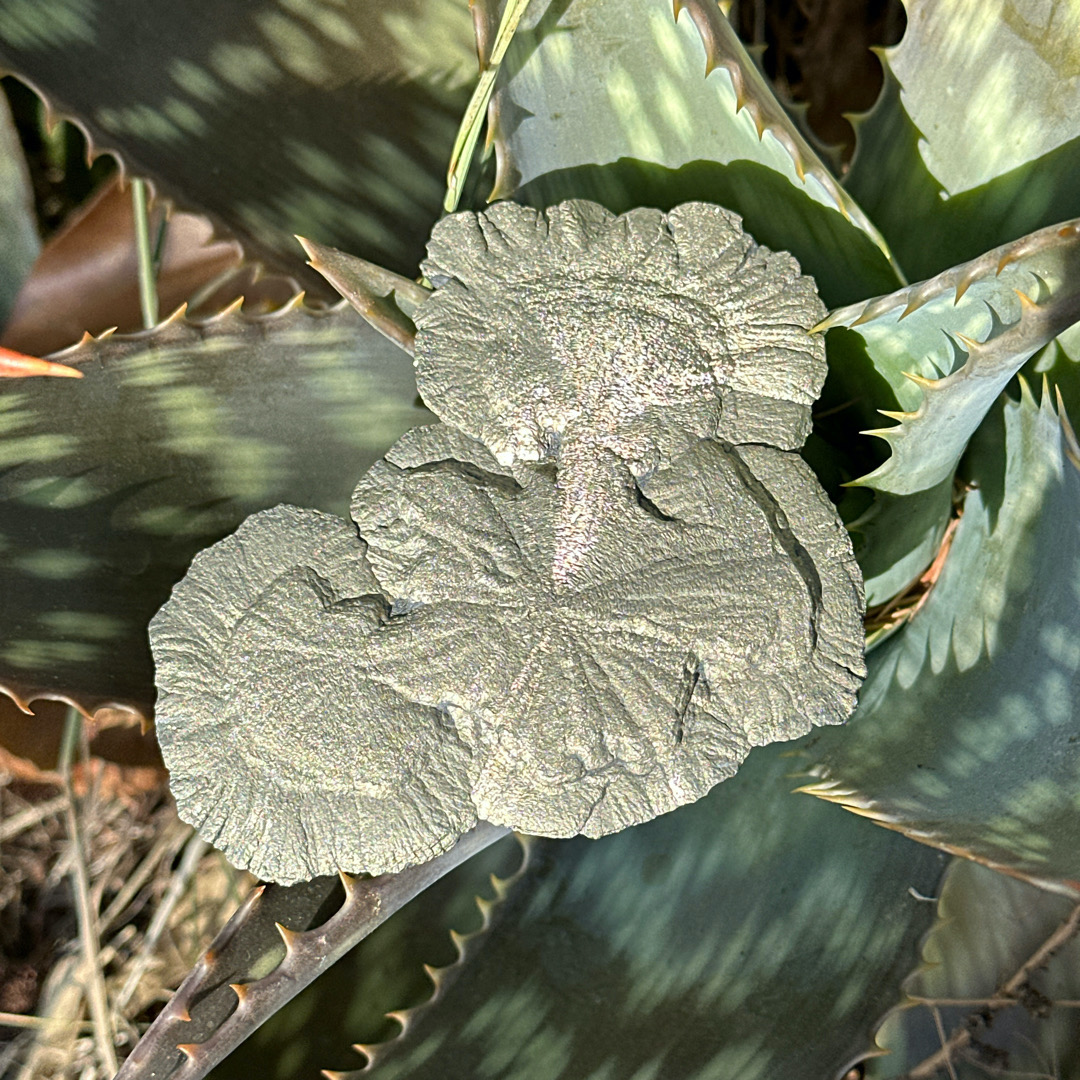
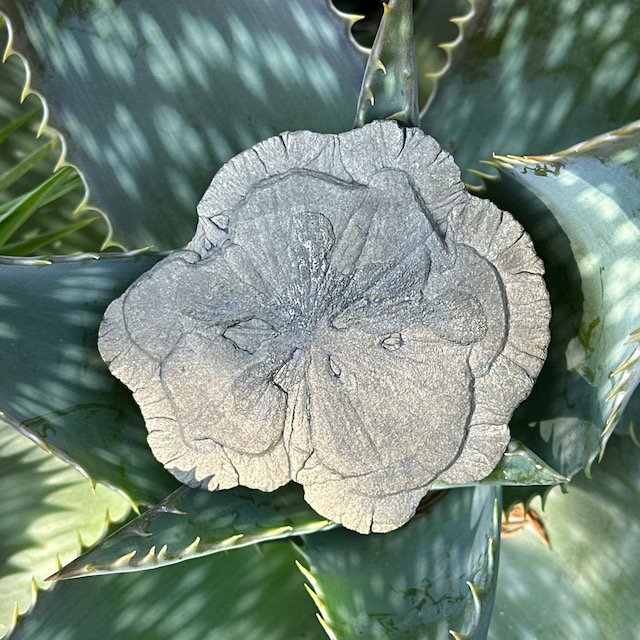
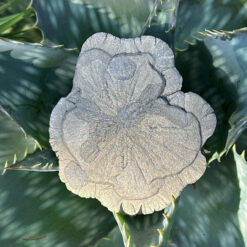
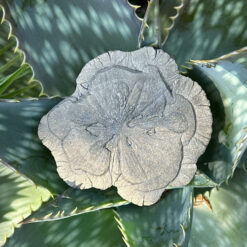
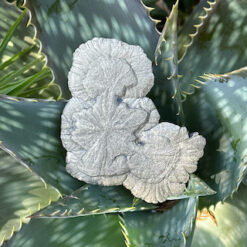
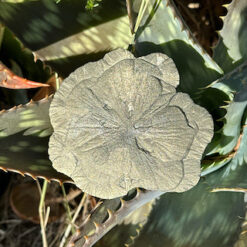
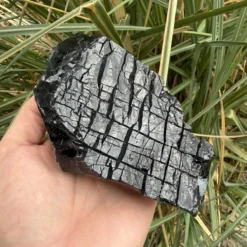
Magnificent natural pyrite sun. This specimen is neither carved nor molded: its shape is the result of a natural crystallization phenomenon.
In stock
Stone(s): natural pyrite sun
Color: metallic silver/gold/brass yellow
Stone dimensions: 8cm to 10cm
Weight: 110 to 140g
Stone size: raw
Shape: freeform
Chemical composition: iron disulfide – FeS₂
Classification: sulfide group
Crystal system: cubic
Mohs hardness: 6 to 6.5
Density: approximately 4.8 to 5.0
Origin: USA, China, Australia
Care instructions:
Avoid exposing pyrite to water, humidity or high temperatures. The presence of iron in its composition can promote oxidation and gradually diminish its luster. Gently clean the stone with a soft, dry cloth, without soaking it.
Photos are non-contractual. Item sold individually. The stones in the photos represent a small sample of the pieces sold.
Natural pyrite sun: mineralogical features
Pyrite is an iron sulfide (FeS2) with a golden metallic shine, which is why it’s nicknamed fool’s gold. Its Mohs hardness is 6 to 6.5. It often crystallizes in cubes with striated faces and oxidizes with humidity.
Characteristics noted on the sheet: free form, 8cm to 10cm, weight 110 to 140 g.
You can browse the Raw stones category to see similar pieces.
Origins and minéralogy
🔥 Pyrite – The golden stone nicknamed “fool’s gold”
🌍 Origin and nature of pyrite
Pyrite is a natural mineral composed of iron disulfide, with the chemical formula FeS₂. Its metallic luster and golden yellow to brass yellow color give it an appearance similar to that of gold, which earned it its famous nickname “fool’s gold”.
Despite this resemblance, pyrite is easily distinguished from gold by its hardness, brittleness and geometric crystalline forms. While gold is soft and malleable, pyrite is brittle and can form remarkable cubes with naturally striated faces.
Its crystals appear in different forms:
- cubes with well-defined edges;
- octahedra;
- pyritohedra with multiple facets;
- massive, granular or nodular aggregates;
- small brilliant crystallizations on a host rock.
- discoidal formations with a radial structure, called pyrite suns
🪨 Geology and formation
Pyrite is one of the most widespread sulfides in the Earth’s crust. It can form in very diverse geological contexts, both at high temperature and in colder sedimentary environments.
It appears notably:
- in hydrothermal veins, when hot fluids rich in iron and sulfur circulate through rock fractures;
- in certain igneous rocks;
- during metamorphic transformations;
- in oxygen-poor sedimentary rocks;
- in coal seams, shales and certain limestones;
- as a replacement of organic matter or fossils.
In oxygen-deprived sedimentary environments, iron can react with sulfur from microorganism activity. This encounter gradually promotes the crystallization of pyrite. It can then take the form of very small spherical aggregates called framboids, invisible to the naked eye or observable only at high magnification.
Natural pyrite sun with radial growth
This particular mineral formation is composed of pyrite, an iron sulfide with the formula FeS₂. It developed between thin layers of shale in a very limited space. The crystals therefore grew laterally, creating this flattened shape and radiating patterns reminiscent of sunbeams.
Commonly called a “pyrite sun”, this specimen is neither carved nor molded: its shape is the result of a natural crystallization phenomenon. Each piece features unique contours, reliefs, and patterns. The surface here retains its natural appearance, with several discoidal formations partially joined together.
✨ History, etymology and legends
The name pyrite comes from the ancient Greek pyr, which means “fire”. This name refers to the mineral’s ability to produce sparks when struck against a hard material, particularly flint or metal.
Long before the appearance of modern lighters, pyrite was thus used as a fire stone. Archaeological discoveries attest that prehistoric human groups already knew the properties of this mineral and could use it to obtain sparks and light a fire.
In Antiquity, several stones capable of producing sparks were designated by terms related to pyrite. Its relationship with fire gradually gave it a symbolism of warmth, strength and mastery of energy.
In Mesoamerica, carefully polished pyrite fragments were assembled on supports to create mosaic mirrors. Found notably in Mayan contexts and linked to ruling classes, these objects did not serve solely to reflect an image. According to archaeological interpretations, they could also be used in ceremonies, divinatory practices or the representation of power.
The most famous legend associated with pyrite remains that of fool’s gold. Its golden color and metallic luster supposedly fooled many inexperienced gold seekers. Contrary to popular belief, its presence is not always without interest for prospectors: in certain deposits, pyrite can be associated with very small quantities of gold.
Its solar appearance has also nourished a more contemporary symbolism. It is often represented as a stone of radiance, success and prosperity. Its cubic crystals, perfectly structured, evoke stability, organization and the construction of solid foundations.
🔮 Wellness and energies
Pyrite is considered a dynamic stone, associated with confidence, willpower and the realization of projects.
It is generally used with the following intentions:
- strengthen self-confidence and assurance;
- encourage motivation and taking action;
- promote organization and concentration;
- stimulate creativity and initiative;
- support the pursuit of success and prosperity;
- help overcome limiting thoughts;
- support vitality and determination;
- encourage a more positive attitude toward difficulties;
- symbolically create a sense of protection and stability.
Due to its resemblance to gold, pyrite is frequently associated with abundance, professional opportunities and material success. It can thus be symbolically placed in a workspace, near a desk or in a place dedicated to projects and creativity.
Its energy is often described as structuring and stimulating. It would be particularly suitable for periods when it is necessary to regain momentum, clarify objectives or transform an idea into concrete action.
👉 These properties are based on beliefs and traditional practices not scientifically proven. They in no way replace a diagnosis, treatment or support from a healthcare professional.
⚖️ Chakras and astrological signs
Associated chakras
- Solar plexus chakra – Manipura
Associated with willpower, personal assertion, confidence and the ability to act. - Root chakra – Muladhara
Associated with stability, structure, security and grounding in material reality.
Associated astrological signs
Pyrite is most often connected to the following signs:
- Leo, for radiance, confidence and solar energy;
- Aries, for initiative, courage and dynamism;
- Capricorn, for ambition, discipline and building lasting projects.
Pyrite can nevertheless be used independently of astrological sign, according to personal intentions and individual affinities.
🧼 Cleansing, recharging and care
Pyrite contains iron and can oxidize when regularly exposed to water, moisture or certain chemicals. It is therefore preferable to favor dry cleansing methods.
🔸 Cleansing
Recommended methods:
- smudging with sage or palo santo;
- passing through incense smoke;
- using the sound of a singing bowl, bell or tuning fork;
- placing near a quartz cluster;
- gentle cleaning with a soft, perfectly dry cloth.
Not recommended methods:
- immersion in water;
- salt water or direct contact with salt;
- steam cleaning;
- prolonged exposure to humid atmosphere;
- household products, detergents or acidic solutions.
🔸 Recharging
- soft natural light;
- moderate sunlight for short duration;
- placing on a geode or quartz cluster;
- placing on a perfectly dry selenite plate;
- recharging through sound or meditative practice.
🔸 Care instructions
Store pyrite in a dry place, away from moisture and significant temperature variations. For jewelry, avoid repeated contact with water, soap, shower gel, perfumes, creams and household products.
Expédition : 48 à 72 heures, hors week-ends et jours fériés, après confirmation du paiement.
Livraison offerte dès 60 € en France métropolitaine.
Droit de rétractation : 14 jours pour nous signaler votre décision.
You may also like…


Minerals


Freeform Minerals


Purification and recharging


Related products
Cubes/Bricks
Freeform Minerals


Freeform Minerals


Freeform Minerals