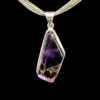


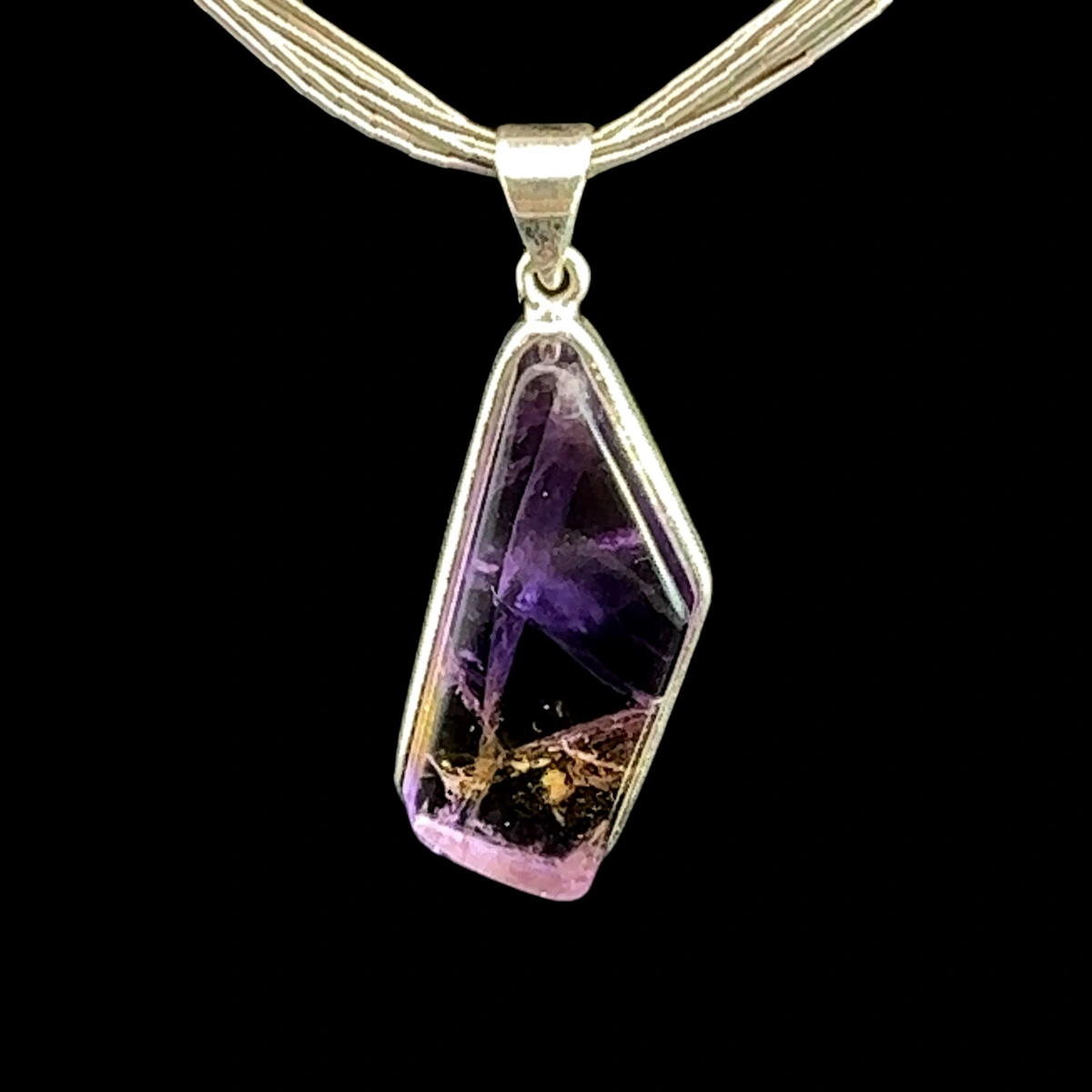
Ametrine and 925 Silver Pendant – One of a Kind
156,00 € incl. VAT
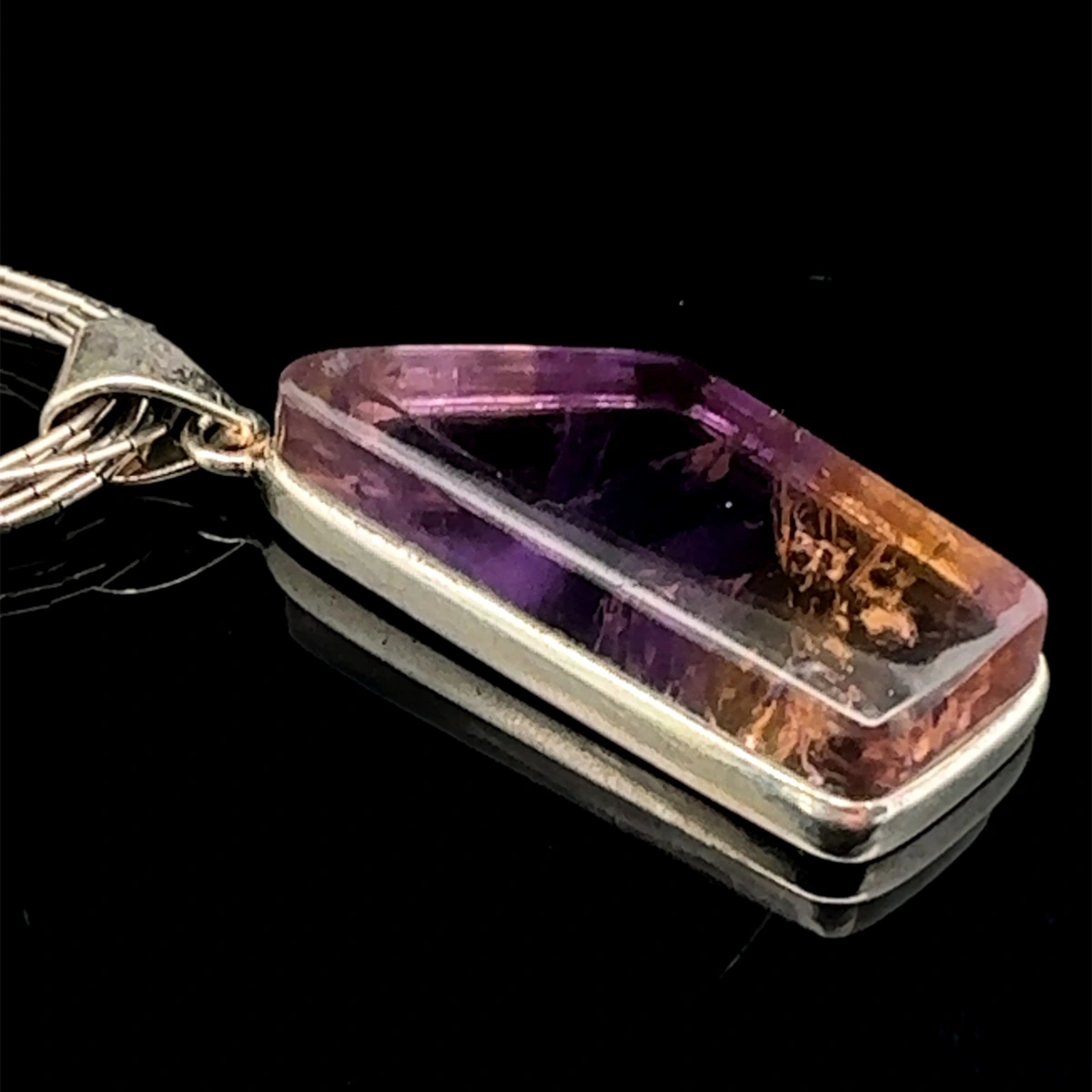
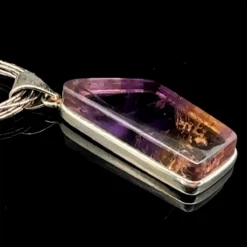
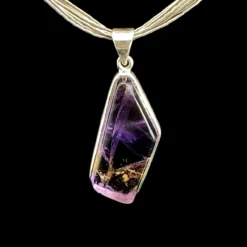
Discover our natural ametrine and 925 silver freeform pendant. One of a kind. An elegant and original piece of jewelry with purple and golden hues.
In stock
Stone(s): ametrine
Color: mauve to purple and yellow
Dimensions: approx. 13 mm x 33 mm
Pendant weight: 12.2 g
Precious metal: 925 silver
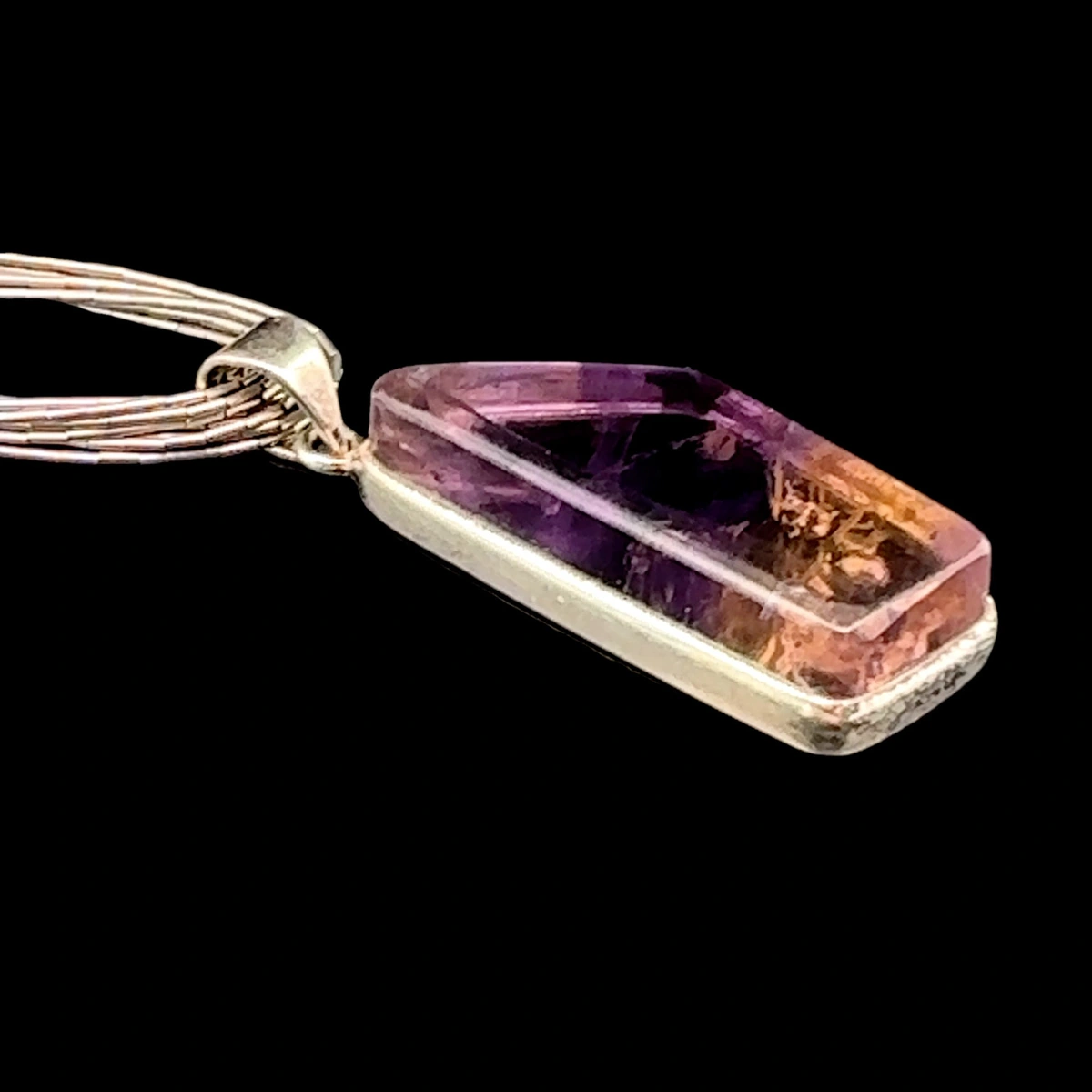
Stone cut: cabochon
Setting: bezel setting
Shape: freeform
Photos show the actual pendant you will receive. Chain not included.
Classification: silicates group
Mohs hardness: 7
Density: 2.63–2.66
Origin: Brazil
Care instructions: Clean the pendant with a soft cloth. Avoid prolonged exposure to intense light or high heat, which could alter the stone’s color.
ORIGINS AND MINERALOGY
Ametrine – Origin, formation, and properties
Ametrine is a natural bicolor quartz variety, instantly recognizable by the blend of amethyst’s purple and citrine’s golden yellow within a single crystal. This unique feature gives it its name, a blend of both stones.
Its colors can show sharp boundaries or softer transitions, ranging from deep violet to honey yellow, sometimes with orange highlights. Each crystal has its own unique color distribution.
Origins & Mineralogy
Classification and Composition
Ametrine belongs to the quartz family, within the silicates group and the tectosilicates subclass. Its chemical composition is identical to amethyst and citrine: silicon dioxide (SiO₂).
It crystallizes in the trigonal system, has a Mohs hardness of 7, and a density of approximately 2.65 g/cm³.
Formation and Features
Ametrine forms through the crystallization of silica-rich hydrothermal solutions circulating through rock fractures and cavities.
The coexistence of both colors stems from specific geochemical conditions during crystal growth, especially the presence of iron and differences in its crystal lattice environment.
The purple areas correspond to amethyst, whose color comes from color centers linked to iron and natural irradiation. The yellow-to-orange zones are associated with very fine concentrations or clusters of iron compounds.
The different colored zones follow quartz’s crystallographic orientation. In certain crystal cross-sections, they can create distinctive radiating patterns.
While amethyst and citrine are traditional terms used to describe its two colors, some mineralogical studies distinguish the yellow sectors of Bolivian ametrine from true citrine.
Deposits and Provenance
The main commercial source of natural ametrine is the Anahí mine, located in eastern Bolivia near the Brazilian border.
This deposit is well known for crystals with a natural alternation of purple and yellow zones, often transparent enough to be faceted into gems.
Smaller occurrences of ametrine have also been reported in other parts of the world, notably Mozambique.
Ametrine is sold in various forms: raw crystals, tumbled stones, faceted gems, and jewelry. Cutting and polishing highlight the color contrast and natural transparency of the quartz.
History and Lore
The story of ametrine is closely tied to Bolivia and the Anahí mine.
According to local legend, a Spanish conquistador received the deposit in the 17th century as a dowry when he married an indigenous princess named Anahí. He reportedly brought bicolor crystals back to Europe.
This tale is traditional lore rather than verified history.
Modern mining of the deposit began in the 20th century, and ametrine started appearing on the international gemstone market in the 1970s.
Its natural contrast between purple and yellow gives it a unique status among quartz varieties used in fine jewelry and mineral collections.
Care Instructions
Ametrine requires no special maintenance. Simply wipe it with a soft cloth, slightly dampened if needed.
For a deeper clean, use lukewarm water and mild soap, then dry the stone thoroughly.
Avoid impacts, sudden temperature changes, and prolonged exposure to intense sunlight, which can fade certain color tones.
Wellness & Energies
In lithotherapy, ametrine is traditionally associated with balance between inner calm and personal drive.
The union of its two colors symbolizes the complementarity between the serenity attributed to amethyst and the vitality associated with citrine.
In contemporary energy practices, it is notably linked to mental clarity, creativity, and self-confidence.
It is generally associated with the solar plexus chakra and the crown chakra, symbolically representing balance between intuition and action.
These associations are based on symbolic beliefs and practices, with no scientific validation of their effects on health.
Expédition : 48 à 72 heures, hors week-ends et jours fériés, après confirmation du paiement.
Livraison offerte dès 60 € en France métropolitaine.
Droit de rétractation : 14 jours pour nous signaler votre décision.
You may also like…


Freeform Pendants


Freeform Pendants


Freeform Pendants
Natural Stone Jewelry
Related products


Natural Stone Jewelry


Natural Stone Jewelry


Freeform Pendants


Natural Stone Jewelry