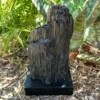


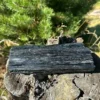
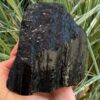
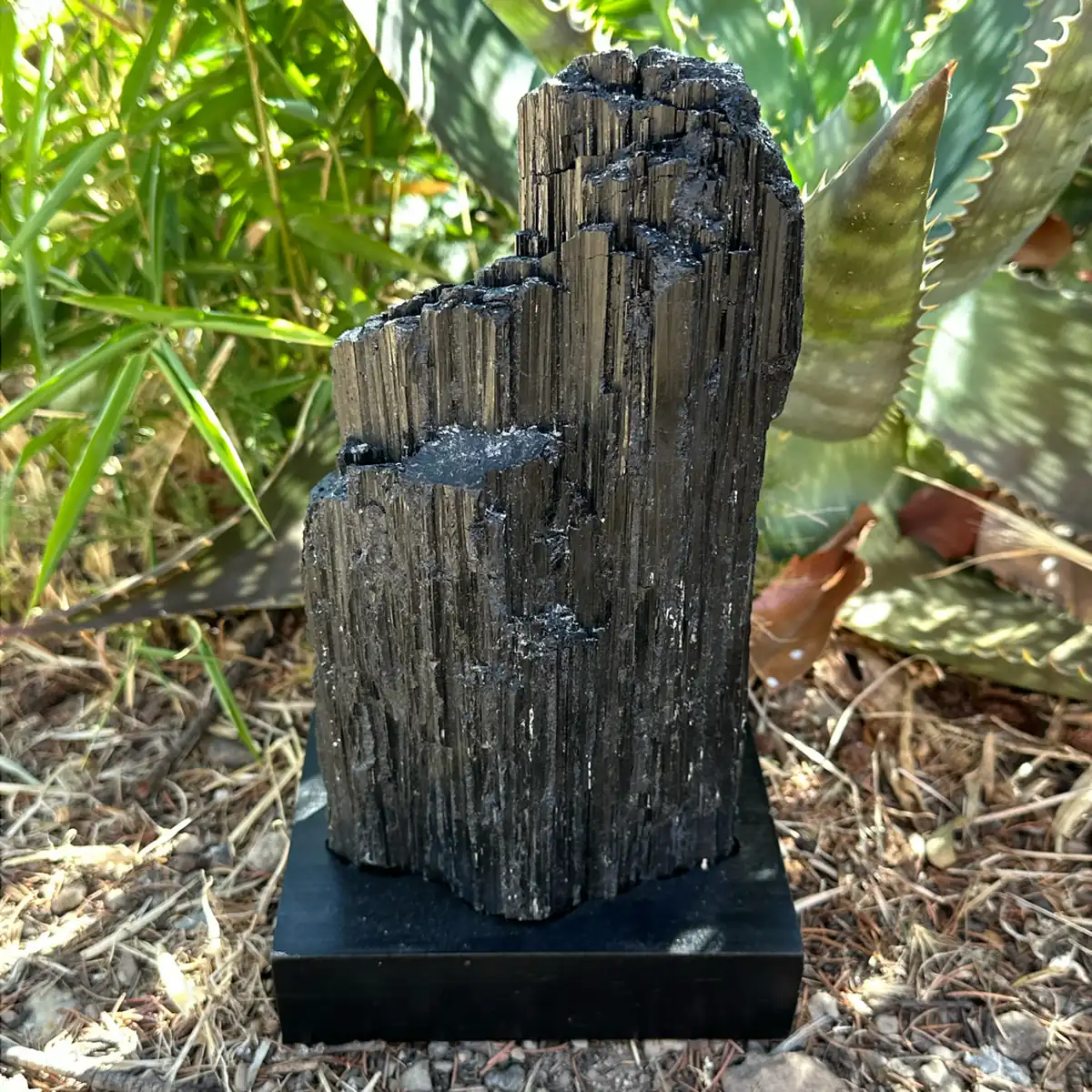
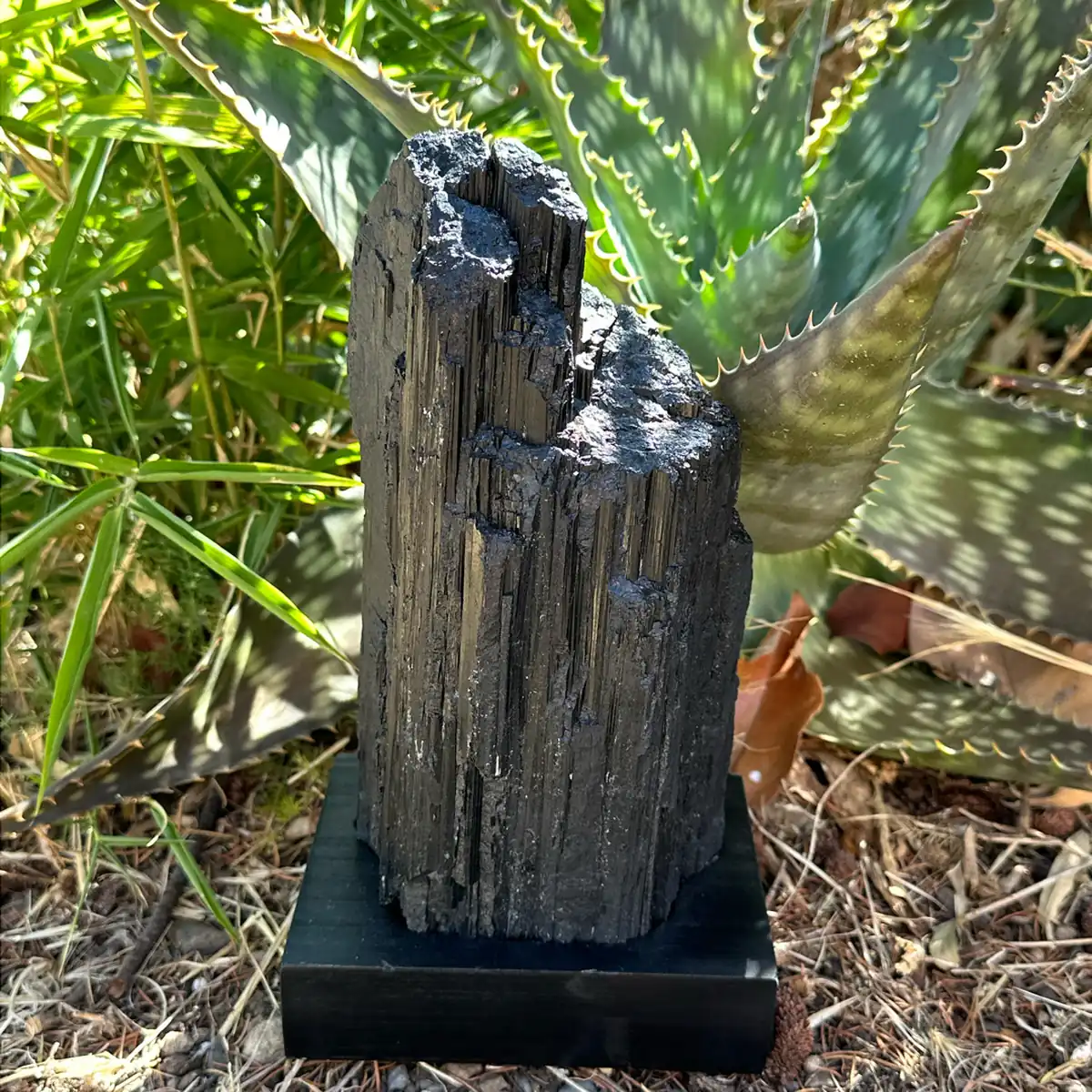
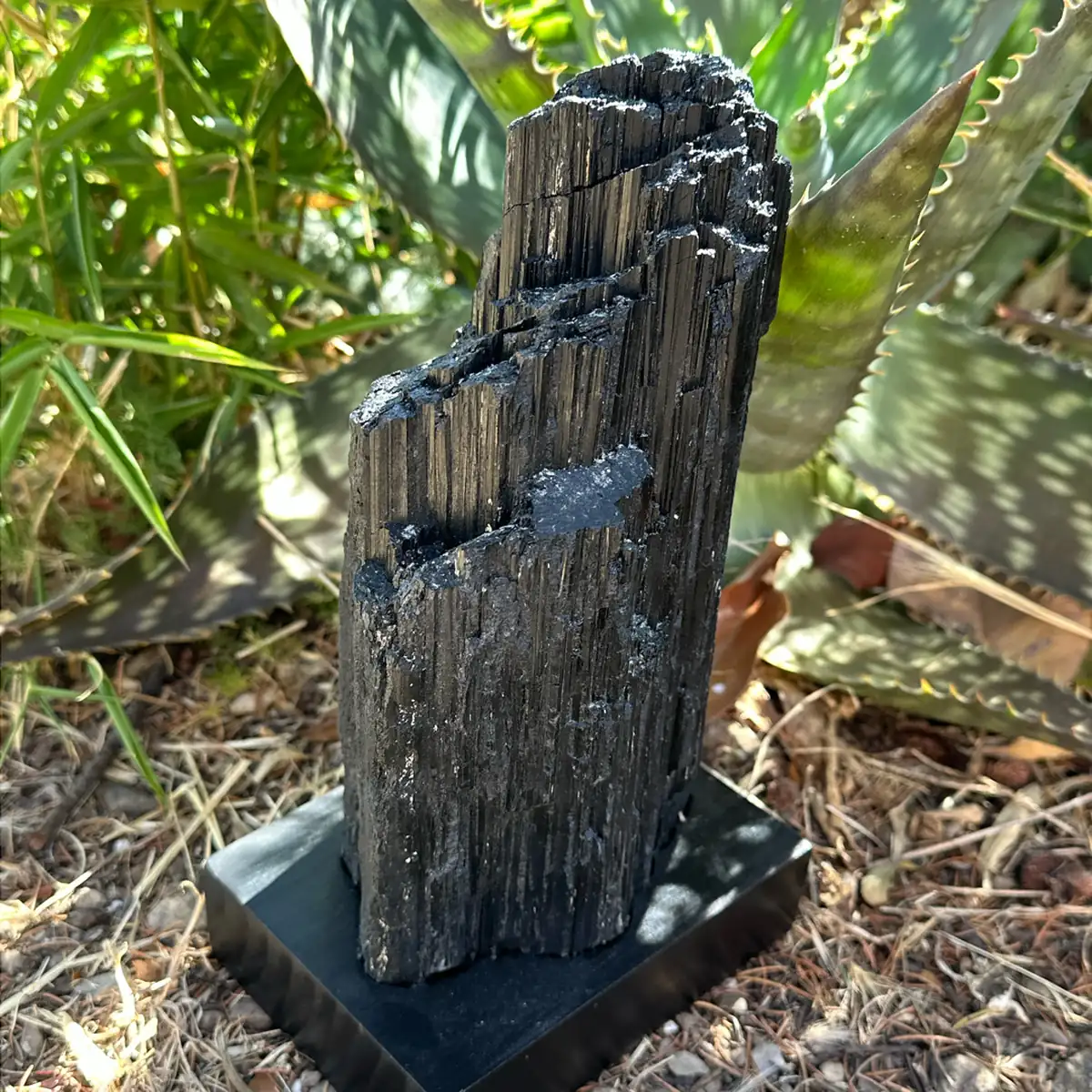
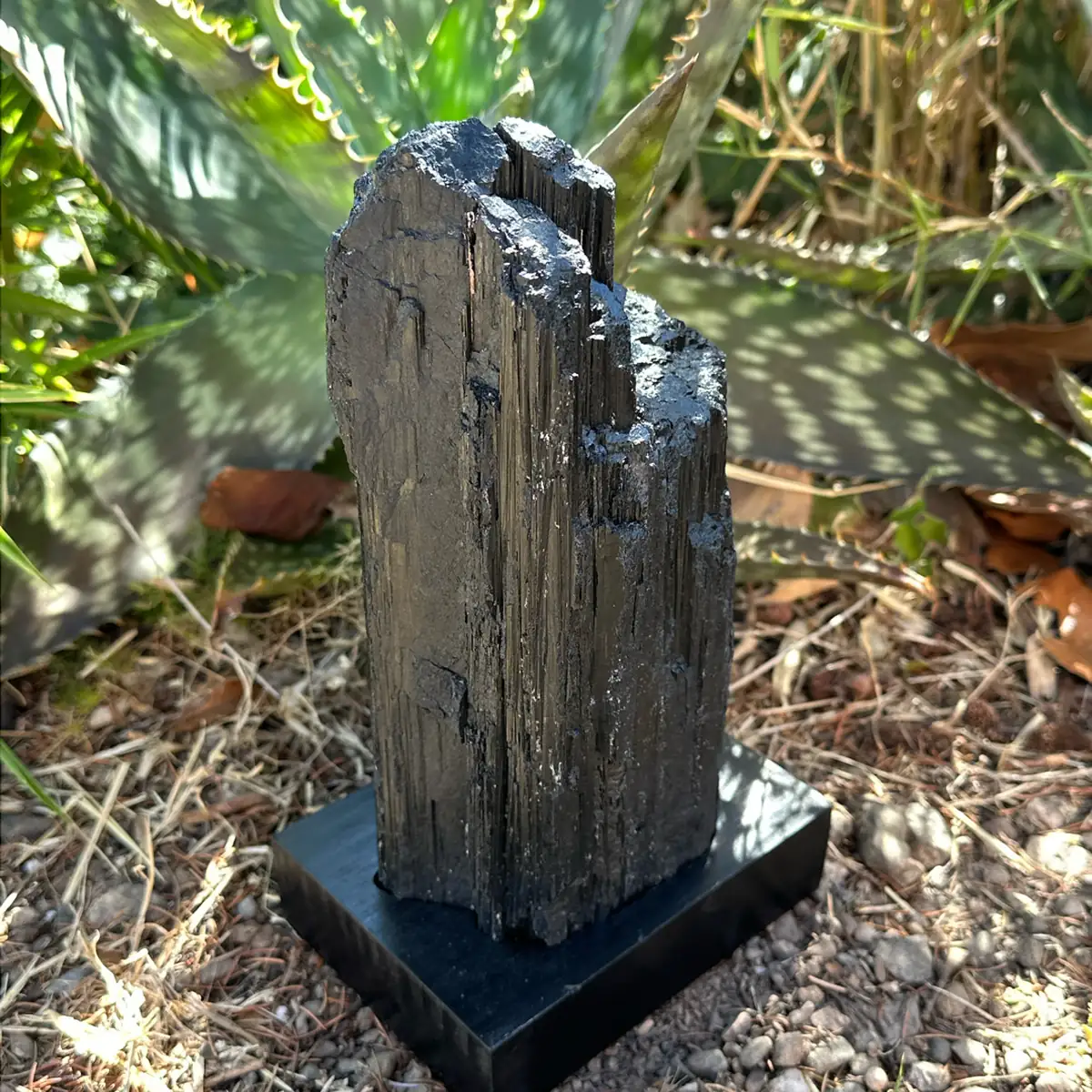
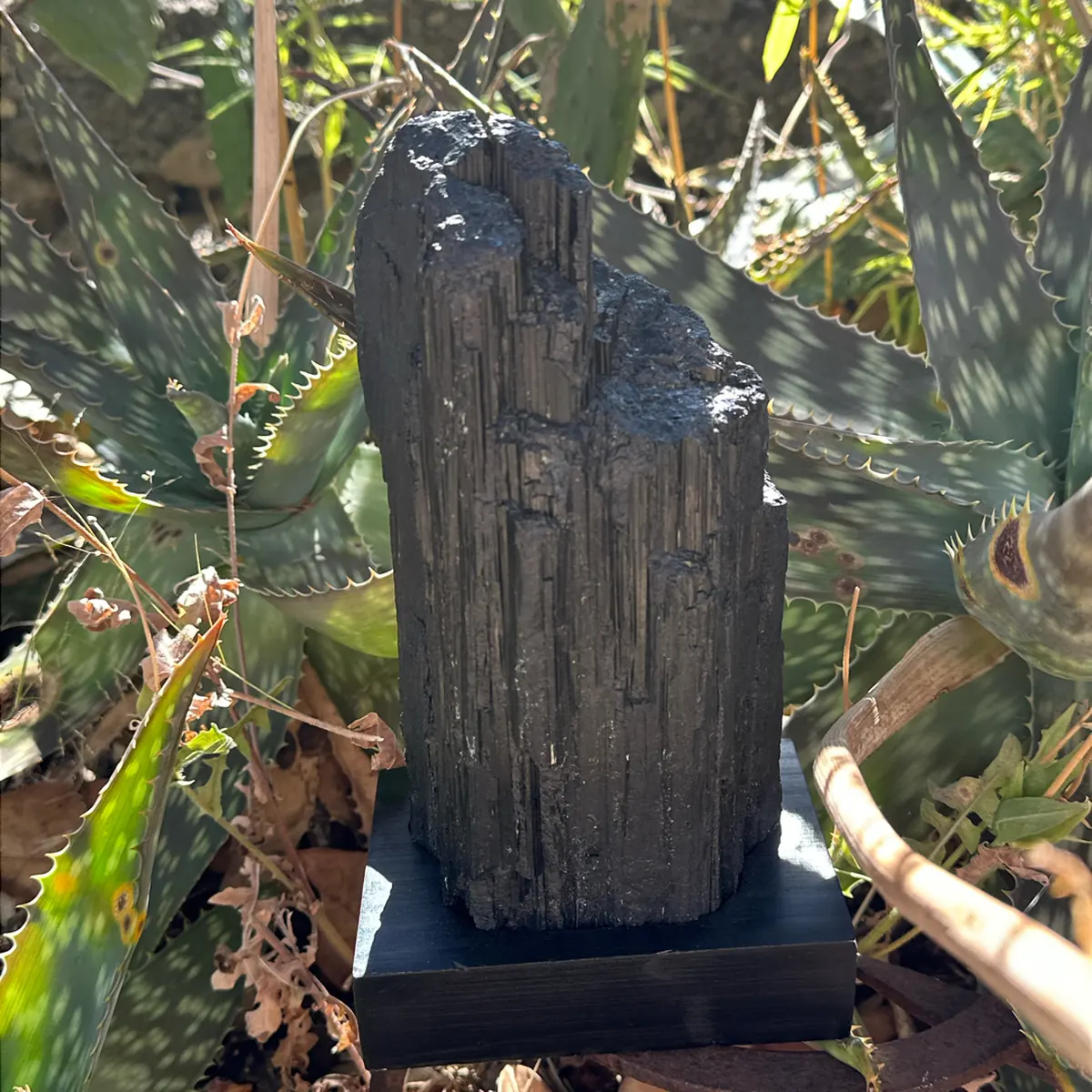
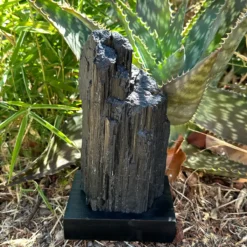
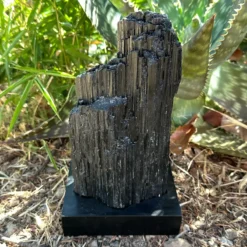
Large raw black tourmaline 3.6 kg
399,00 € incl. VAT
Large raw black tourmaline, 3.6 kg. A beautiful decor piece mounted on a base.
In stock
Stone(s): black tourmaline
Dimensions: 22 cm x 12 cm
Weight: approx. 3.6 kg
Color: black
Photos are contractual
Stone size: rough
Shape: freeform
Classification: silicate group
Mohs hardness: 7 – 7.5
Density: 3-3.10
Origin: Brazil, Sri Lanka, United States, Mexico
Care tips: Tourmaline isn’t fragile. No specific care required.
Large raw black tourmaline 3.6kg, in detail
Black tourmaline, or schorl, is a complex borosilicate of iron and aluminum from the tourmaline group. Its Mohs hardness is 7 to 7.5. Its crystals are typically elongated and striated lengthwise.
Quick fact sheet: 22cm x 12cm; weight approx. 3.6 kg; free form.
Find more items in the Rough stones category.
ORIGINS AND MINERALOGY
Tourmaline: origin, formation, and mineralogical properties
➤ Origin & formation of tourmaline
Tourmaline refers to a group of natural minerals belonging to the silicate family, specifically borosilicates. It is distinguished by a remarkable diversity of colors, ranging from deep black to emerald green, including blue, pink, red, yellow, and sometimes even colorless.
Some tourmalines display several colors within the same crystal, such as the famous watermelon tourmaline, recognizable by its pink heart surrounded by green.
Contrary to what one might think, tourmaline does not correspond to a single mineral species, but to a group of minerals sharing a common crystalline structure and presenting different chemical compositions.
Among the main species are:
- Schorl: generally black, rich in iron, it is one of the most widespread species of the tourmaline group.
- Elbaite: particularly appreciated in gemology for its great diversity of colors, notably pink, red, green, and blue varieties.
- Dravite: rich in magnesium, generally brown to dark brown, but can present other colorations.
- Liddicoatite: a species that can present particularly complex color zoning.
Tourmaline forms in several geological environments, notably within granitic pegmatites, magmatic rocks characterized by the presence of sometimes very developed crystals.
These pegmatites can be enriched in elements such as lithium, boron, manganese, or iron, which participate in the formation of different tourmaline species.
Some tourmalines also form in metamorphic rocks, notably schists and marbles, under the effect of mineralogical transformations related to temperature, pressure, and fluid circulation.
Tourmaline crystals often have an elongated prismatic shape, with characteristic longitudinal striations on their faces.
Why does tourmaline have so many colors?
The chromatic diversity of tourmaline is one of its most remarkable properties.
It is mainly explained by variations in the chemical composition of the mineral and the presence of certain elements in its crystalline structure.
- Iron: contributes notably to the black, blue, and green colors of many tourmalines.
- Manganese: involved in the pink and red shades of certain varieties.
- Chromium and vanadium: can produce particularly intense greens.
- Copper: associated notably with manganese, is responsible for the particularly vivid blue and green colors of Paraíba-type tourmalines.
Tourmaline can also exhibit an optical phenomenon called pleochroism, which corresponds to variations in color or color intensity depending on the orientation of the crystal relative to light.
Some stones thus possess different nuances when observed from several angles.
Another peculiarity: chemical conditions can evolve during the growth of a single crystal, leading to the formation of distinct color zones.
This is notably the case for watermelon tourmaline, whose pink and green colors correspond to different stages of crystallization.
This diversity explains the interest in tourmalines for collectors, gemologists, and jewelry designers.
The natural electrical properties of tourmaline
Tourmaline possesses two particularly interesting physical properties: pyroelectricity and piezoelectricity.
Pyroelectricity refers to the ability of a crystal to develop electrical charges on its surface when its temperature varies.
Piezoelectricity corresponds to the production of electrical charges under the effect of mechanical stress.
These properties are linked to the particular organization of tourmaline’s crystalline structure.
They attracted the attention of scientists as early as the 18th century, notably when observations showed that certain heated tourmalines could attract small light particles, such as dust or ash.
These phenomena constitute genuine physical properties, studied in crystallography.
It should be noted, however, that they do not demonstrate any ability of tourmaline to protect a person against radiation emitted by electrical devices.
Mineralogical characteristics
- Mineral family: silicates, cyclosilicates group
- Group: tourmaline
- Main species: schorl, elbaite, dravite, liddicoatite, uvite
- Chemical composition: complex borosilicates containing notably silicon, boron, and aluminum, associated with different elements depending on the species
- Crystal system: trigonal
- Hardness: 7 to 7.5 on the Mohs scale
- Density: generally between 2.9 and 3.3 depending on the species
- Luster: vitreous, sometimes resinous
- Transparency: transparent to opaque depending on the specimens
- Colors: black, green, blue, pink, red, yellow, brown, violet, colorless or multicolored
- Cleavage: absent or very indistinct
- Fracture: irregular to conchoidal
- Morphology: elongated prismatic crystals, generally longitudinally striated
- Special properties: pyroelectricity, piezoelectricity, and frequent pleochroism
With a hardness of 7 to 7.5 on the Mohs scale, tourmaline shows good scratch resistance, making it a popular stone in jewelry.
It nevertheless remains sensitive to significant shocks and sudden temperature variations.
Its aesthetic value depends notably on the intensity and homogeneity of its color, its transparency, the quality of its crystals, and their polishing.
Main tourmaline deposits
Tourmaline is present in many regions of the world, notably within granitic and metamorphic formations.
Among the best-known provenances are:
- Brazil: notably the State of Minas Gerais, renowned for its tourmalines of many colors. The State of Paraíba and that of Rio Grande do Norte are also famous for their copper-bearing tourmalines with particularly intense blue and green shades.
- Madagascar: an important source for pink, green, and multicolored tourmalines, sometimes associated with other minerals in pegmatites.
- Afghanistan: the Nuristan and Kunar regions contain pegmatites renowned for their tourmaline crystals, notably green, pink, and bicolor.
- Pakistan: certain regions in the north of the country produce collector tourmalines, sometimes in the form of well-developed crystals.
- Mozambique: an important producer of gem tourmalines, notably pink, green, and certain copper-bearing varieties.
- Namibia: the pegmatitic formations of the Erongo region are particularly known for their tourmalines, notably black schorls.
- United States: the states of Maine and California have historical deposits, renowned notably for their green, pink, and red tourmalines.
- Sri Lanka: an important historical source in the gem trade, closely linked to the origin of the name tourmaline.
The geological conditions specific to each deposit influence the chemical composition, color, size, and quality of the crystals.
Black tourmaline, rubellite, indicolite, and Paraíba: what are the differences?
The many names used in the tourmaline trade sometimes refer to mineral species, but most often to color varieties or trade names.
- Black tourmaline: generally consists of schorl, an iron-rich species, particularly widespread in granitic and metamorphic formations.
- Green tourmaline or verdelite: trade name used for green tourmalines, notably certain elbaites.
- Blue tourmaline or indicolite: refers to tourmalines presenting blue to blue-green shades.
- Pink tourmaline: mainly associated with elbaites, it presents nuances ranging from pale pink to deep pink.
- Rubellite: name used for certain intense pink to red or purplish-red tourmalines.
- Watermelon tourmaline: tourmaline presenting color zoning, generally pink in the center and green on its periphery.
- Yellow tourmaline: color variety that can present pale yellow, golden, or yellow-green nuances.
- Paraíba tourmaline: gemological and trade name referring to certain copper-bearing tourmalines with particularly vivid colors, mainly blue to green.
Paraíba tourmaline deserves special attention.
Discovered in northeastern Brazil in the late 1980s, it is distinguished by its colors sometimes described as “neon,” due notably to the presence of copper.
Tourmalines with comparable chemical and optical characteristics were later discovered in Nigeria and Mozambique.
Today, the Paraíba name can also be used in trade for certain copper-bearing tourmalines from these countries.
It is therefore important to distinguish the gemological name from the actual geographical origin, which sometimes requires specialized analysis.
Some tourmalines may also have undergone treatments, notably heat or irradiation, in order to modify or improve their color.
➤ Discovery & history through the ages
🌍 Stones known long before their mineralogical identification
Tourmalines have been used and appreciated for several centuries, long before their composition and properties were precisely identified.
Their great diversity of colors explains why they were long confused with other gems, notably rubies, emeralds, and sapphires.
In the 16th century, certain green stones discovered in Brazil were thus mistaken for emeralds, before being recognized later as tourmalines.
This historical confusion reflects the limits of identification methods at the time, which relied mainly on the appearance of the stones.
The name tourmaline finds its origin in the Sinhalese term toramalli or turmali, used in Sri Lanka to refer to stones of different natures, often marketed together.
This term is generally interpreted as meaning “mixed stones,” in reference to the diversity of gems present in the island’s alluvial deposits.
🏛️ 18th Century: The arrival of Ceylon tourmalines in Europe
At the beginning of the 18th century, trade between Asia and Europe helped make tourmalines known to European naturalists.
Around 1703, stones from Ceylon, modern-day Sri Lanka, were imported to the Netherlands through maritime trade.
Dutch lapidaries quickly noticed certain peculiarities of these gems, notably their ability to attract small particles after being heated.
This property earned them the nickname “ash-drawers” because they could attract light fragments of dust or ash.
During the 18th century, several European scholars became interested in this phenomenon.
In 1717, observations concerning the electrical properties of tourmaline were notably presented to the Royal Academy of Sciences in Paris.
Research conducted in the following decades contributed to advancing the understanding of its physical properties.
The study of tourmaline thus participated in the development of knowledge about electricity and the behavior of crystals.
👑 19th Century: California tourmalines and the Chinese imperial court
In the 19th century, discoveries of tourmaline deposits in North America helped develop its international trade.
The states of Maine and California, in the United States, gradually became important regions for the extraction of gem tourmalines.
In Southern California, notably in San Diego County, several deposits produced particularly appreciated pink and red tourmalines.
These stones met with notable success in China, where they were used for the creation of jewelry and ornamental objects.
Empress Dowager Cixi (1835-1908), a major figure of the Qing dynasty, was notably known for her interest in pink tourmalines.
Under her influence, large quantities of Californian tourmalines were exported to China in the late 19th and early 20th centuries.
Chinese artisans used these stones to make jewelry, sculptures, and small decorative objects, notably snuff bottles.
This period marks an important stage in the commercial history of tourmaline and in its spread among collectors and gem enthusiasts.
💎 20th Century: The development of Brazilian deposits
During the 20th century, Brazil became one of the main producers of gem-quality tourmalines.
The important pegmatitic formations of the State of Minas Gerais revealed a great diversity of crystals, with sometimes particularly intense colors.
The regions of Araçuaí, Governador Valadares, and their surroundings became famous for their green, blue, pink, and multicolored tourmalines.
The quality of certain crystals allowed for the development of significant stone cutting and marketing activity.
Progress in gemology simultaneously allowed for a better understanding of the relationships between the chemical composition of tourmalines and their different colors.
🔬 Late 20th Century: The exceptional discovery of Paraíba tourmalines
In the late 1980s, a major discovery disrupted the tourmaline market.
In the State of Paraíba, in northeastern Brazil, prospecting work led notably by Heitor Dimas Barbosa brought to light tourmalines presenting blue and green colors of exceptional intensity.
The first crystals were discovered in the late 1980s, before these stones were presented to the international market.
Their peculiarity lies in the presence of copper, associated notably with manganese, which helps produce their remarkably vivid colors.
These tourmalines quickly became highly sought after by collectors and jewelers.
Their rarity, the difficulty of obtaining large crystals, and the intensity of their colors explain their high value on the gem market.
Later discoveries in Nigeria and Mozambique also revealed copper-bearing tourmalines with comparable characteristics.
Today, Paraíba tourmalines are among the most sought-after colored gems.
More broadly, natural tourmaline remains appreciated for its great diversity of colors, its characteristic crystals, and its multiple uses in mineralogy, jewelry, and the creation of decorative objects.
➤ Maintenance of tourmaline: natural stones and jewelry
With a hardness of 7 to 7.5 on the Mohs scale, tourmaline shows good scratch resistance.
It remains, however, sensitive to significant shocks, especially when the crystals contain inclusions or natural fractures.
Proper maintenance helps preserve the quality of its polish, its color, and its luster.
Maintenance of crystals and polished minerals
To clean a raw or polished tourmaline, use a slightly damp soft cloth.
If necessary, a delicate cleaning with lukewarm water and a little mild soap can be performed, followed by a quick rinse and careful drying.
For raw crystals with many cracks or associated with other minerals, opt for gentle dusting.
Avoid harsh chemicals, ultrasonic and steam cleaning, as well as sudden temperature variations.
It is also not recommended to expose tourmalines to significant heat, which could cause damage or modify the color of certain specimens.
Maintenance of tourmaline jewelry
For tourmaline bracelets, necklaces, pendants, and rings, use a clean, soft, and slightly damp cloth.
Avoid prolonged immersion, especially when the jewelry contains elastic threads, fragile settings, or glued elements.
It is also advisable to limit contact with perfumes, cosmetics, and household products.
When you are not wearing your jewelry, store it preferably in a soft pouch or an individual case to avoid scratches and shocks.
➤ Well-being & energies: the symbolism of tourmalines
In contemporary lithotherapy traditions, tourmalines are associated with different symbolic interpretations according to their color.
Black tourmaline is mainly linked to protection and grounding, while colored tourmalines are more associated with communication, emotions, creativity, or inner balance.
⚫ Black tourmaline: protection and grounding
The black tourmaline, generally consisting of schorl, is traditionally considered a stone of protection.
In certain lithotherapy practices, it would symbolize:
- Protection: it would represent a shield against negative influences.
- Grounding: it would be associated with stability and a sense of security.
- Inner harmony: it is said to symbolize calm and self-control.
- Self-confidence: it would symbolically encourage assurance and determination.
It is mainly associated with the root chakra, traditionally linked to stability and grounding.
Some beliefs also attribute to it a symbolic protective value. This claim, however, is based on no scientific demonstration and should not be confused with its real physical properties of pyroelectricity and piezoelectricity.
🔵 Blue tourmaline: communication and intuition
The blue tourmaline, also called indicolite, is associated with communication, intuition, and personal expression.
It would symbolize clarity of mind, creativity, and openness to dialogue.
In energetic traditions, it is mainly connected to the throat and third eye chakras.
Paraíba-type tourmalines with blue nuances can be associated with the same symbolic interpretations, without a superior energetic intensity being scientifically established.
🟢 Green tourmaline: harmony and balance
The green tourmaline, or verdelite, is traditionally associated with harmony, nature, and renewal.
It would symbolize notably patience, compassion, and the search for inner balance.
It is generally connected to the heart chakra, symbolically associated with emotional relationships and openness to others.
🌸 Pink tourmaline: love and gentleness
The pink tourmaline is traditionally associated with love, tenderness, and self-acceptance.
It is said to symbolize softness, serenity, and inner harmony.
In lithotherapy practices, it is mainly connected to the heart chakra.
🍉 Watermelon tourmaline: balance and renewal
The watermelon tourmaline, recognizable by its pink and green colors, is symbolically associated with harmony between emotions and affective relationships.
It would represent balance, openness to others, and support during periods of change.
🟡 Yellow tourmaline: motivation and determination
The yellow tourmaline is traditionally associated with optimism, motivation, and personal confidence.
It would symbolize will, dynamism, and the ability to undertake new projects.
It is generally connected to the solar plexus chakra, associated with self-assertion.
🔴 Red tourmaline or rubellite: vitality and creativity
Rubellite, a name used for certain intense pink to red tourmalines, is symbolically associated with energy, creativity, and inner strength.
It would represent vitality, motivation, and the expression of emotions.
In certain traditions, it is connected to the sacral chakra, associated with creativity and personal drive.
Warning: the energetic properties mentioned are based on lithotherapy beliefs. They are not scientifically proven. Using minerals for well-being is not a medical treatment and cannot replace medical advice or follow-up.
Cleansing and recharging tourmaline in lithotherapy
In lithotherapy traditions, cleansing and recharging correspond to symbolic rituals, distinct from the physical maintenance of the mineral.
Purification:
Tourmaline can be symbolically cleansed by smudging with white sage or palo santo.
Burn a sage or palo santo stick, then gently pass your stone near the smoke, without exposing it directly to the flame.
Be sure to perform this operation in a well-ventilated room.
Recharging:
In lithotherapy practices, tourmaline is traditionally associated with sunlight or moonlight.
It is common to place it for a few hours in a bright spot, favoring gentle exposure and avoiding high heat and prolonged direct sun.
Other symbolic practices involve placing the stone:
- In a quartz geode
- On a quartz cluster
- On an amethyst druse
- On a selenite plate
These practices belong to lithotherapy traditions and do not modify the physical or chemical properties of the mineral.
Lithotherapy is based on tradition and does not replace medical advice.
Expédition : 48 à 72 heures, hors week-ends et jours fériés, après confirmation du paiement.
Livraison offerte dès 60 € en France métropolitaine.
Droit de rétractation : 14 jours pour nous signaler votre décision.
You may also like…


Exceptional Minerals


Mineral Points


Purification and recharging


Related products


Freeform Minerals
Minerals


Minerals


Geodes Druzy Clusters