

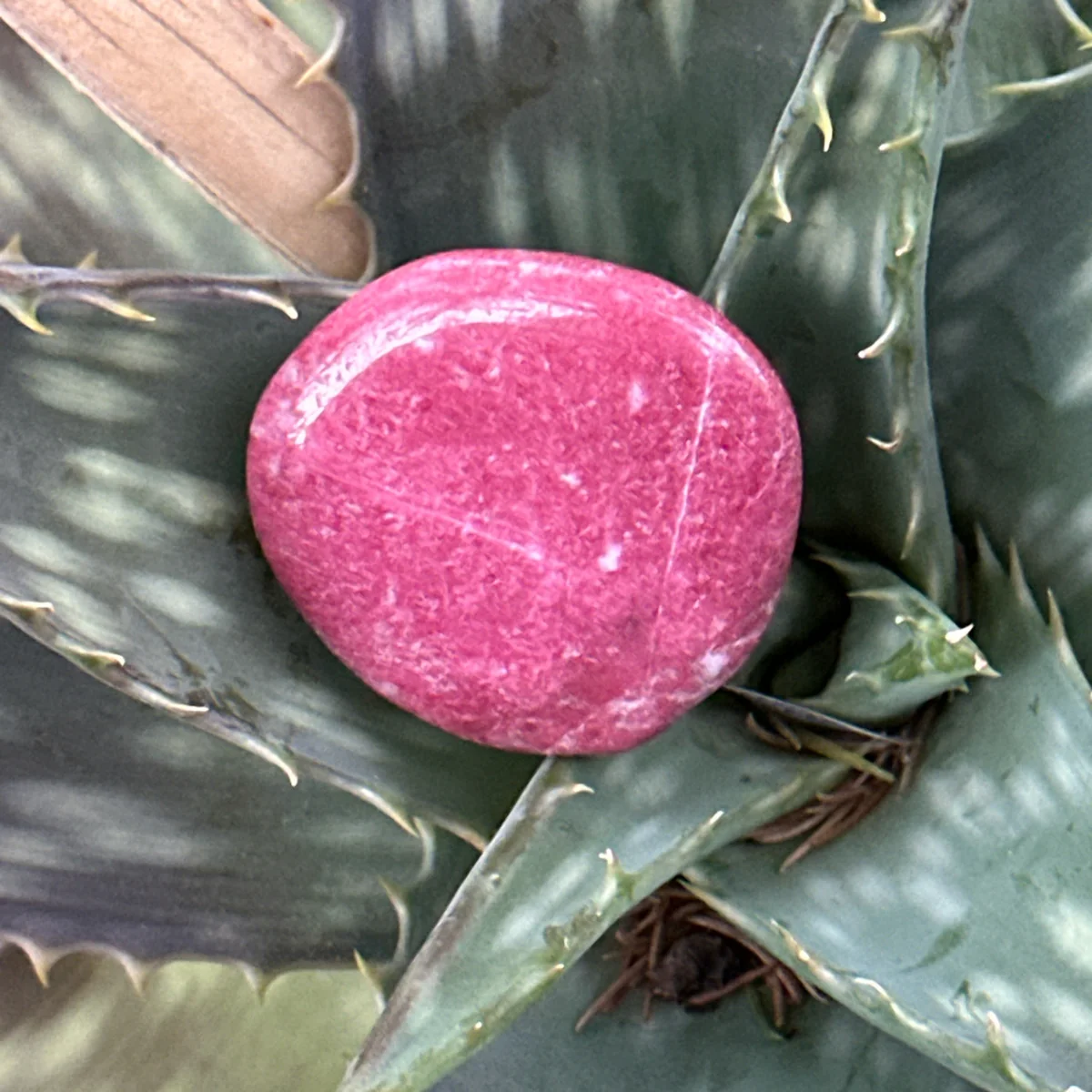
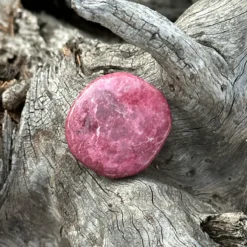
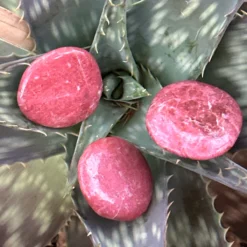
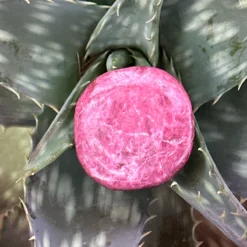
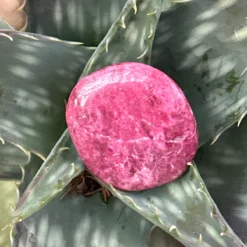
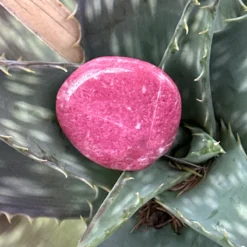
AA Grade Thulite Palm Stone
21,60 € incl. VAT
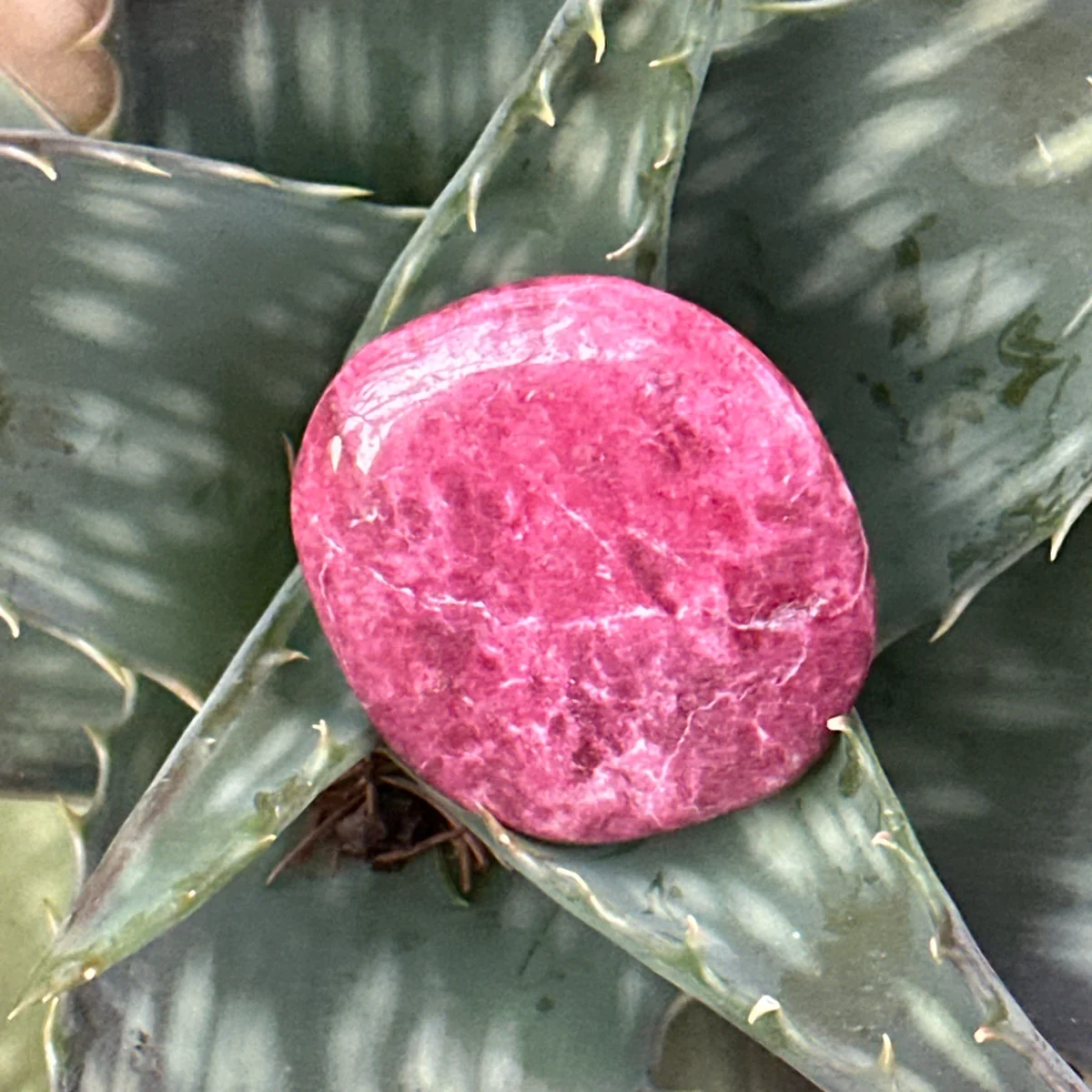
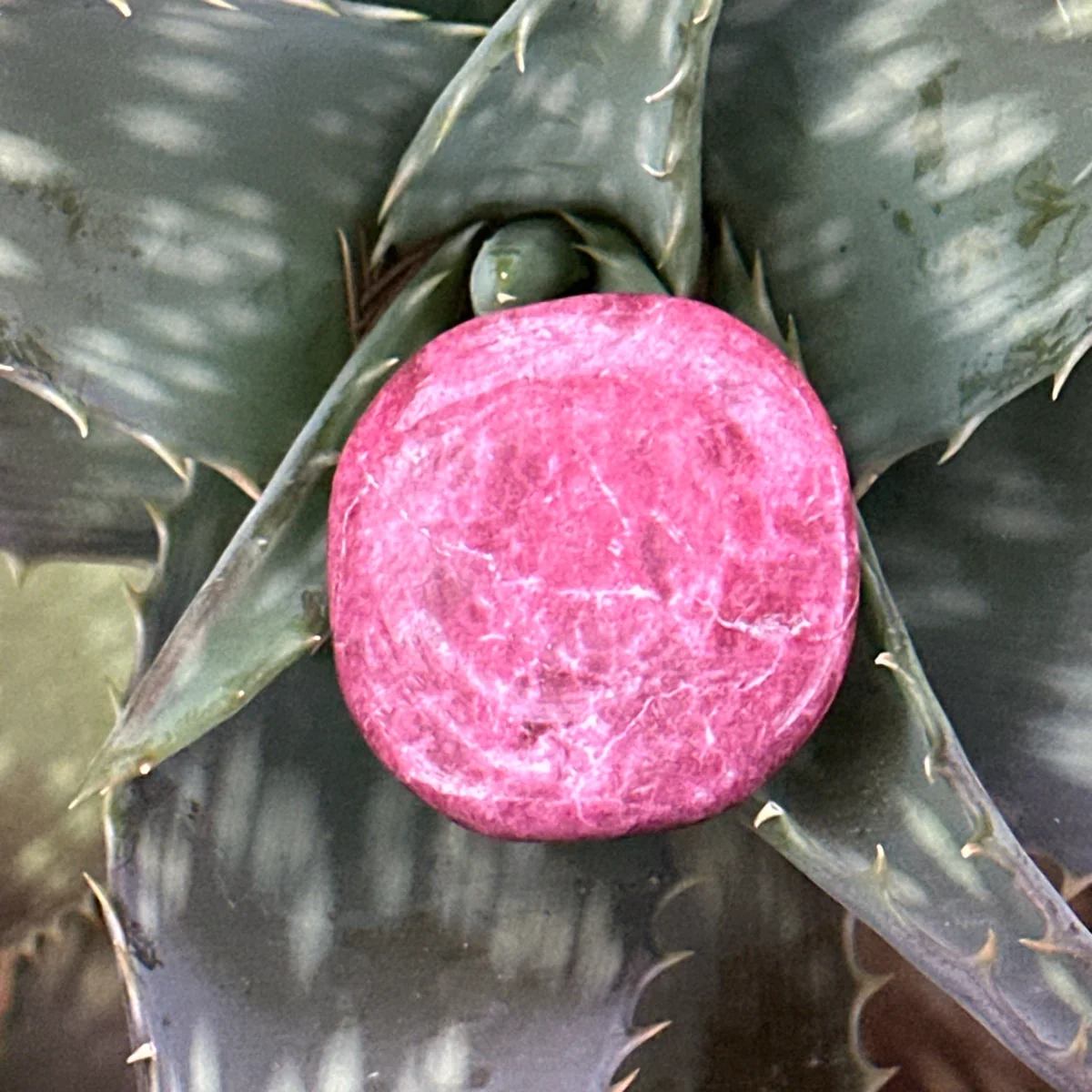
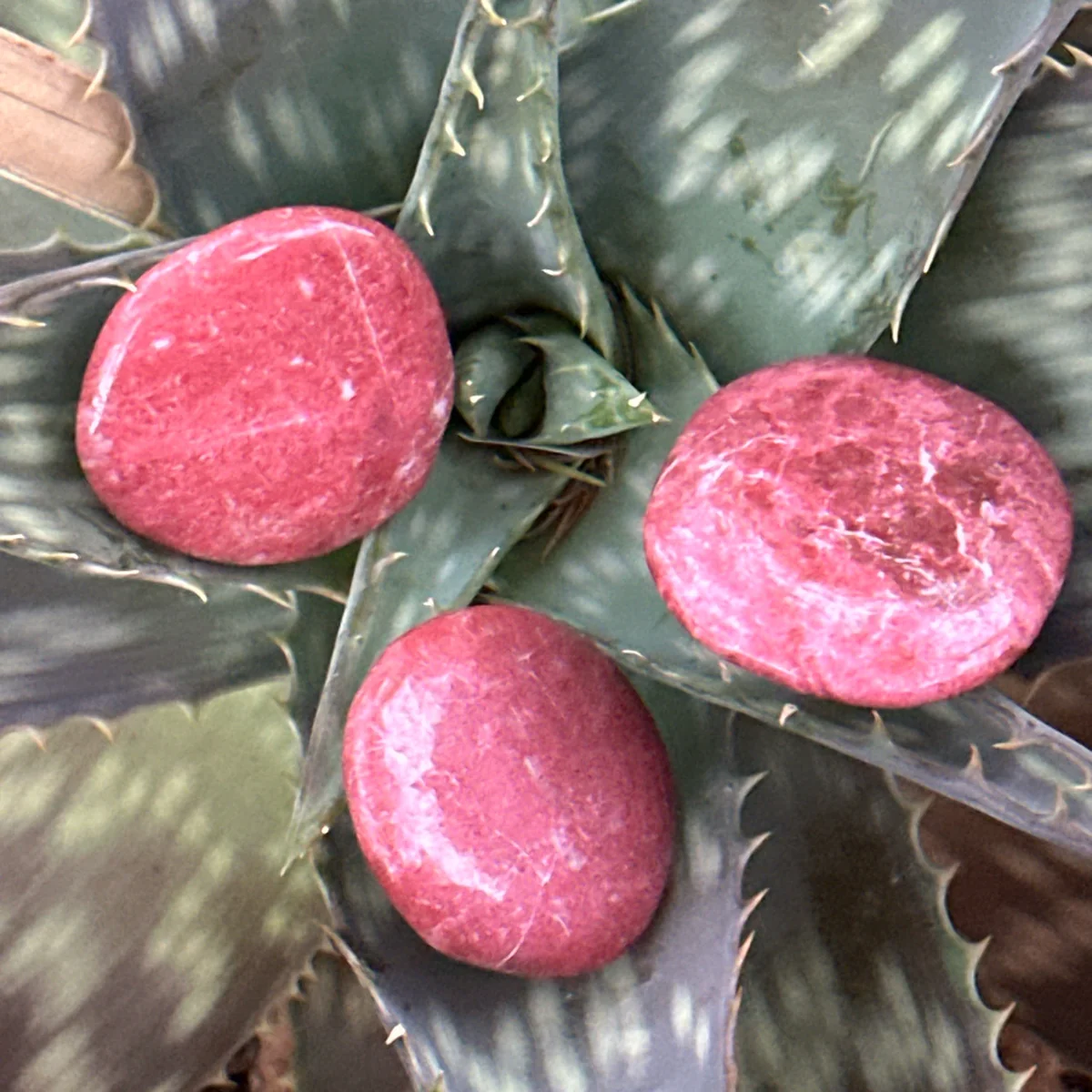
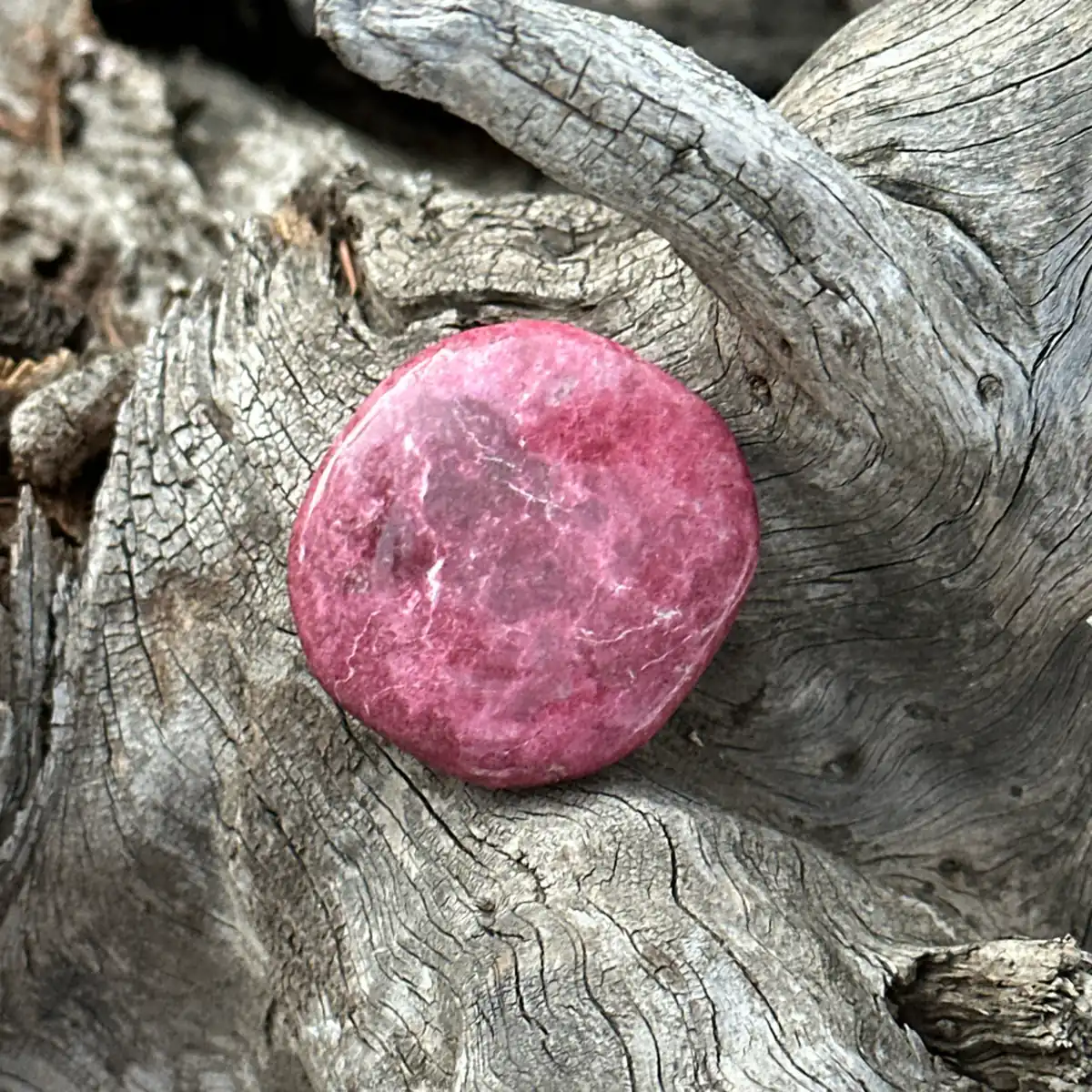
Premium quality 4 cm thulite palm stone. Its characteristic bright pink color is due to the presence of manganese.
In stock
Stone(s): thulite
Dimensions: 4 cm
Weight: approx. 25 to 30 g
Color: pink
Photos not contractual
Stone shape: round/oval
Classification: silicate group
Mohs hardness: 6–6.5
Density: 3.1–3.4
Origin: Norway
Care instructions: Avoid repeated exposure to soap/shower gel, cosmetic products (perfume, etc.), or household cleaners to preserve the stone’s color.
Thulite palm stone, in detail
Thulite is a pink variety of zoisite, a calcium aluminum silicate colored by manganese. Its hardness ranges from 6 to 6.5 on the Mohs scale.
Dimensions: 4 cm. Approximate weight: around 25 to 30 g.
Other similar items can be found in the Palm Stones category.
Origins and minéralogy
Thulite: Origin, Formation, and Mineralogical Properties
Origin and Formation
Thulite is a pink to rose-red variety of zoisite, a calcium aluminum silicate belonging to the sorosilicate group. It is distinguished by shades ranging from pale pink to deep rose, sometimes with purplish hues, as well as white, gray, or darker mottling.
Originating from the mountainous regions of Norway, where it was discovered in the early 19th century, thulite is highly prized for its coloration and natural patterns.
It generally occurs in massive form, with a compact structure that is opaque to slightly translucent. Well-formed individual crystals are much rarer.
How Does Thulite Form?
Thulite forms primarily in metamorphic environments, where pre-existing rocks undergo transformations caused by temperature, pressure, and fluid circulation.
It occurs particularly in rocks rich in calcium and aluminum, as well as in manganese-bearing geological formations.
During metamorphism, minerals present in the host rock can become unstable and react with one another. These transformations lead to the recrystallization of the components and, under favorable chemical conditions, the formation of manganese-bearing zoisite.
In some deposits, hydrothermal fluids take part in these transformations by transporting chemical elements through fractures and fault lines in the rock.
Thulite can thus develop in metamorphic rocks rich in calcium silicates, in certain gneisses, and in formations associated with hydrothermal circulation.
Formation conditions vary depending on the deposit. Some occurrences result from regional metamorphism, while others are linked to chemical alterations brought about by contact with fluids.
The Origin of Its Pink Color
Thulite’s distinctive color is mainly due to the presence of trivalent manganese (Mn³⁺) within the zoisite crystal lattice.
A small fraction of aluminum atoms can be substituted by manganese ions within the crystal framework.
This substitution alters light absorption properties, producing the characteristic pink to rose-red hues of thulite.
Color intensity depends primarily on manganese concentration, its distribution within the crystal, and the geological formation conditions.
Some specimens display a relatively uniform pink shade, while others exhibit mottled patterns or alternating light and dark zones.
These variations can also result from other minerals associated with zoisite.
Mottling and Mineral Associations
Thulite sold as palm stones, cabochons, or decorative items can contain several mineral constituents.
Common associations include:
- Quartz: which can form white or translucent areas.
- Calcite: present in certain calcium-rich formations.
- Clinozoisite: a mineral related to zoisite, with a different crystal structure.
- Piemontite: an epidote-group mineral rich in manganese that can display pink to purplish-red shades.
- Other silicates: whose presence depends on deposit-specific geological conditions.
The distribution of these different minerals accounts for the diverse patterns seen in polished stones.
Two stones from the same deposit can therefore display noticeably different shades and patterns.
Composition and Mineralogical Properties
Thulite belongs to the sorosilicate group and is a manganese-bearing variety of zoisite.
The chemical formula of zoisite is Ca₂Al₃(Si₂O₇)(SiO₄)O(OH).
In thulite, part of the aluminum is replaced by trivalent manganese, which can be expressed with the general formula:
Ca₂(Al,Mn³⁺)₃(Si₂O₇)(SiO₄)O(OH)
It is therefore not a distinct mineral species from zoisite, but a variety primarily defined by its coloration.
Main mineralogical properties
- Classification: Silicates, sorosilicate subclass
- Family: Zoisite, related to the epidote group
- Chemical composition: Calcium aluminum silicate containing manganese
- Chemical formula: Ca₂(Al,Mn³⁺)₃(Si₂O₇)(SiO₄)O(OH)
- Crystal system: Orthorhombic for zoisite
- Mohs hardness: 6 to 7
- Density: approx. 3.15 to 3.36
- Refractive index: Variable according to composition, generally around 1.69 to 1.72 for zoisite
- Luster: Vitreous to slightly pearly
- Transparency: Generally opaque to translucent
- Colors: Pale pink, deep pink, reddish-pink, sometimes purplish
- Cleavage: Perfect in one crystallographic direction
- Fracture: Irregular to conchoidal
- Morphology: Primarily massive, rarely as individual crystals
Crystal Structure and Characteristics
Zoisite belongs to the orthorhombic crystal system, characterized by three mutually perpendicular crystallographic axes of different lengths.
It features a complex structure combining silica tetrahedra with calcium- and aluminum-bearing groups.
Within this framework, subtle chemical substitutions can alter the mineral’s optical properties and coloration.
Thulite most commonly occurs as compact masses without distinct crystal faces.
Polished surfaces highlight its color variations and the mineral associations that create its patterns.
Thulite, Clinozoisite, and Piemontite: What Are the Differences?
Several related minerals can display pink or reddish hues, which sometimes leads to confusion in the gem trade.
Thulite traditionally refers to pink, manganese-bearing zoisite. Zoisite has an orthorhombic crystal structure.
Clinozoisite has a very similar chemical composition, but crystallizes in the monoclinic system. Some pink varieties are occasionally marketed as thulite or clinothulite.
Piemontite also belongs to the epidote group. It contains manganese and can show pink, red, or purplish shades.
These different minerals can occur together in the same host rock.
Precise distinction sometimes requires mineralogical analysis, notably X-ray diffraction.
Consequently, some stones sold as thulite actually consist of intergrowths of several pink minerals, particularly clinozoisite or piemontite.
Mineralogical analysis may therefore be necessary to confirm the exact nature of certain specimens.
Deposits
Thulite is primarily famous for its Norwegian deposits, though occurrences of pink manganese-bearing zoisite have also been identified in other parts of the world.
Norway – Telemark
Norway is the historic source of thulite.
The first documented locality is at Øvstebø, near Kleppan and Sauland, in the Telemark region of southern Norway.
There, thulite occurs in metamorphic formations and mineral associations rich in calcium, aluminum, and manganese.
Specimens range from light pink to deep reddish-pink, sometimes featuring white or gray patches.
The region is especially renowned for associations of thulite with minerals such as vesuvianite, grossular garnet, quartz, and calcite.
Other occurrences are known across several Norwegian regions, notably Trøndelag and Agder.
United States
Occurrences of thulite and pink zoisite are also recorded in the United States, particularly in North Carolina.
Specimens can be associated with metamorphic rocks and other calcium- and aluminum-rich minerals.
Some pieces show pink tones with pale mottling.
Australia
Australia also hosts occurrences of pink epidote-group minerals, some of which are identified as thulite or related zoisite varieties.
Notable localities include Western Australia and Tasmania.
The precise mineralogical composition may vary between deposits.
Other Origins
Materials marketed as thulite are also reported in Brazil, Namibia, and Portugal.
However, true pink manganese-bearing zoisite must be distinguished from other pink epidote-group minerals whose commercial labeling can sometimes be imprecise.
History and Uses
The Discovery of Thulite in Norway
Thulite was discovered in the early 19th century in the Telemark region of Norway.
In 1812, geologist and mineralogist Jens Esmark observed a pink stone from the Sauland area, considering it a potentially new mineral.
The find was not immediately documented in detailed scientific literature, however.
The name thulite appeared in mineralogical texts over the following years, notably in an 1817 publication.
The variety was subsequently described more extensively throughout the 19th century as understanding of zoisite and related minerals progressed.
Origin of the Name: Thule and the Northern Lands
The name thulite is traditionally linked to Thule, an ancient term used for a remote region at the northernmost reaches of the known world.
In the 4th century BCE, the Greek navigator and geographer Pytheas of Massalia reportedly described a northern European land called Thule during his travels.
The exact location of this land remains debated by historians.
Over the centuries, the name became a geographic and cultural symbol of Europe’s far north.
Another hypothesis traces thulite’s name to Thulemarchia, an old designation found on early maps of the Telemark region.
Both explanations highlight the historical connection between the mineral’s name and its Norwegian origins.
Thulite and Nordic Traditions
Thulite’s discovery in Norway’s mountain ranges accounts for its frequent association with Scandinavian history and landscapes.
Some modern accounts associate it with Viking lore, often portraying it as a stone of courage or protection.
However, no documented archaeological evidence confirms that Vikings specifically used thulite as an amulet.
A clear distinction should therefore be made between its Nordic geographic origin and more recent symbolic interpretations.
A Stone Prized for Its Colors
Thulite is primarily used as an ornamental material.
Its deep pink color and massive structure allow it to be fashioned into various shapes.
It is notably crafted into:
- Palm stones and polished pebbles.
- Cabochons for pendants and rings.
- Beads for bracelets and necklaces.
- Spheres and decorative objects.
- Small carvings and ornamental pieces.
- Specimens for mineral collections.
Stones showcasing intense pink coloration, balanced natural patterns, and a fine polish are particularly sought after.
Care Instructions
With a Mohs hardness between 6 and 7, thulite offers adequate durability for jewelry and ornamental use.
However, it remains susceptible to impacts and may possess fragile zones due to its cleavage planes and potential multi-mineral composition.
For routine maintenance, using a soft cloth—slightly damp if necessary—is recommended.
Occasional cleaning with lukewarm soapy water is suitable for appropriate pieces, followed by thorough drying.
Avoid harsh chemicals, abrasives, hard impacts, and sudden temperature shifts.
Ultrasonic and steam cleaning are discouraged as a precaution, especially for stones with fractures, inclusions, or complex mineral associations.
For polished palm stones, gentle wiping with a cloth is usually enough to maintain their luster.
Well-being and Energies
Properties Traditionally Attributed to Thulite
In crystal healing, thulite is primarily associated with self-love, compassion, confidence, and self-expression.
Its pink to rose-red hue is symbolically connected to the heart, emotional balance, and relational harmony.
In contemporary energetic practices, it is often linked to:
- Self-love: traditionally used to encourage self-acceptance and kindness toward oneself.
- Compassion: associated with empathy, attentive listening, and openness to others.
- Self-confidence: considered symbolic support for self-affirmation.
- Emotional expression: associated with the ability to communicate feelings honestly.
- Creativity: traditionally linked to inspiration and artistic expression.
- Motivation: linked to vitality, enthusiasm, and entrepreneurial spirit.
- Emotional balance: symbolically used to support inner peace and harmony.
- Personal renewal: associated with periods of change and personal growth.
Associated chakras
- Heart Chakra – ANAHATA: primarily associated with love, compassion, and emotional harmony.
- Throat Chakra – VISHUDDHA: secondary association related to expressing feelings and communication.
Associated Zodiac Signs
- Taurus
- Virgo
- Capricorn
These associations may vary across different crystal healing traditions.
Purification and recharging
Cleansing
In crystal healing, thulite can be symbolically cleansed through smudging with palo santo or white sage.
Simply pass the stone or jewelry gently through the smoke for a few moments, making sure to ventilate the room well.
This method avoids prolonged immersion, particularly for jewelry with stringing wire or metal elements.
Recharging
In contemporary energetic practices, thulite can be symbolically recharged under moonlight.
It can also be placed in a room bathed in gentle natural light, away from excessive heat and prolonged direct sun exposure.
Another common practice is placing it near a quartz geode or on a selenite plate.
The energetic properties mentioned stem from traditional and contemporary crystal healing practices. They are not scientifically proven and do not replace professional medical care.
Expédition : 48 à 72 heures, hors week-ends et jours fériés, après confirmation du paiement.
Livraison offerte dès 60 € en France métropolitaine.
Droit de rétractation : 14 jours pour nous signaler votre décision.
You may also like…


Massage Wands, Pebbles, and Sticks


Massage Wands, Pebbles, and Sticks


Purification and recharging


Related products


Massage Wands, Pebbles, and Sticks


Fluorescent Minerals


Minerals