

Minerals
WHEN STONES PLAY WITH LIGHT
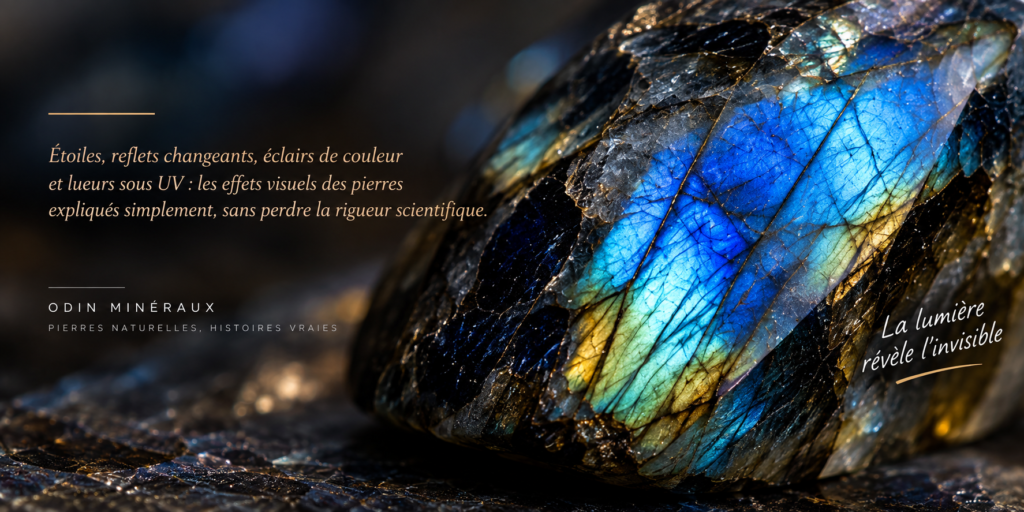
| Some stones don’t just have a beautiful color. They can seem to light up, change appearance, or reveal glowing patterns. These effects result from the interaction between light and matter: microscopic inclusions, internal structures, very thin layers, or elements capable of absorbing and then re-emitting energy. Here are the main phenomena that give stones their most fascinating plays of light. | “The same stone can tell different stories depending on the light that illuminates it.” |
the same stone can look very different depending on the angle, the cut, and the lighting.
Asterism
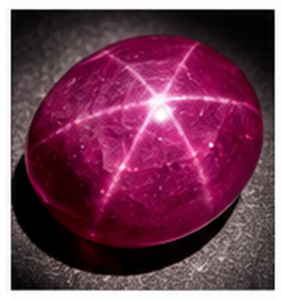
A star within the stone
In gemology, this is known as “asterism.” On certain rubies, sapphires, and other cabochon-cut stones, a bright star appears on the surface and moves along with the light source.
The effect comes from very fine inclusions or structures oriented along several directions. They reflect light in bands; where these bands cross, they form a star with four, six, or sometimes more points.
The cabochon cut is essential: its rounded surface visually gathers the reflections.
Chatoyancy
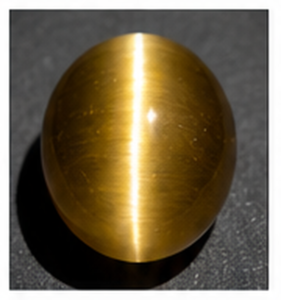
An eye that follows the light
Chatoyancy produces a narrow band of light that crosses the stone. As you move the stone, the band seems to shift like a vertical pupil — hence the name “cat’s eye.”
Discover our selection of cat’s eye bracelets.
Chatoyancy appears when inclusions, fibers, channels, or other very fine structures are arranged in a roughly parallel way. The reflected light then concentrates into a single bright line.
Cat’s eye chrysoberyl is the classic example; tiger’s eye also shows very visible chatoyancy.
Iridescence
Colors that shift with the angle
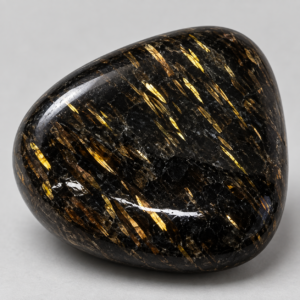
Iridescence occurs when shifting colors appear depending on the viewing or lighting angle: blue, green, purple, copper, or yellow can appear and then disappear as the stone is tilted.
The term describes a general effect, not a single mechanism. Often, light interacts with extremely fine structures: certain wavelengths are strengthened while others are weakened through interference, sometimes with a contribution from diffraction.
Nuummite can display beautiful iridescent reflections, often golden or blue, linked to the very fine arrangement of its amphiboles.
Labradorescence
The flash of labradorite
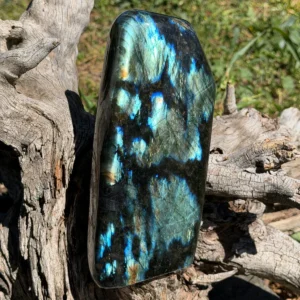
Labradorescence is the signature effect of certain labradorites. A gray or dark stone can suddenly reveal a broad flash of blue, green, yellow, or orange when turned.
The phenomenon comes from very fine internal structures within the feldspar, resulting from microscopic variations in composition. Light interferes selectively there: certain colors only become visible when the orientation is favorable.
The cut and orientation of the stone are therefore essential.
Discover our selection of polished labradorites.
Adularescence
A glow that seems to float
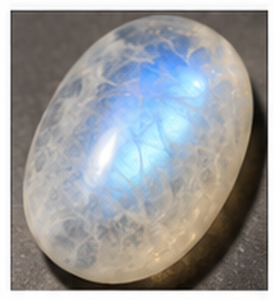
Adularescence is mainly associated with moonstone. Instead of a sharp flash, you see a soft, whitish or bluish glow that seems to float just beneath the surface.
It results from light interacting with very thin layers of feldspar with different compositions. Light is scattered and interferes within this internal structure, creating the impression of a moving halo.
The effect is softer and hazier than labradorescence, even though both involve feldspars.
Aventurescence
Sparkles within the stone
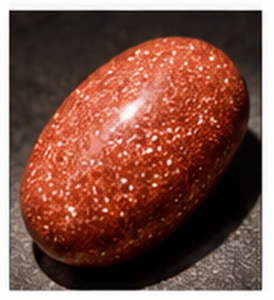
With aventurescence, the stone sparkles thanks to countless reflective inclusions. The effect looks like tiny glints rather than a continuous color change.
These inclusions can be minerals in thin flakes or small crystals. In certain quartz aventurines, for example, inclusions of mica or other minerals create these sparkling glints.
Each inclusion acts like a tiny mirror.
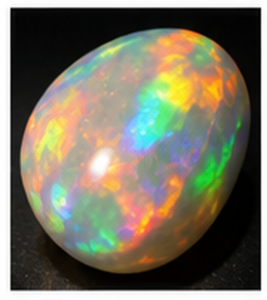
Opal’s play-of-color
A mosaic that shifts
Some opals show patches of red, green, blue, or orange that shift position as the stone turns. This phenomenon has a precise name: “play-of-color.”
In precious opal, tiny silica spheres can be arranged regularly enough to diffract light. Depending on their size, spacing, and the viewing angle, different wavelengths become visible.
Not all opals show this effect. “Play-of-color” doesn’t simply mean “opalescence.” In gemology, opalescence refers to a milky or slightly hazy look produced by light scattering, while play-of-color refers to the appearance of spectral colors that shift with the viewing angle.
Check out our opal jewelry and watch these plays of color from different angles.
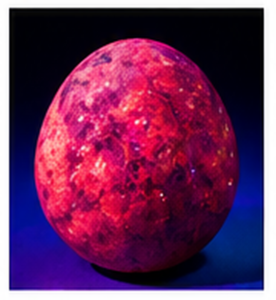
Fluorescence
A different look under UV
Fluorescence technically falls under luminescence, but its effect is so striking that it deserves a place here. Some minerals absorb ultraviolet energy and then re-emit part of it as visible light.
The reaction depends on composition, trace elements present, and defects in the crystal lattice. Two samples of the same mineral can therefore react differently.
Tugtupite and certain sodalites from Greenland are remarkable examples.
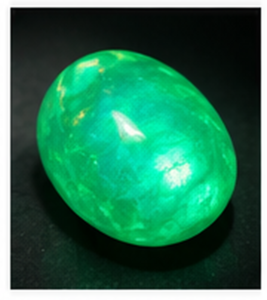
Phosphorescence
When the glow lingers
Phosphorescence is similar to fluorescence, but the light doesn’t fade immediately once the light or UV source is removed: the material keeps glowing for a while.
Part of the absorbed energy remains temporarily trapped within the structure before being released gradually. The duration can be very brief or much longer, depending on the material.
So not all fluorescent stones are phosphorescent.
Same family of effects, different mechanisms
| Star or band of light | Asterism and chatoyancy: oriented inclusions or structures organize the light. |
| Colors that shift with the angle | Iridescence, labradorescence, and play-of-color: microscopic structures select or diffract certain wavelengths. |
| Diffuse glow | Adularescence: scattering and interference within fine internal feldspar structures. |
| Emission under or after UV | Fluorescence and phosphorescence: the material absorbs energy and then re-emits it as visible light. |
Light, a source of wonder
These effects aren’t illusions: they’re the result of very real physical phenomena. They remind us that every stone is unique, and that its beauty depends not only on its color, but also on how it interacts with light.
Observing a stone also means watching light in action.
Looking at a stone differently
A stone isn’t just about its color. Its internal texture, inclusions, crystal arrangement, and sometimes a few trace elements can profoundly transform its relationship with light.
To observe these effects, you don’t need a lab: a point light source, slowly turning the stone, and a bit of patience are often enough. If a star, a blue flash, or a lingering glow appears, it’s not magic — it’s physics at the mineral scale.
The little observation kit
- A small white point-source light:
it shows stars, chatoyant lines, and labradorescence flashes better than very diffuse lighting. - A dark background and slow movement:
instead of shaking the stone, turn it gradually to find the angle where the effect appears. - A simple magnifying glass:
it helps you tell sparkling inclusions apart from a genuine background color. - For fluorescence:
a UV lamp designed for mineralogical observation can be helpful. Never point ultraviolet light toward your eyes or skin.
Note on the illustrations. Some of the visuals were generated by AI to illustrate the phenomena described.