

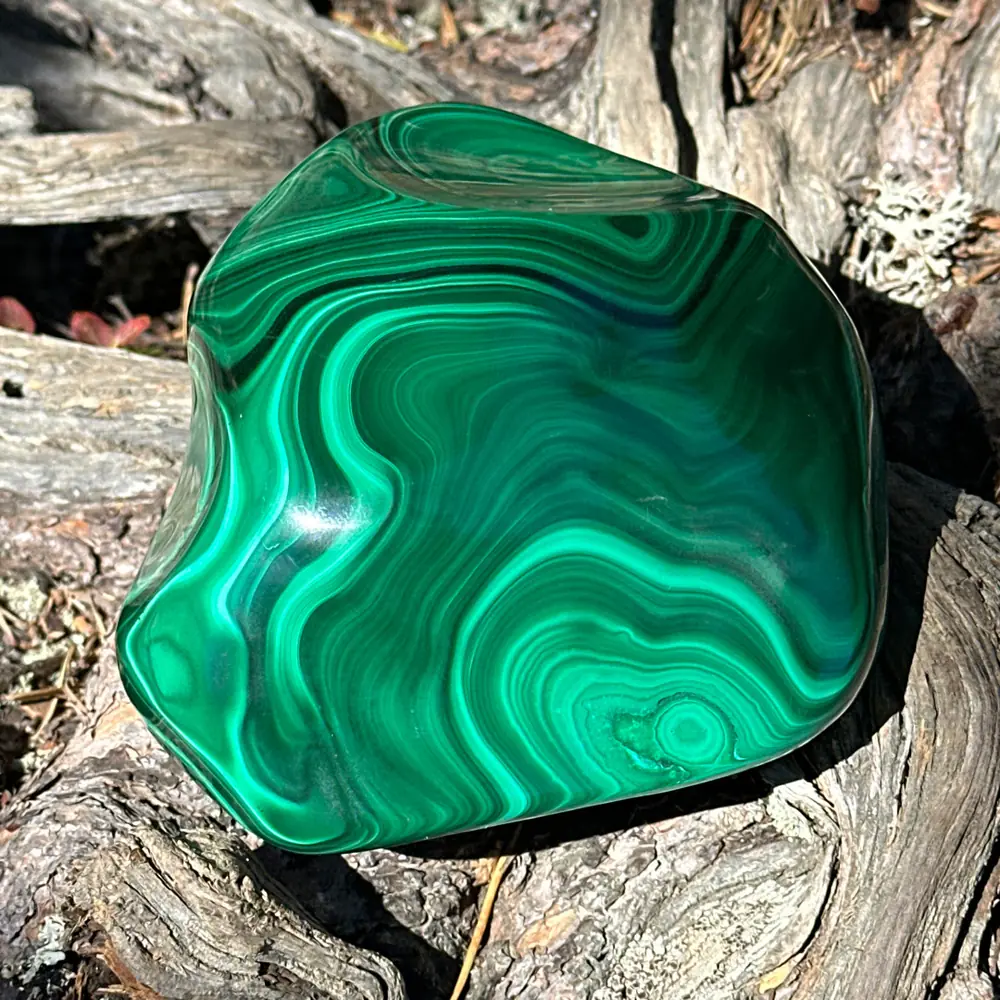
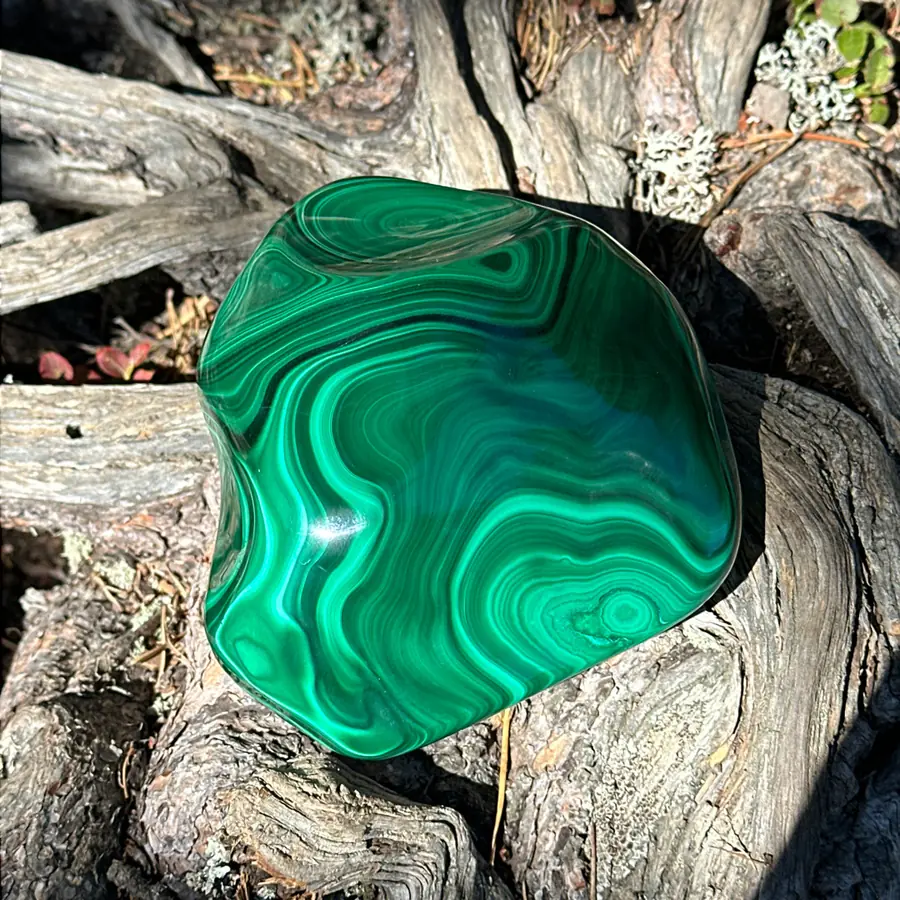
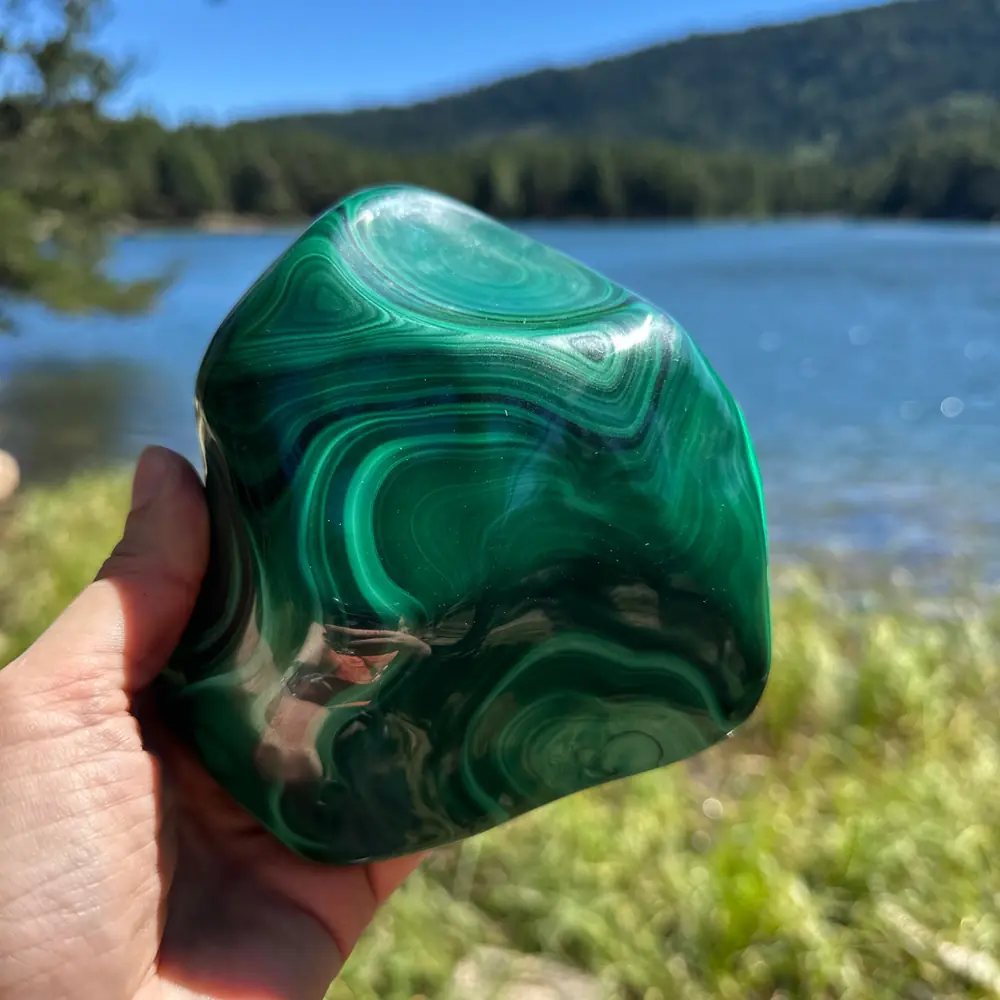
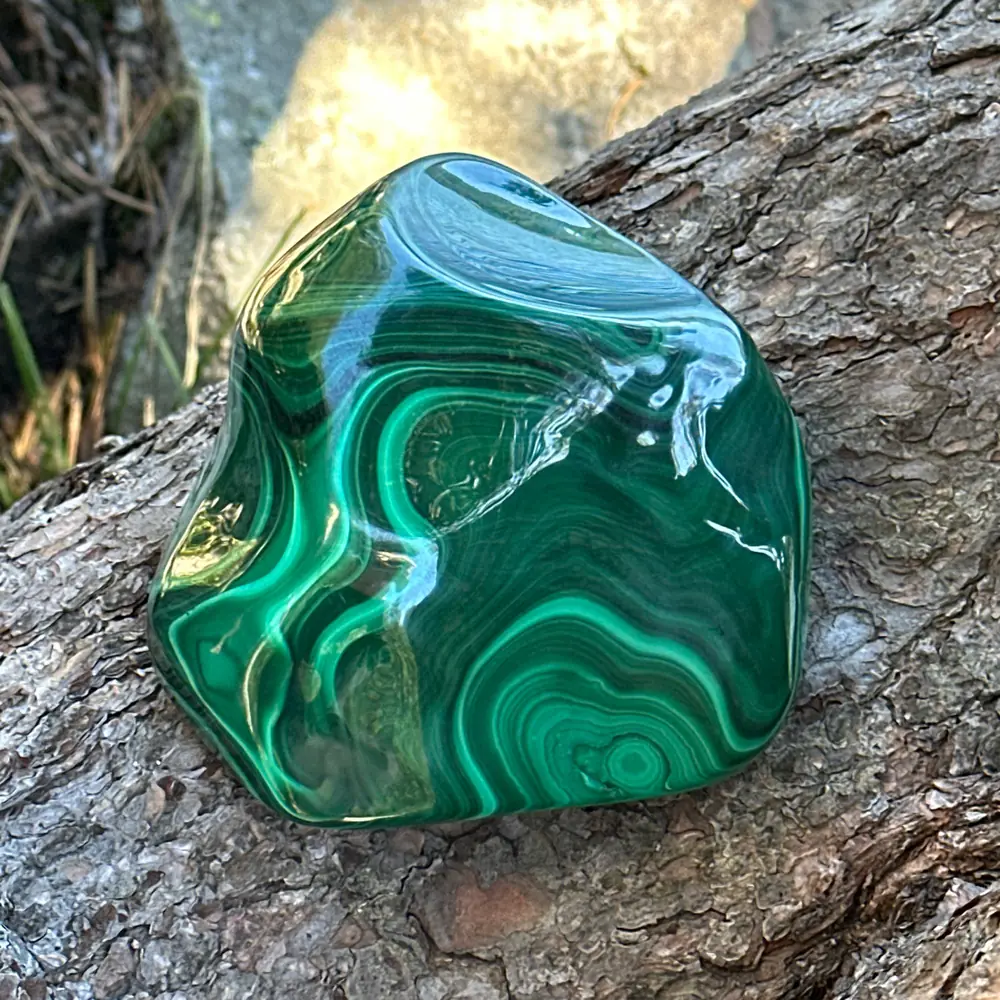
Polished Malachite 2 kg – AA grading
480,00 € incl. VAT
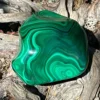
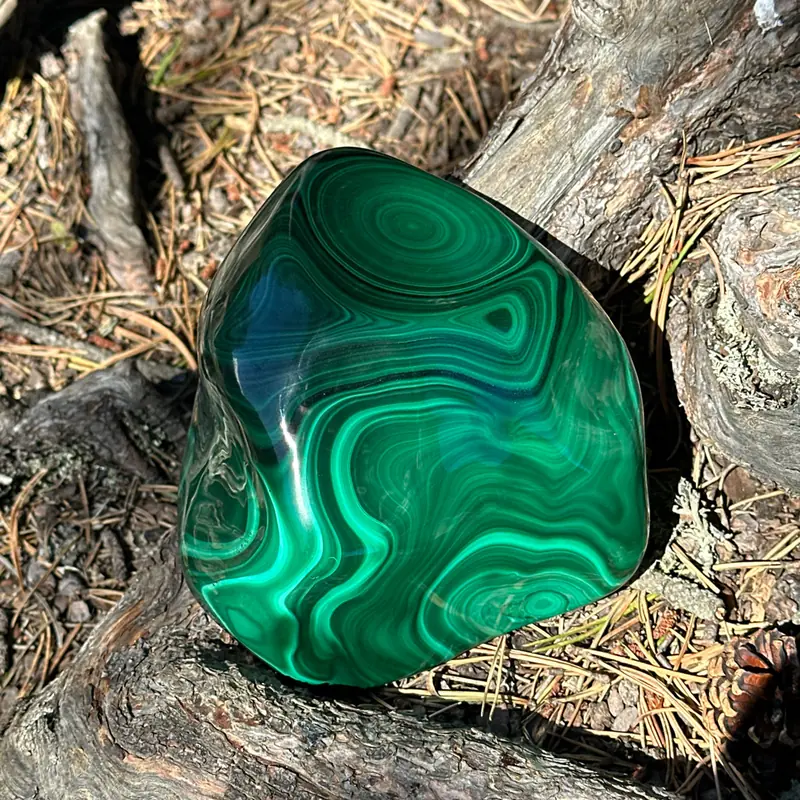
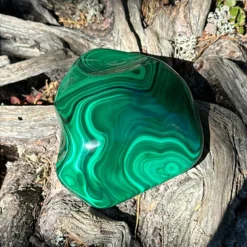
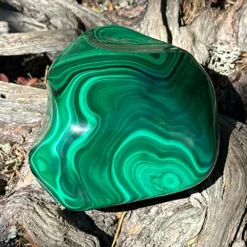
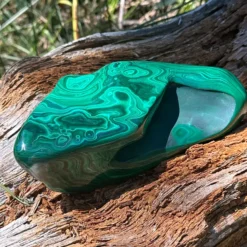
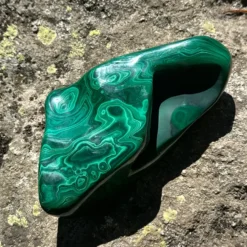
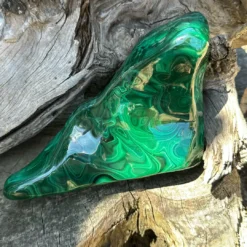
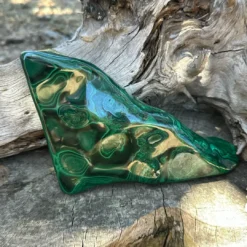
Magnificent 2 kg free-form polished malachite, superior AA grading.
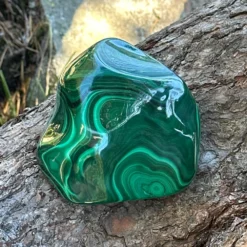
This collector’s piece stands out for its beautiful polish, deep green hues, and stunning natural concentric patterns.
In stock
Stone(s): malachite
Color: green
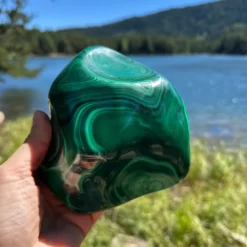
Dimensions: 14 cm x 12 cm x 6 cm
Approximate Weight: 2 kg
Number of stones: sold individually
Shape: freeform
Photos are for illustration purposes only. The piece shown in the photo is the exact piece shipped.
Classification: carbonate group
Mohs hardness: 3.5-4
Density: 3.6-4.05
Origin: Democratic Republic of the Congo, Australia, Brazil, USA, Russia, Mexico
Care instructions: Malachite is fragile; do not bring the stone into contact with abrasive elements that could scratch it. Avoid prolonged exposure to sunlight or heat. Since malachite is composed of copper carbonate hydroxide, avoid all contact with water. If the stone comes into contact with water, it is highly likely to tarnish and irremediably lose all its luster.
Polished Malachite 2 KG – AA quality: mineralogical details
Malachite is a basic copper carbonate (Cu2CO3(OH)2), recognizable by its concentric green bands. Its Mohs hardness is 3.5 to 4, so it’s soft. It reacts to acids.
Freeform: 14 cm x 12 cm x 6 cm, weight 2 kg.
This piece is categorized under Free forms.
ORIGINS AND MINERALOGY
Malachite: origin, formation, and history
A stone with stunning shades of green
Malachite is a natural mineral from the carbonate family, recognizable by its sumptuous shades of green, from bright emerald green to deep green.
Its concentric patterns, circles, and wavy bands are its natural signature. Beautifully enhanced by polishing, these designs make each piece a one-of-a-kind creation of nature, highly sought after by collectors and mineral lovers.
Malachite composition and formation
Malachite is a natural basic copper carbonate, with the chemical formula Cu₂CO₃(OH)₂.
It forms mainly in the oxidation zones of copper deposits, near the Earth’s surface.
The alteration of copper-bearing minerals and the circulation of water rich in dissolved elements encourage the gradual formation of malachite in cracks and cavities in rocks.
Over time, successive mineral deposits create the beautiful concentric bands and color variations characteristic of this stone.
Malachite is often associated with other copper minerals, including azurite, recognizable by its intense blue color.
Main malachite deposits
Malachite is found in many regions around the world with copper deposits.
Some of the best-known localities include:
- Democratic Republic of the Congo – Katanga: a region known for its large masses of malachite with superb concentric designs, especially prized for carving and decorative objects.
- Russia – Ural Mountains: a historic region famous for malachite used in art objects.
- Namibia – Tsumeb: a deposit known for the diversity of its copper minerals.
- United States – Arizona: a region with many malachite occurrences.
- France: notably the Cap Garonne mine, in the Var.
Malachite through history
In Ancient Egypt
The use of malachite goes back several millennia.
In Ancient Egypt, it was notably used as a green pigment, including in certain cosmetic preparations for eye makeup.
Its intense color and beauty also made it a popular stone in decorative arts.
Over the centuries, malachite has been surrounded by many symbolic beliefs linked to protection, renewal, and transformation.
Malachite in art and painting
Malachite was long used as a green mineral pigment, obtained by grinding the stone.
You can find its use in European painting, especially during the Renaissance. The painter Raphael used this pigment in some of his works, including The Madonna of the Pinks.
Beyond painting, artisans also used malachite to create jewelry, ornamental objects, and sculptures.
Malachite at the Palace of Versailles
Malachite holds a special place in French history.
Following the Treaty of Tilsit, signed in 1807, Tsar Alexander I of Russia offered Napoleon I several malachite art objects.
These prestigious gifts included column elements, a basin, and tabletop trays.
Napoleon had these objects incorporated into sumptuous furnishings.
Today, this set can be seen in the Malachite Room of the Grand Trianon, at the Palace of Versailles, which owes its name to these remarkable works of art.
Malachite and the Russian tsars
In the 19th century, malachite enjoyed a true golden age in Russian decorative arts.
The major resources of the Ural Mountains made it possible to create monumental pieces for palaces and prestigious buildings.
In Saint Petersburg, Saint Isaac’s Cathedral has eight impressive columns clad in malachite.
The Winter Palace, which now houses part of the Hermitage Museum, also has a famous Malachite Room, a testament to the refinement of Russian imperial decor.
Mineralogical characteristics
Malachite has a hardness of 3.5 to 4 on the Mohs scale. So it’s a relatively soft stone that needs a few precautions to preserve its polish.
Its main characteristics are:
- Family: carbonates
- Chemical composition: Cu₂CO₃(OH)₂
- Color: different shades of green, from light green to deep green
- Hardness: 3.5 to 4 on the Mohs scale
- Features: concentric patterns, wavy bands, and natural designs
Symbolism, energies, and well-being
In lithotherapy, malachite is considered a stone of transformation, protection, and harmony.
It’s symbolically associated with change, expressing feelings, and building self-confidence.
According to these beliefs, malachite is said to support transition periods and encourage decision-making.
It’s traditionally attributed several meanings:
- Protection: it’s said to symbolize protection against negative influences.
- Transformation: it’s said to support change and new beginnings.
- Self-confidence: it’s said to be associated with self-assertion and confidence.
- Emotional harmony: it’s said to represent balance and the expression of feelings.
- Love: it’s traditionally linked to the heart chakra.
These interpretations come from lithotherapy traditions and beliefs. No energetic or therapeutic effect of malachite has been scientifically proven.
Purification and recharging
Cleansing
As malachite is sensitive to certain external agents, it’s not recommended to immerse it in water or use salt for its care.
People who practice lithotherapy sometimes prefer smoke cleansing with white sage or palo santo.
The stone can be placed near the smoke, without contact with the flame or exposure to excessive heat.
It’s best to do this in a properly ventilated space.
Recharging
According to lithotherapy traditions, malachite can be placed:
- In indirect daylight, avoiding prolonged direct sun.
- In moonlight overnight.
- Near a geode or a quartz cluster.
Care tips and precautions
Because of its basic copper carbonate composition, malachite is a delicate stone that must not be immersed in water. Prolonged exposure could damage its polish and dull the shine of its beautiful shades of green.
Malachite is also sensitive to acidic products, certain chemicals, and high heat.
To preserve its beauty over time:
- Cleaning: use only a soft, dry cloth.
- Water: avoid immersion and prolonged contact with water.
- Chemicals: never use acidic products like vinegar or lemon, or detergents.
- Heat: avoid high temperatures and prolonged exposure to direct sun.
- Precautions: protect the stone from impacts, scratches, and major temperature changes.
Proper care will help preserve the lasting shine of the polish and the beautiful green shades of your malachite.
WARNING: information related to lithotherapy is provided for cultural and informational purposes. It is not medical advice and does not replace diagnosis, treatment, or follow-up by a healthcare professional.
Expédition : 48 à 72 heures, hors week-ends et jours fériés, après confirmation du paiement.
Livraison offerte dès 60 € en France métropolitaine.
Droit de rétractation : 14 jours pour nous signaler votre décision.
You may also like…


Exceptional Minerals
Exceptional Minerals


Purification and recharging


Related products
Exceptional Minerals
Exceptional Minerals
Freeform Minerals
Freeform Minerals