

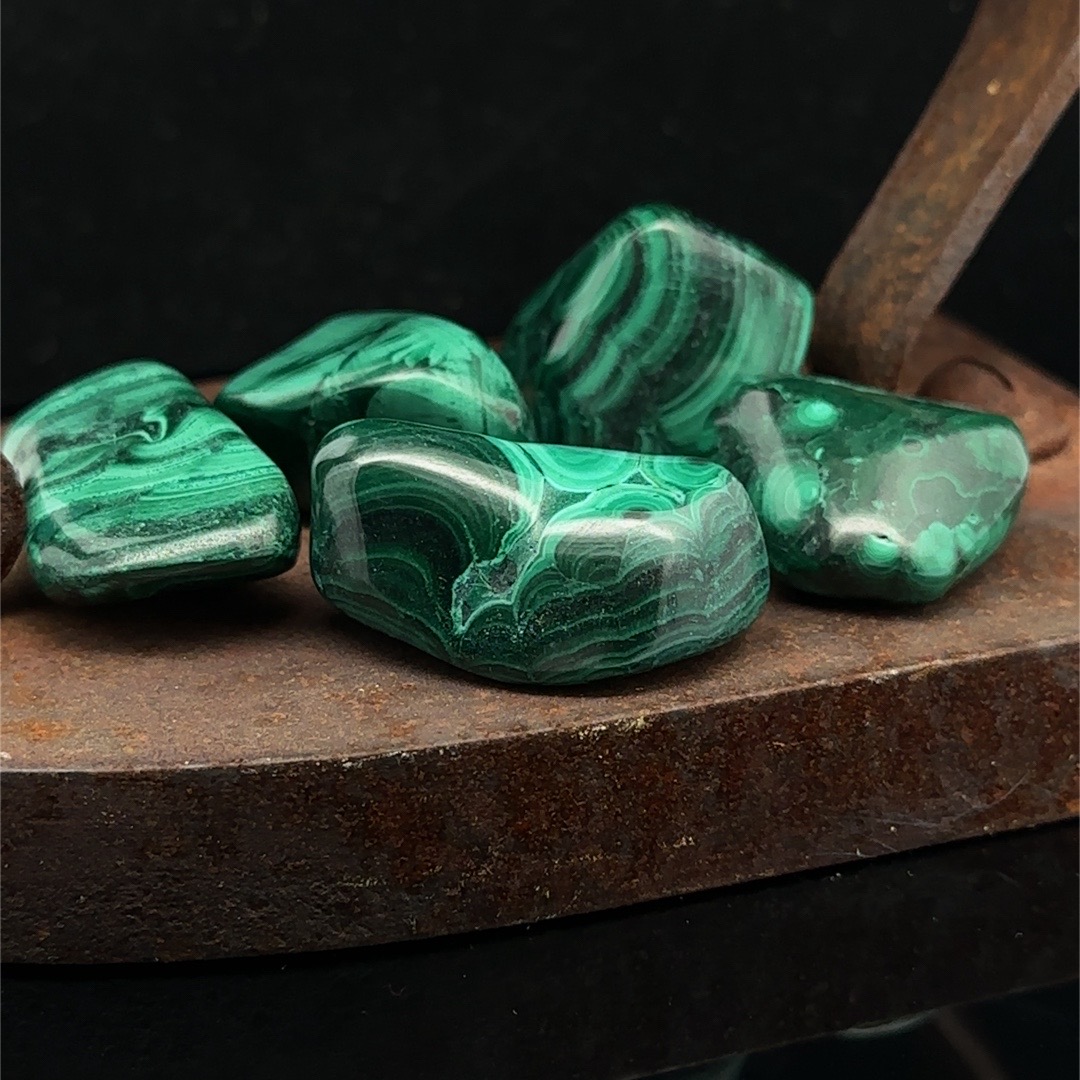
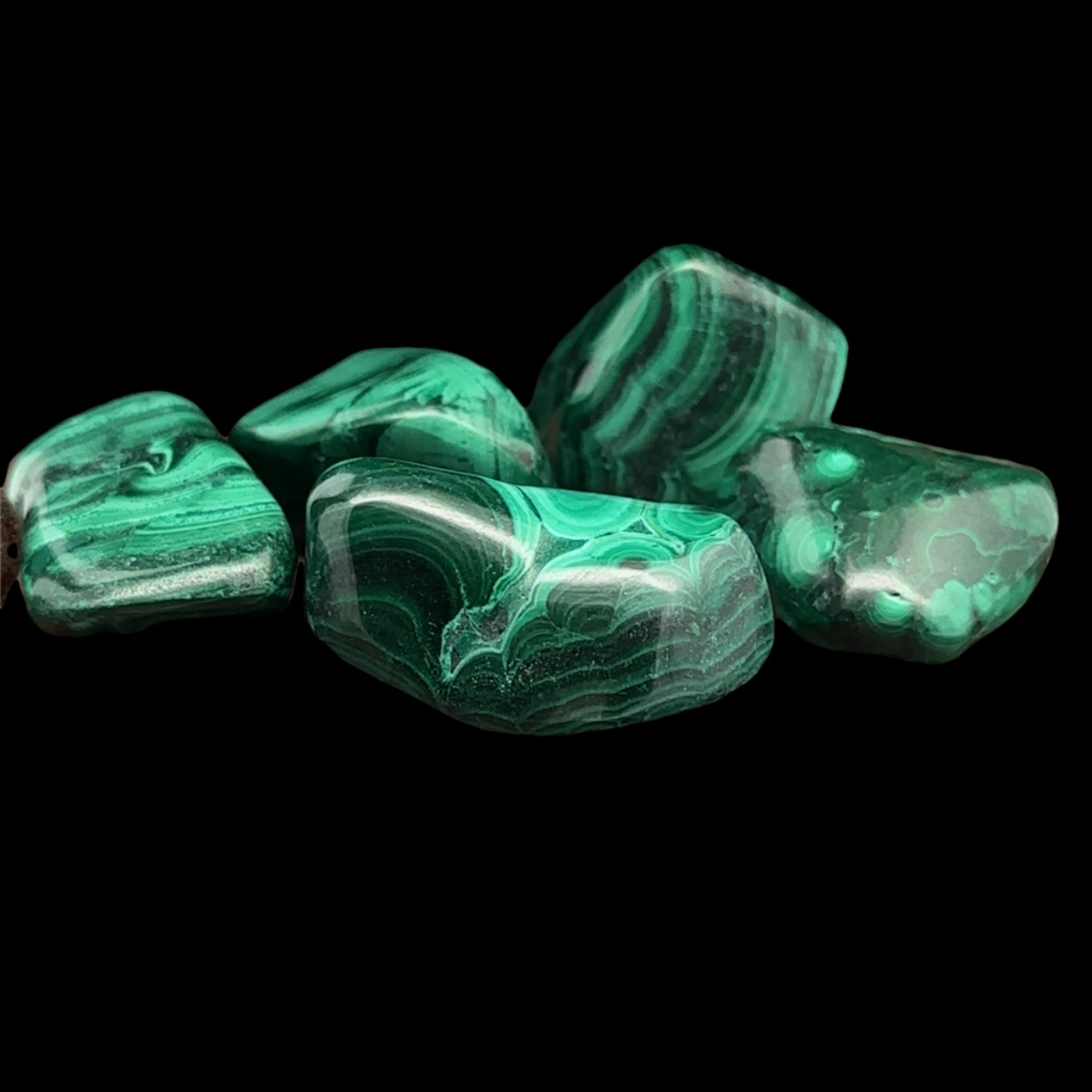
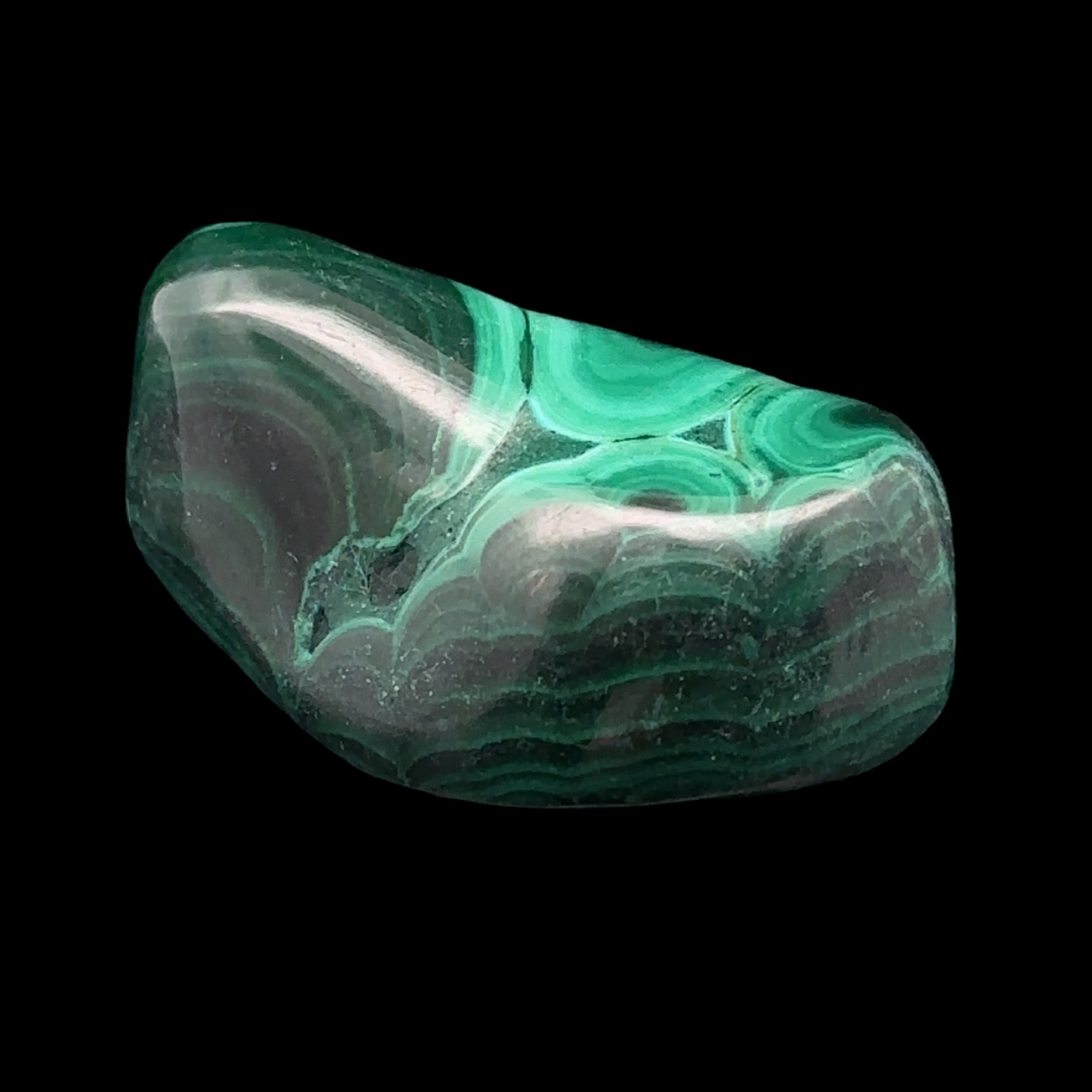

Malachite tumbled stone 3 cm
10,00 € incl. VAT
Malachite tumbled stone approx. 3 cm.
In stock
Stone(s): malachite
Color: green
Dimensions: 3 cm
Approx. weight: 22 to 32 g
Number of stones: sold individually
Shape: tumbled stone
Non-contractual photos.
Classification: carbonate group
Mohs hardness: 3.5-4
Density: 3.6-4.05
Origin: Democratic Republic of the Congo, Australia, Brazil, USA, Russia, Mexico
Care advice: Malachite is fragile—don’t let the stone come into contact with abrasive elements that could scratch it. Avoid prolonged exposure to sun or heat. As malachite is made of copper carbonate hydroxide, avoid any contact with water. If the stone comes into contact with water or cosmetic products, it is very likely to dull and irreversibly lose its shine.
Malachite tumbled stone 3 cm: mineralogical benchmarks
Malachite is a basic copper carbonate (Cu2CO3(OH)2), recognizable by its concentric green bands. Its Mohs hardness is 3.5 to 4, so it’s soft. It reacts to acids.
Size benchmarks: 3 cm, weight approx. 22 to 32 g. Shape: tumbled stone.
To expand your selection, the Tumbled Stones category includes comparable items.
Origins and minéralogy
Malachite is a natural copper carbonate. It is very sensitive to water, acid, and heat.
Many civilizations gave malachite a special place in their beliefs.
In ancient Egypt, it was used as a protective amulet and symbolized renewal and eternal youth. The Egyptians were the first to mine malachite extensively.
In Ancient Greece, women wore malachite amulets.
In the Middle Ages, it was worn as a talisman, especially for children.
In Christianity, malachite was associated with Saint Francis of Assisi, who was said to possess the gift of understanding the language of animals thanks to this stone.
Malachite has been widely used as an ornamental stone.
In the 17th century, the first malachite deposits were discovered in Russia. Malachite was highly prized by the Russian tsars. Saint Isaac’s Cathedral and the Hermitage Palace in Saint Petersburg were entirely decorated with malachite. Sixteen tons of malachite were used for the cathedral’s columns.
At the Palace of Versailles, the Malachite Room is decorated with malachite art objects. These were given by Tsar Alexander I to Napoleon I after the signing of the Treaty of Tilsit.
Malachite has also been used as a mineral pigment; it can be found in the painting “The Sistine Madonna” by the painter Raphael.
Malachite symbolizes harmony and love. It encourages expressing feelings. It brings confidence. In the lithotherapy tradition, it’s associated with self-assertion and self-confidence. It supports persuasion and structured speech.
Malachite is a stone of protection; it absorbs negative energies and amplifies positive energies. It is also a stone of transformation. It encourages decision-making and supports life changes.
Malachite is traditionally linked to the heart chakra. However, it can be used on all other chakras to stimulate energy flow and eliminate blockages.
Warning: this product is not intended for therapeutic use and cannot replace medical treatment or follow-up.
Purification and recharging
Purification:
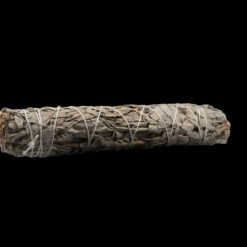
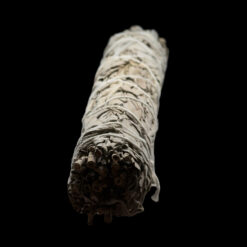
Malachite can be purified by fumigation with a palo santo stick or with white sage. Burn the palo santo or sage and pass the stone through the smoke produced. Remember to ventilate the room well after fumigation.
Recharging:
Malachite can be recharged by placing it for a few hours in a sun-drenched room. Avoid direct exposure to sunlight. You can also recharge it by exposing it to moonlight overnight.
It can be placed in a quartz geode, on a quartz cluster or an amethyst druse.
Lithotherapy is based on tradition and does not replace medical advice.
Expédition : 48 à 72 heures, hors week-ends et jours fériés, après confirmation du paiement.
Livraison offerte dès 60 € en France métropolitaine.
Droit de rétractation : 14 jours pour nous signaler votre décision.
You may also like…
Minerals
Minerals
Purification and recharging
Related products

Minerals

Minerals
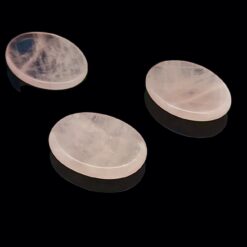
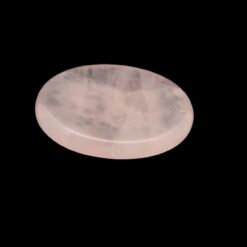
Anti-Stress Stones
