

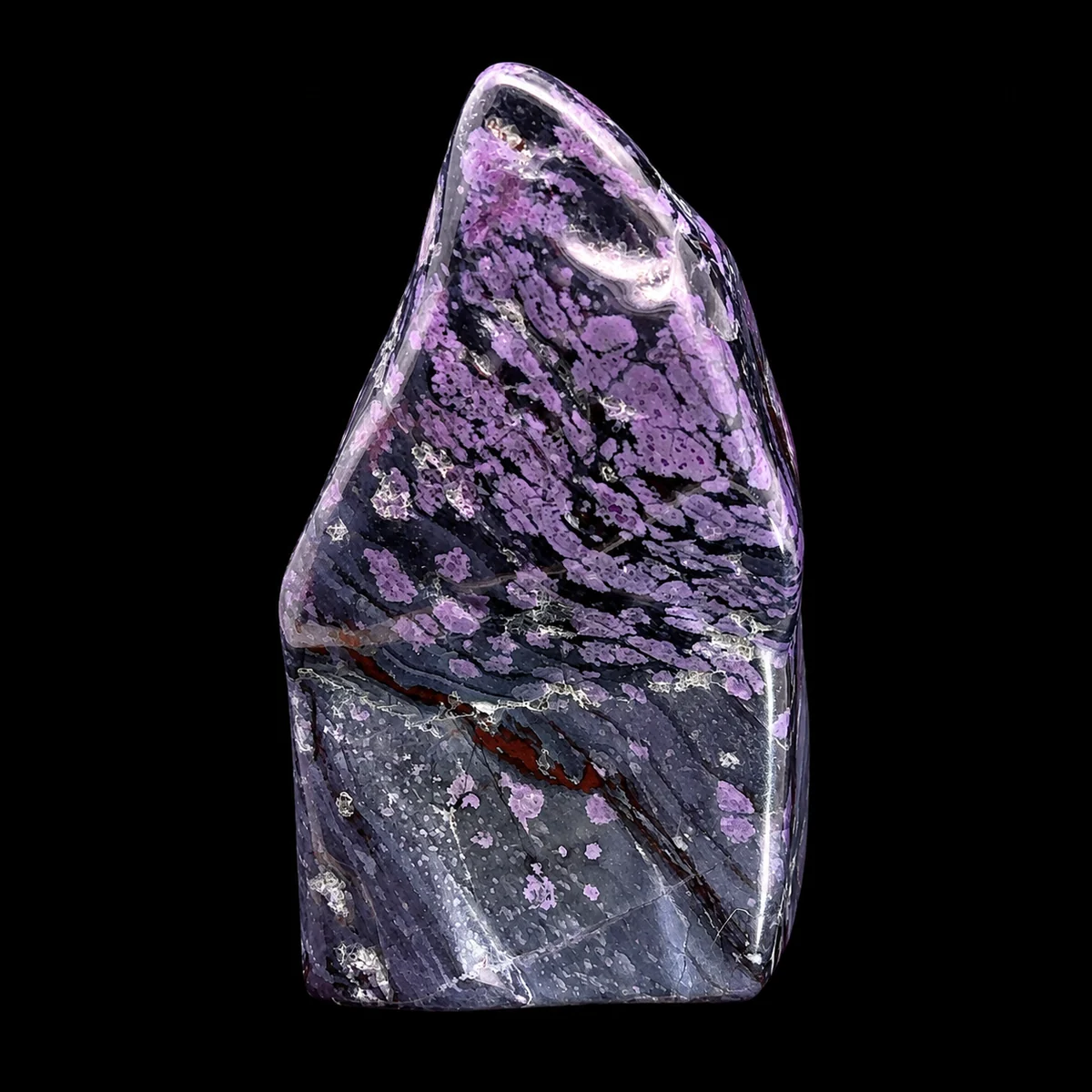
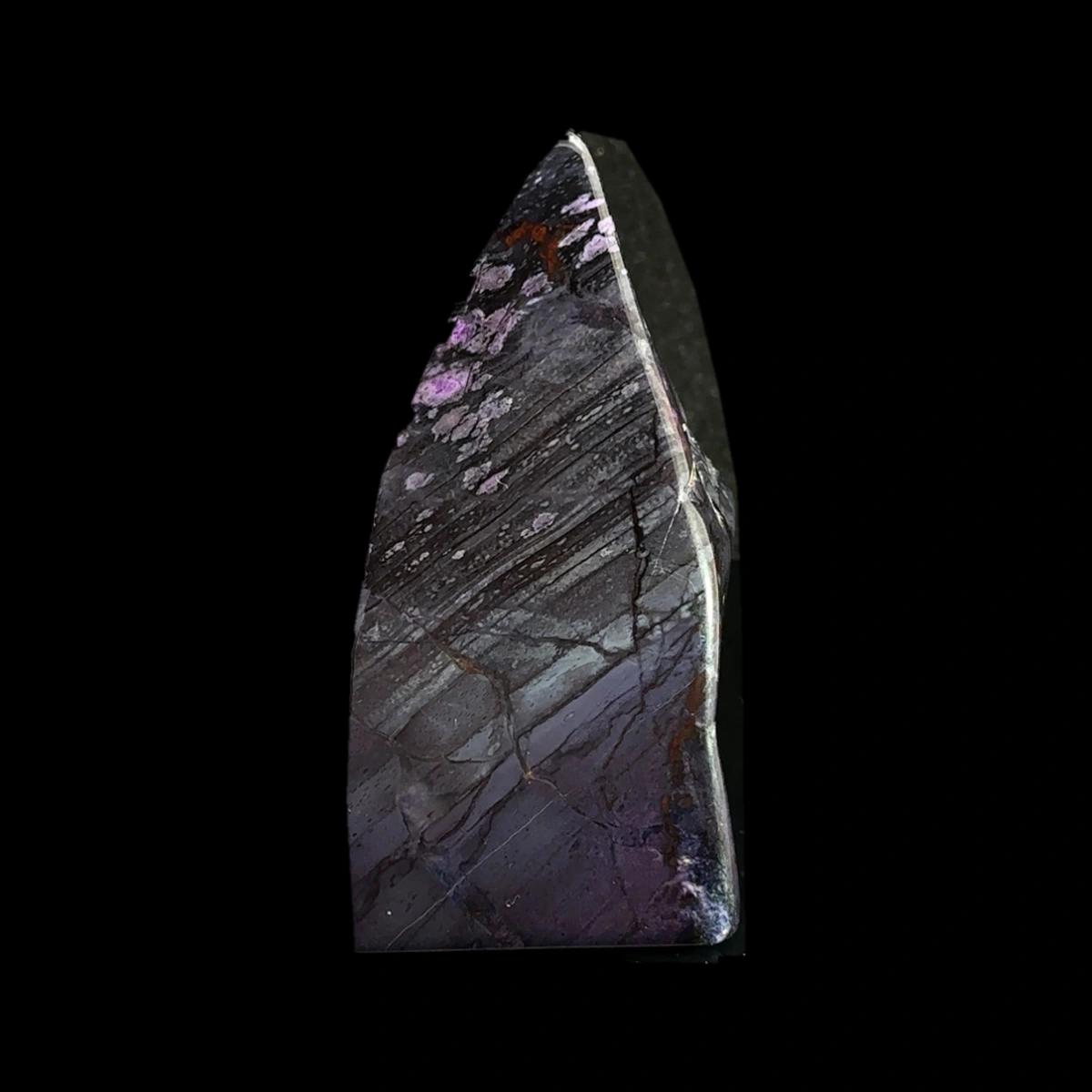
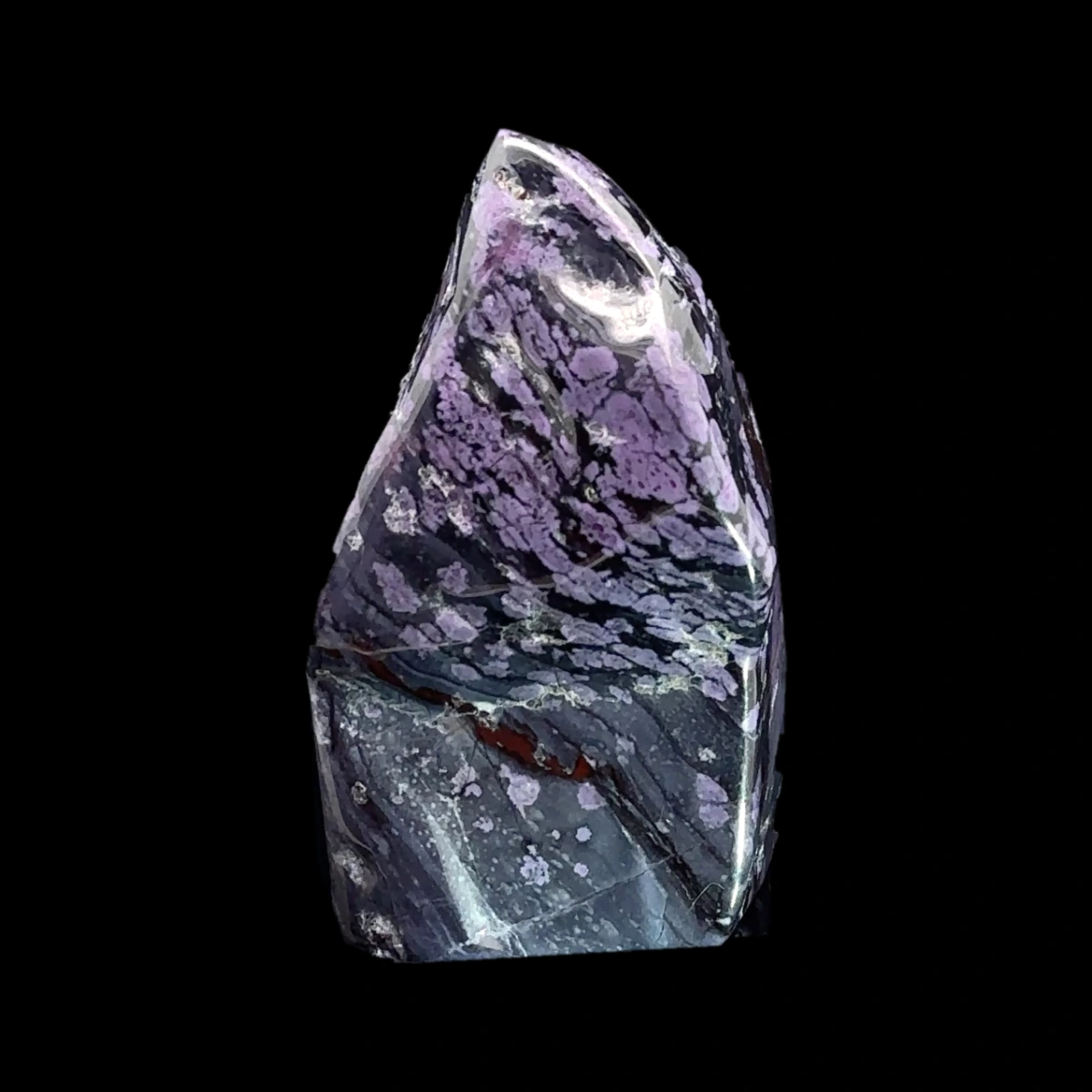
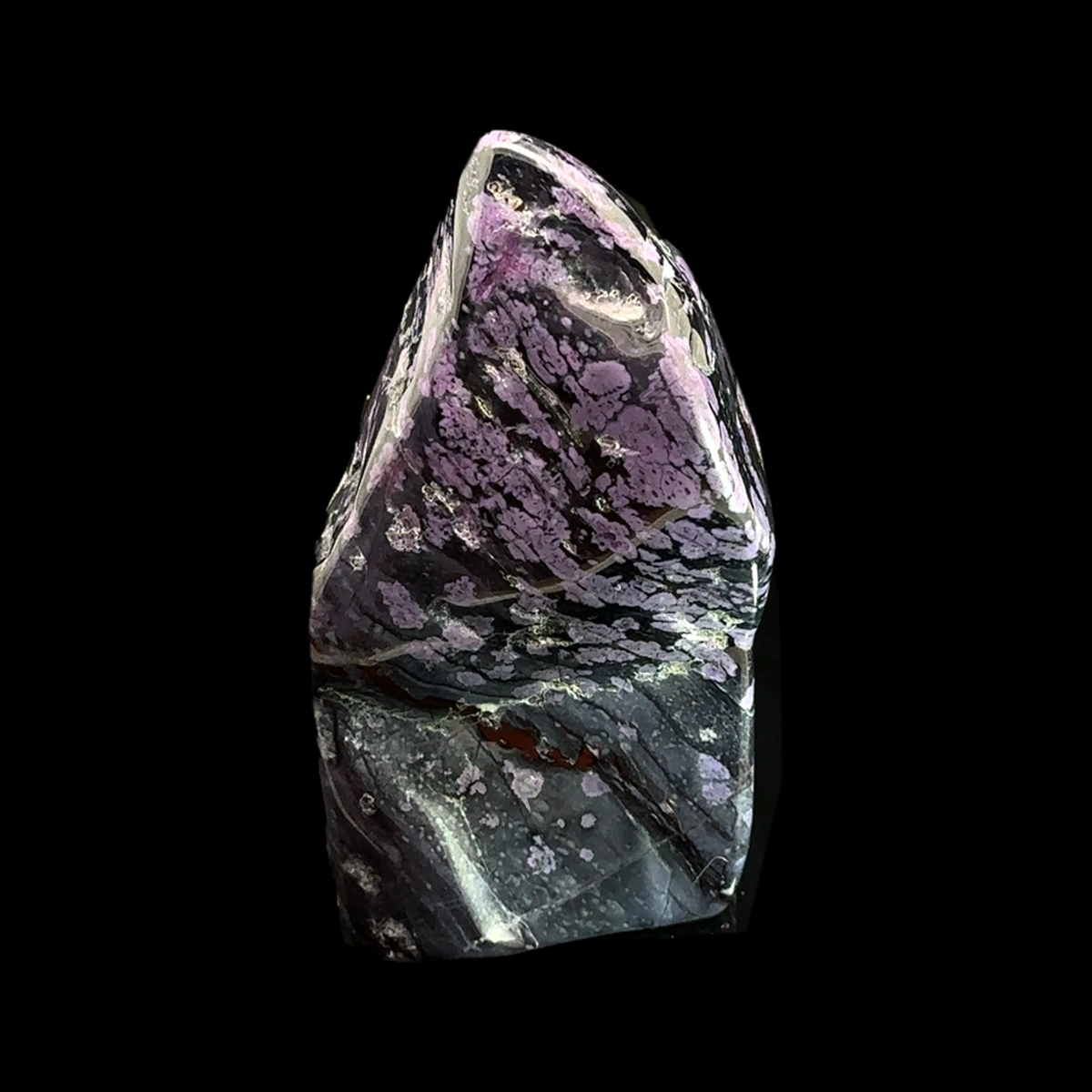
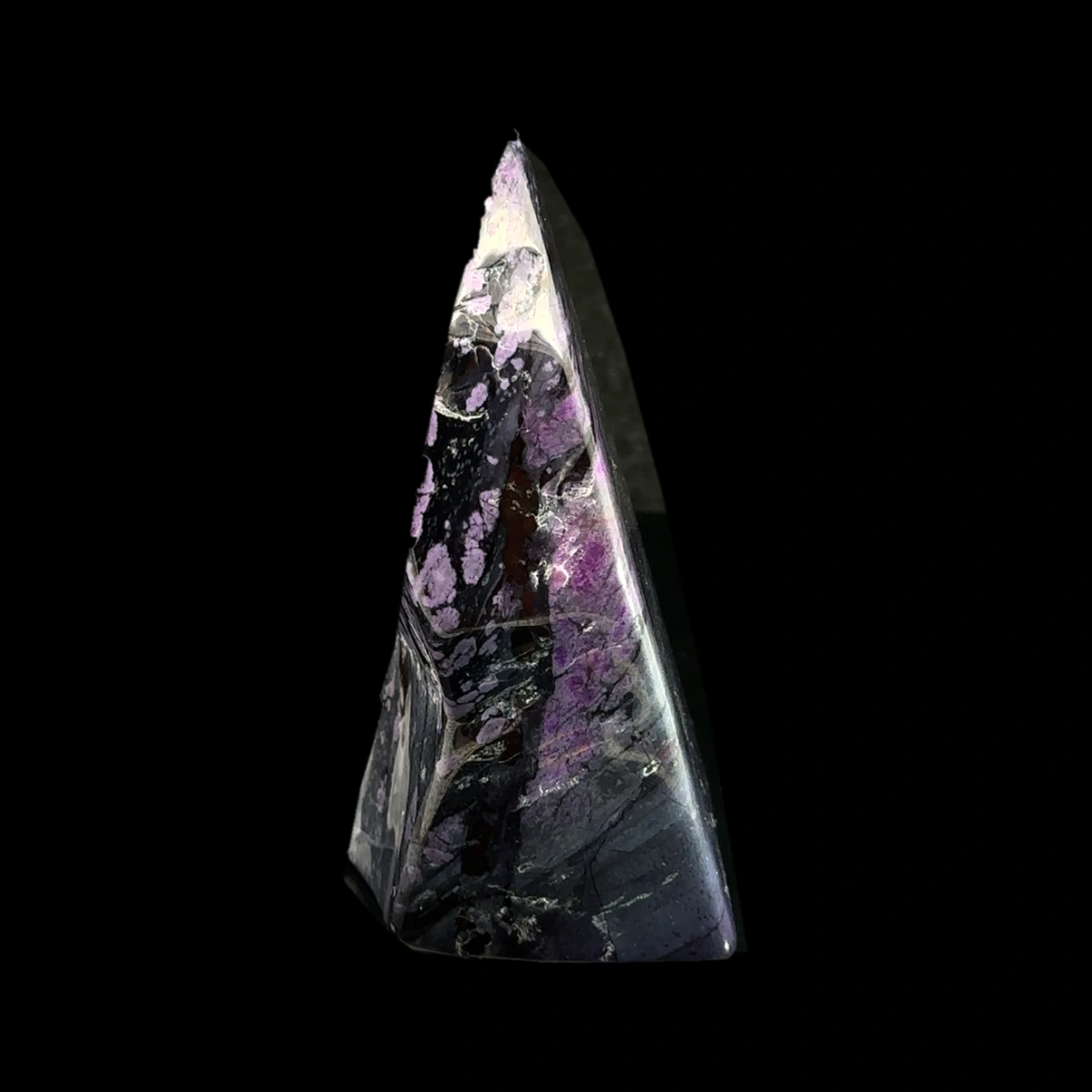
Large Polished Sugilite – Rare Specimen
540,00 € incl. VAT
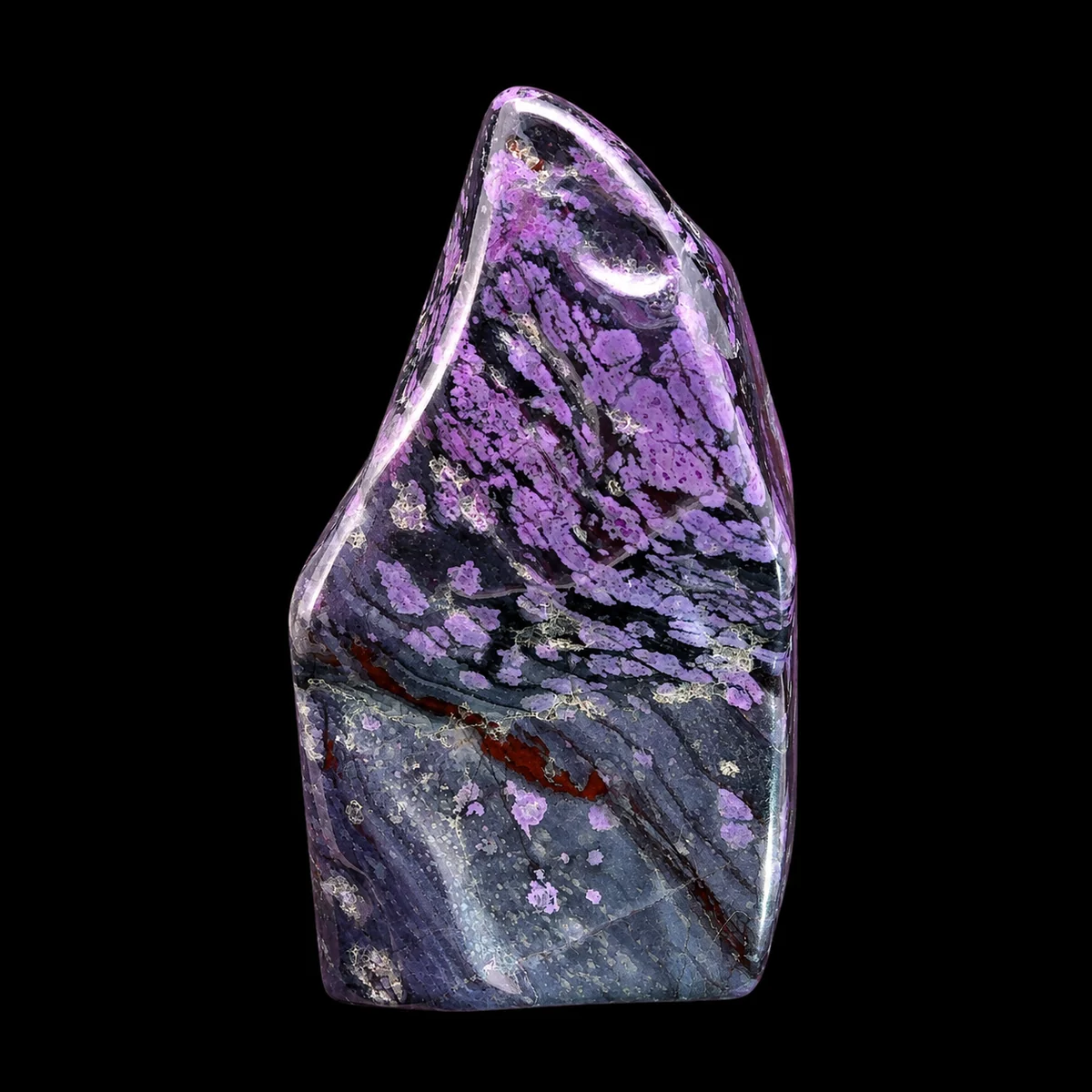
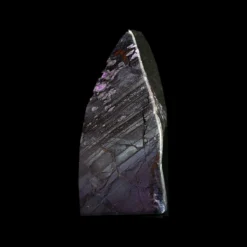
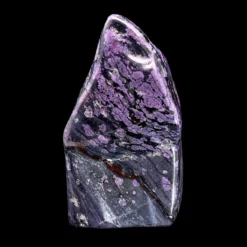
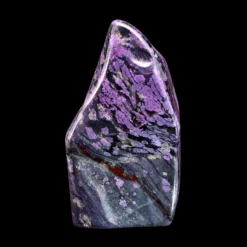
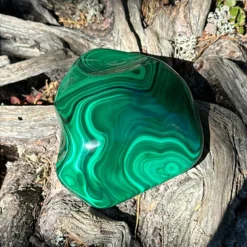
Natural purple sugilite, polished into a freeform shape, measuring approximately 8 cm high by 4 cm wide.
Sugilite is more commonly available in smaller sizes, particularly as tumbled stones, and is rare in this size. A beautiful collector’s piece distinguished by its unusual size.
In stock
Stone(s): sugilite
Color: purple, black
Dimensions: H 8 cm x W 4 cm
Approximate weight: 209 g
Shape: freeform – polished stone
Classification: silicate family, cyclosilicate subgroup (osumilite group)
Mohs hardness: 5.5-6.5
Density: 2.74–2.79
Origin: South Africa
Care instructions: avoid impacts, abrasion against harder minerals, and contact with chemicals. Clean gently with a soft, slightly damp cloth if needed, then dry thoroughly.
Photos are contractual.
Large polished sugilite: details
Dimensions: 8 x 4 cm, approximately 209 g. Shape: freeform, polished stone.
This item belongs to the freeform category, which includes similar pieces.
ORIGINS AND MINERALOGY
Sugilite – Origins and Mineralogy
Origin and Formation
Sugilite is a rare mineral in the silicate family, specifically the osumilite group. It is prized for its purple shades, ranging from lilac and mauve to deep purple, sometimes with black, brown or pink areas.
Its characteristic color is mainly due to the presence of manganese in its crystal structure. Variations in its chemical composition and associated minerals account for the diversity of colors and patterns observed.
Sugilite can form in different geological environments.
In Japan, it has been identified in alkaline igneous rocks, including aegirine-bearing syenites.
In South Africa, it occurs in manganese deposits that have undergone metamorphism. Temperature and pressure conditions favored the formation of this mineral within manganese-rich rocks.
Sugilite used in jewelry generally occurs as massive aggregates of closely intergrown small crystals. Some pieces have a relatively uniform color, while others reveal contrasting areas or natural patterns.
Specimens with an intense, relatively uniform purple color are particularly prized in fine jewelry and by collectors.
Deposits and Origin
The main deposits of gem-quality sugilite are in South Africa, in the Northern Cape province, particularly around Kuruman.
The Wessels mine, known for its extensive manganese deposits, is particularly renowned for the purple sugilite used in jewelry.
It was in this region that specimens with the most characteristic colors, ranging from deep violet to purple, were identified.
Sugilite is also known to occur in:
- Japan, on Iwagi Island, where the mineral was first discovered.
- India, in manganese-rich formations.
- Tajikistan, particularly in the Dara-i-Pioz massif.
Although sugilite occurs in several regions worldwide, gem-quality purple material remains relatively uncommon.
South African sugilite holds an important place in the market for ornamental stones and collector’s specimens.
Mineralogical Composition and Characteristics
- Mineral species: sugilite
- Family: silicates, cyclosilicate subgroup
- Mineral group: osumilite
- Chemical composition: KNa₂Fe³⁺₂Li₃Si₁₂O₃₀, with possible substitutions, notably by manganese and aluminum
- Crystal system: hexagonal
- Colors: violet, purple, lilac, mauve, purplish pink; sometimes yellowish brown
- Hardness: 5.5 to 6.5 on the Mohs scale
- Density: approximately 2.74 to 2.79
- Luster: vitreous, sometimes slightly waxy on polished aggregates
- Transparency: opaque to translucent in ornamental varieties
- Main origins: South Africa, Japan, India and Tajikistan
History and Discovery of Sugilite
The history of sugilite is relatively recent compared with that of many minerals used since antiquity.
It was first discovered in Japan by petrologist Ken-ichi Sugi on Iwagi Island, in Ehime Prefecture.
The first specimens identified did not display the purple colors associated with sugilite today. They were small, yellowish-brown crystals found in igneous rocks.
The mineral was officially described and named in 1976 by a team of Japanese mineralogists in honor of Ken-ichi Sugi.
In the late 1970s, the discovery and sale of purple sugilite from the Wessels mine in South Africa sparked growing interest in gemology.
These specimens differed markedly from the material originally described in Japan, notably in their intense purple color linked to manganese.
Sugilite then began to be used to make cabochons, pendants, rings and other ornamental objects.
It is sometimes sold under the names “Royal Lavulite” or “Royal Azel”, historically used for certain purple South African sugilites.
Today, it remains sought after for its distinctive colors and the relatively limited availability of gem-quality material.
Sugilite Care Instructions
With a hardness of 5.5 to 6.5 on the Mohs scale, sugilite has moderate scratch resistance.
To preserve its polish and luster, avoid impacts and contact with perfumes, cosmetics, detergents and harsh chemicals.
Gently clean your jewelry with a soft, slightly damp cloth if needed, then dry it thoroughly.
As a precaution, avoid ultrasonic and steam cleaners, especially if the sugilite has inclusions, natural fractures or a delicate setting.
It is also advisable to store sugilite jewelry separately from harder stones to protect its surface.
Well-Being and Energy
Properties Traditionally Attributed to Sugilite
In contemporary crystal healing practices, sugilite is mainly associated with energy protection, emotional balance and spirituality.
Several properties are traditionally attributed to it:
- Energy protection: said to be associated with protection from negative influences and the preservation of inner balance.
- Emotional calm: said to promote serenity and help put daily tensions into perspective.
- Self-confidence: said to encourage self-assertion and self-acceptance.
- Inner harmony: said to support the search for balance between emotions and thoughts.
- Intuition: said to be associated with developing inner perception and self-awareness.
- Meditation: said to support introspection, relaxation and concentration practices.
In some energy traditions, sugilite is also associated with personal transformation and the pursuit of greater self-understanding.
Associated Chakras
Sugilite is mainly associated with the upper chakras:
- Crown chakra: spirituality, awareness and inner harmony.
- Third eye chakra: intuition, perception and mental clarity.
Some crystal healing practices also associate it with the heart chakra, in connection with emotional balance and self-acceptance.
Associated Zodiac Signs
Sugilite is traditionally associated with several zodiac signs, including:
- Aquarius: intuition, independence and open-mindedness.
- Pisces: sensitivity, serenity and emotional harmony.
- Sagittarius: introspection, confidence and the search for meaning.
These associations vary between astrological traditions and do not limit the use of sugilite to people born under these signs.
Cleansing and Recharging
Cleansing
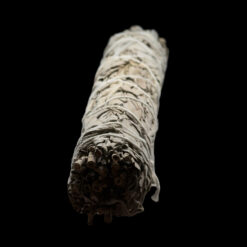
In crystal healing practices, sugilite can be cleansed using smoke from a stick of palo santo or white sage.
Gently pass the stone or jewelry near the smoke without exposing it directly to the flame or excessive heat. Then ventilate the room thoroughly.
This traditional practice avoids immersing jewelry in water and reduces the risk of damage to its setting.
Recharging
According to energy practices, sugilite can be placed in moonlight for a few hours.
It can also be placed on a quartz geode, a selenite plate or an amethyst cluster, taking care to avoid friction that could scratch its surface.
As a precaution, choose indirect natural light over prolonged exposure to direct sunlight.
The properties attributed to stones in crystal healing practices are based on tradition and are not scientifically proven. They are not therapeutic uses and do not replace medical advice or appropriate treatment.
Expédition : 48 à 72 heures, hors week-ends et jours fériés, après confirmation du paiement.
Livraison offerte dès 60 € en France métropolitaine.
Droit de rétractation : 14 jours pour nous signaler votre décision.
You may also like…
Freeform Minerals
Exceptional Minerals
Purification and recharging
Related products


Exceptional Minerals
Freeform Minerals
Freeform Minerals