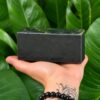


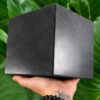
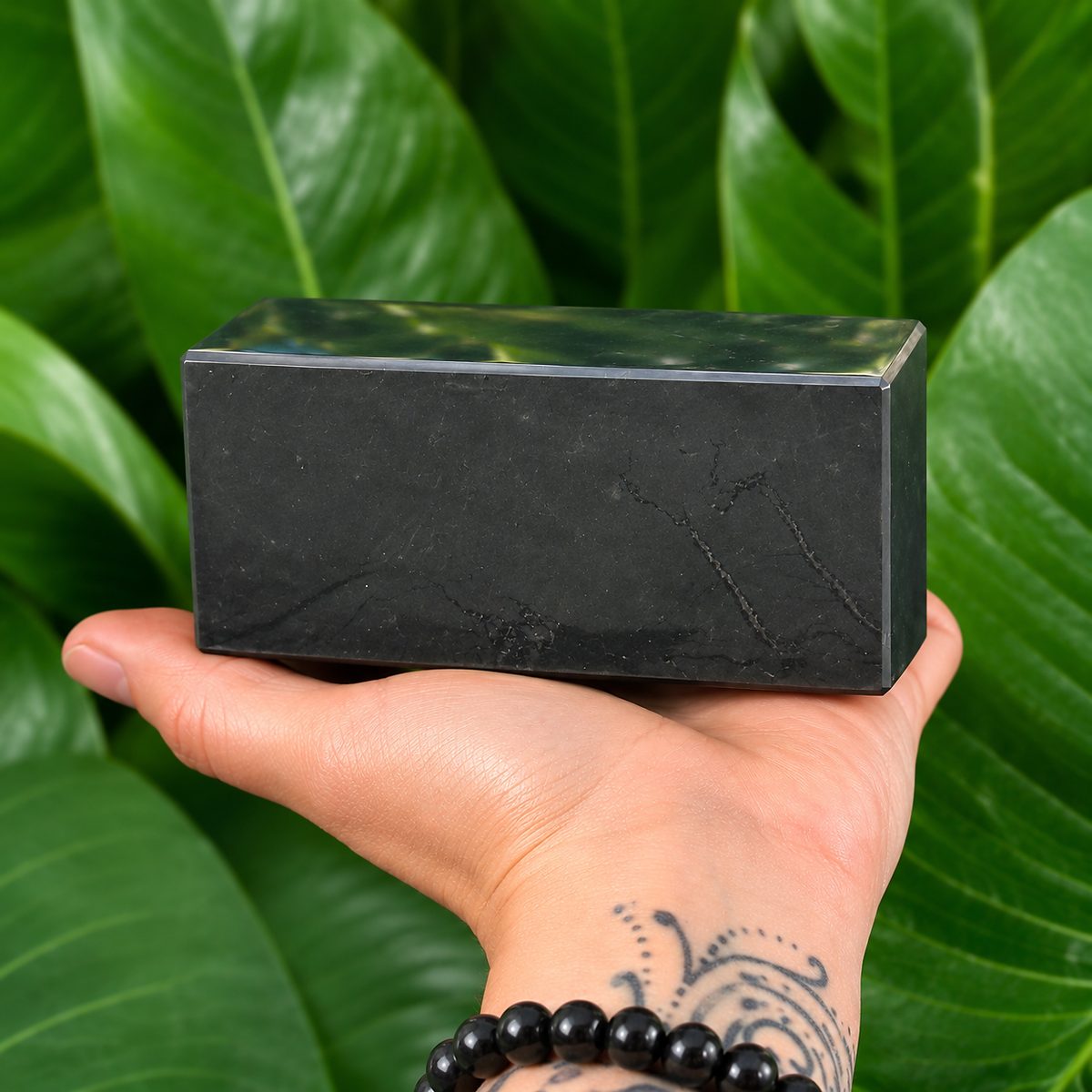
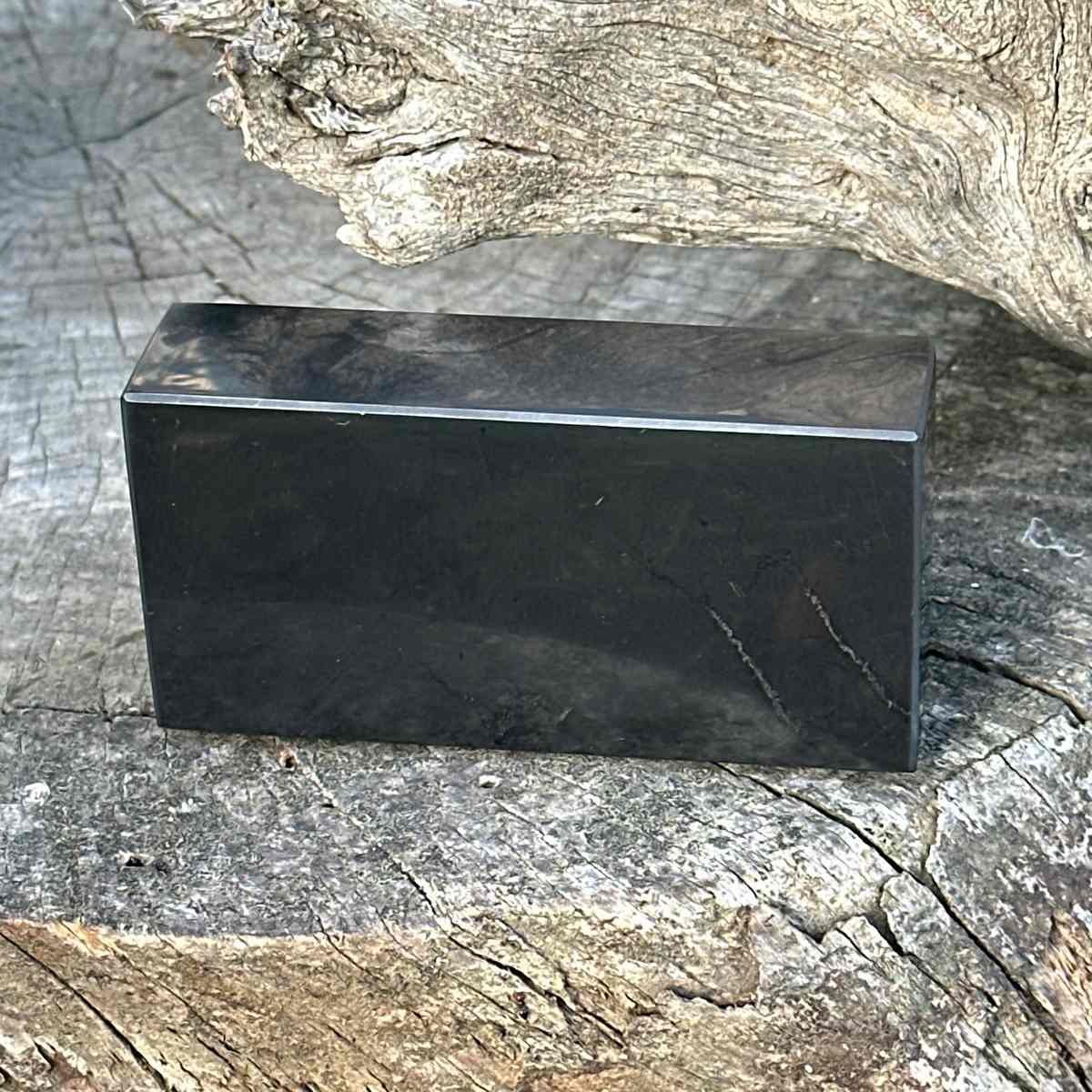
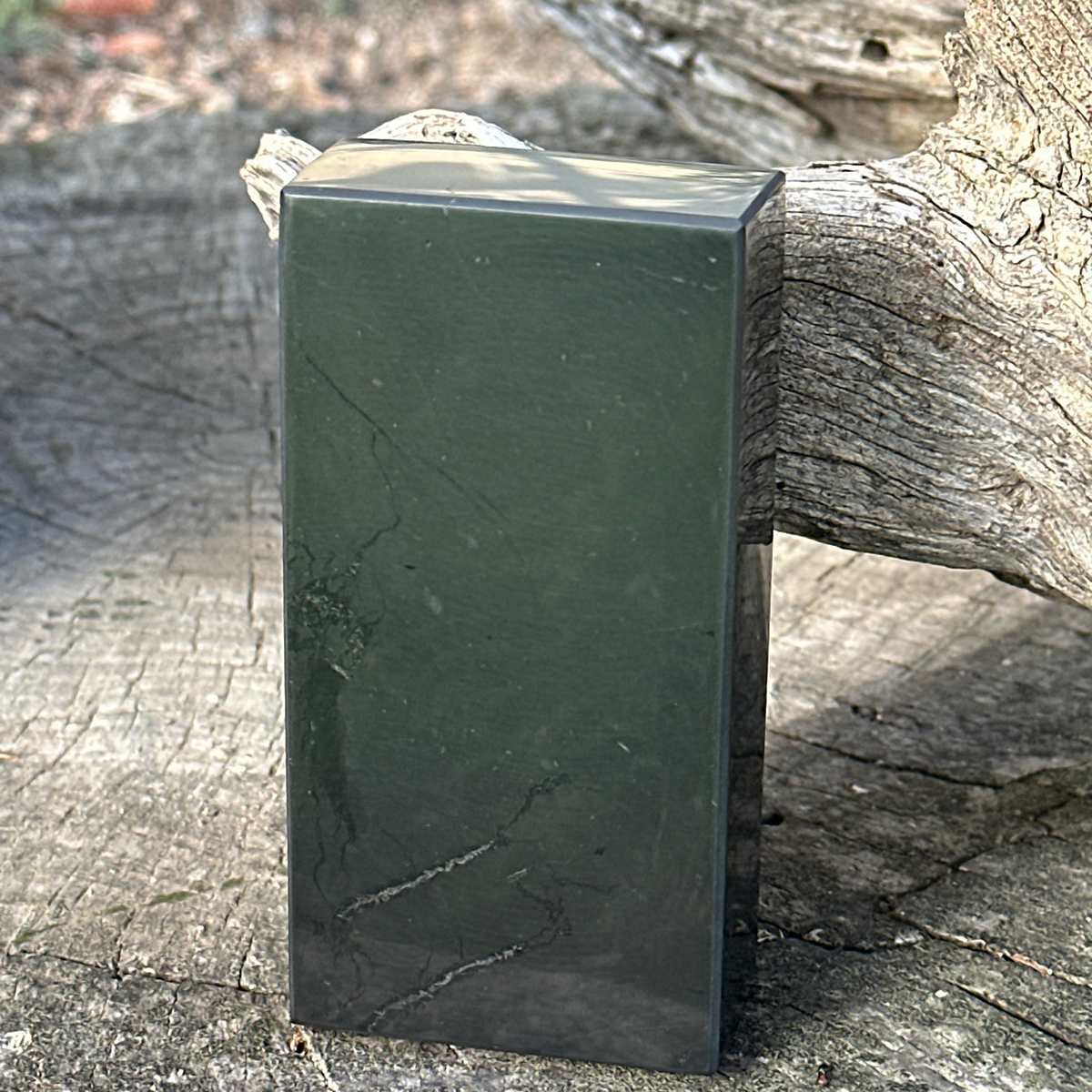
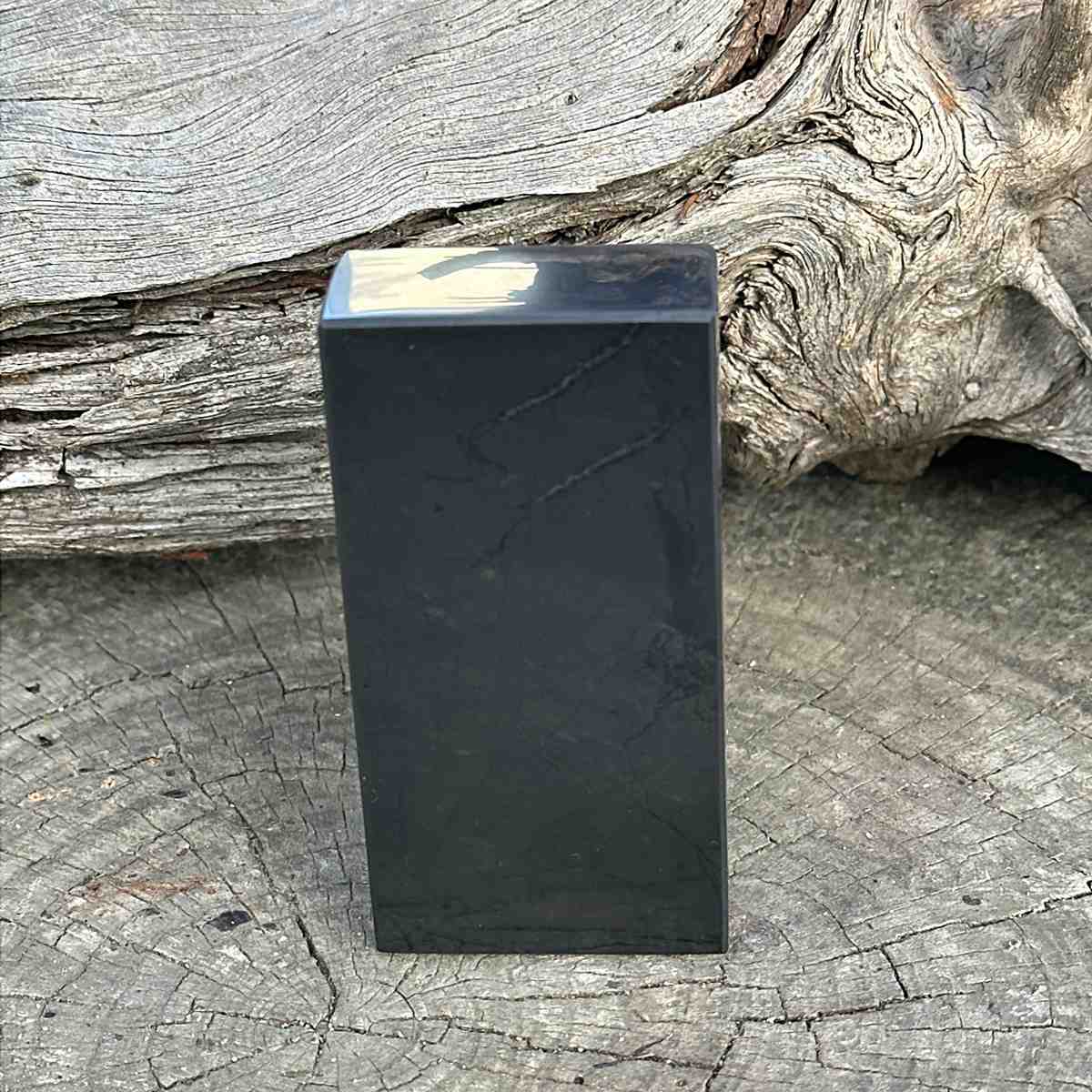
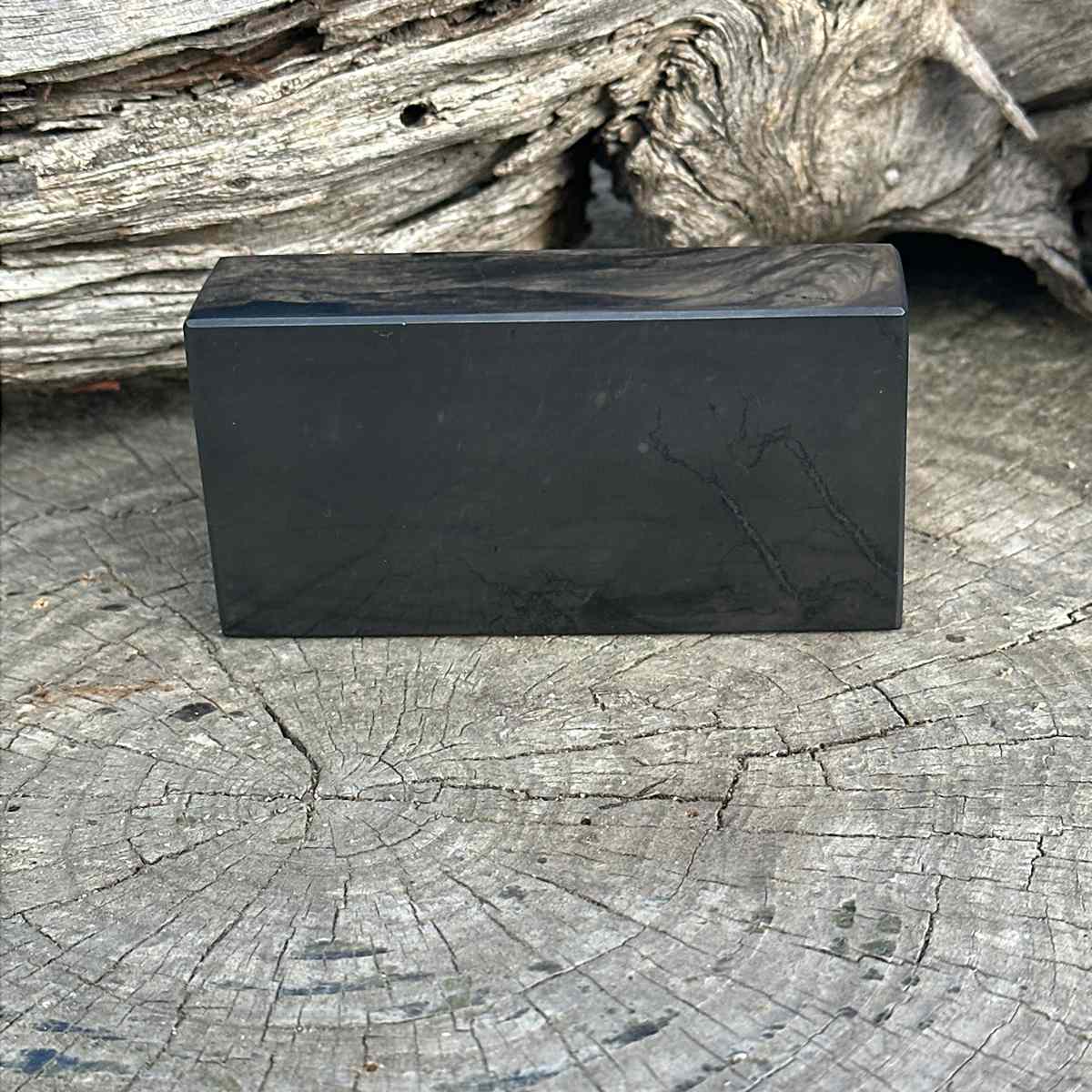
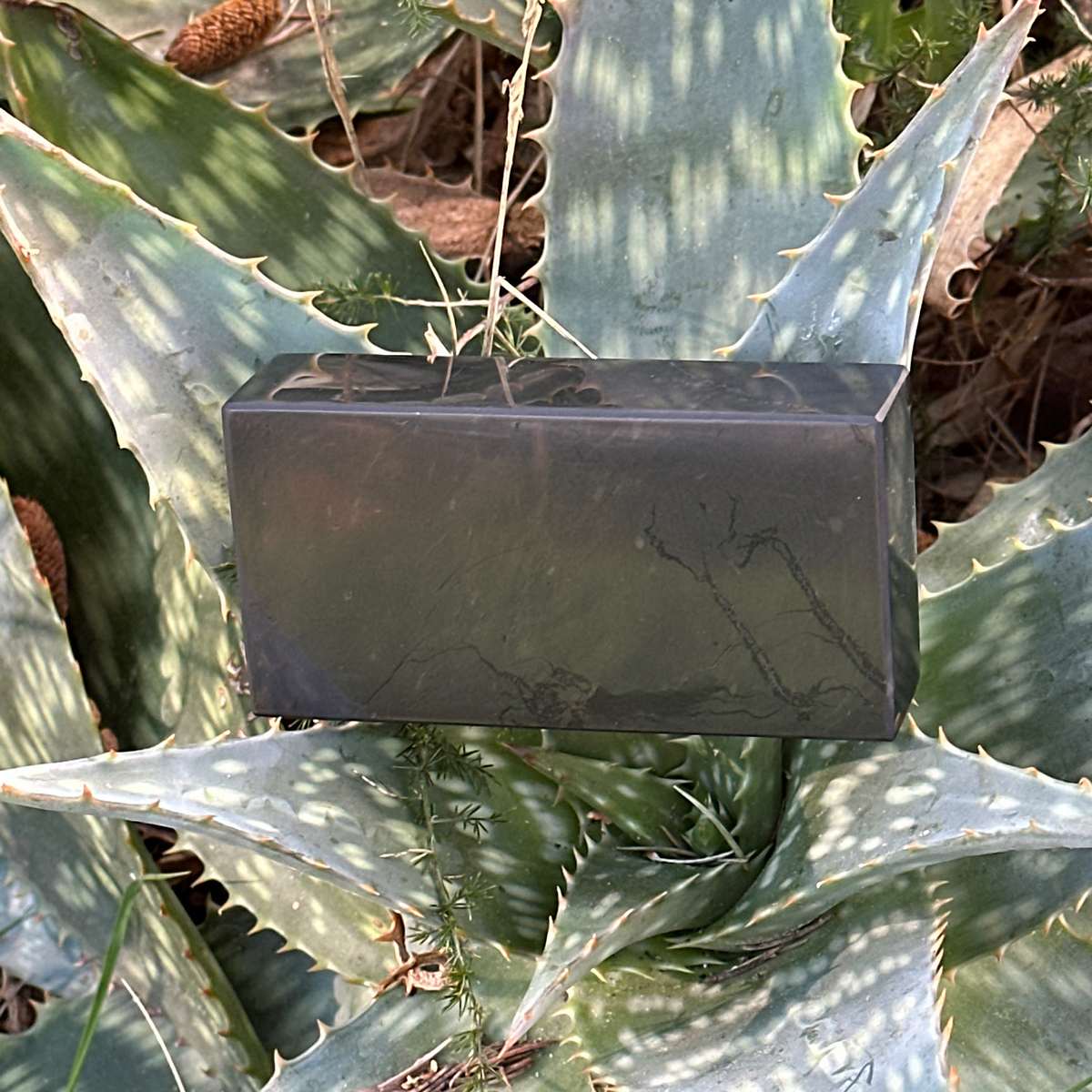
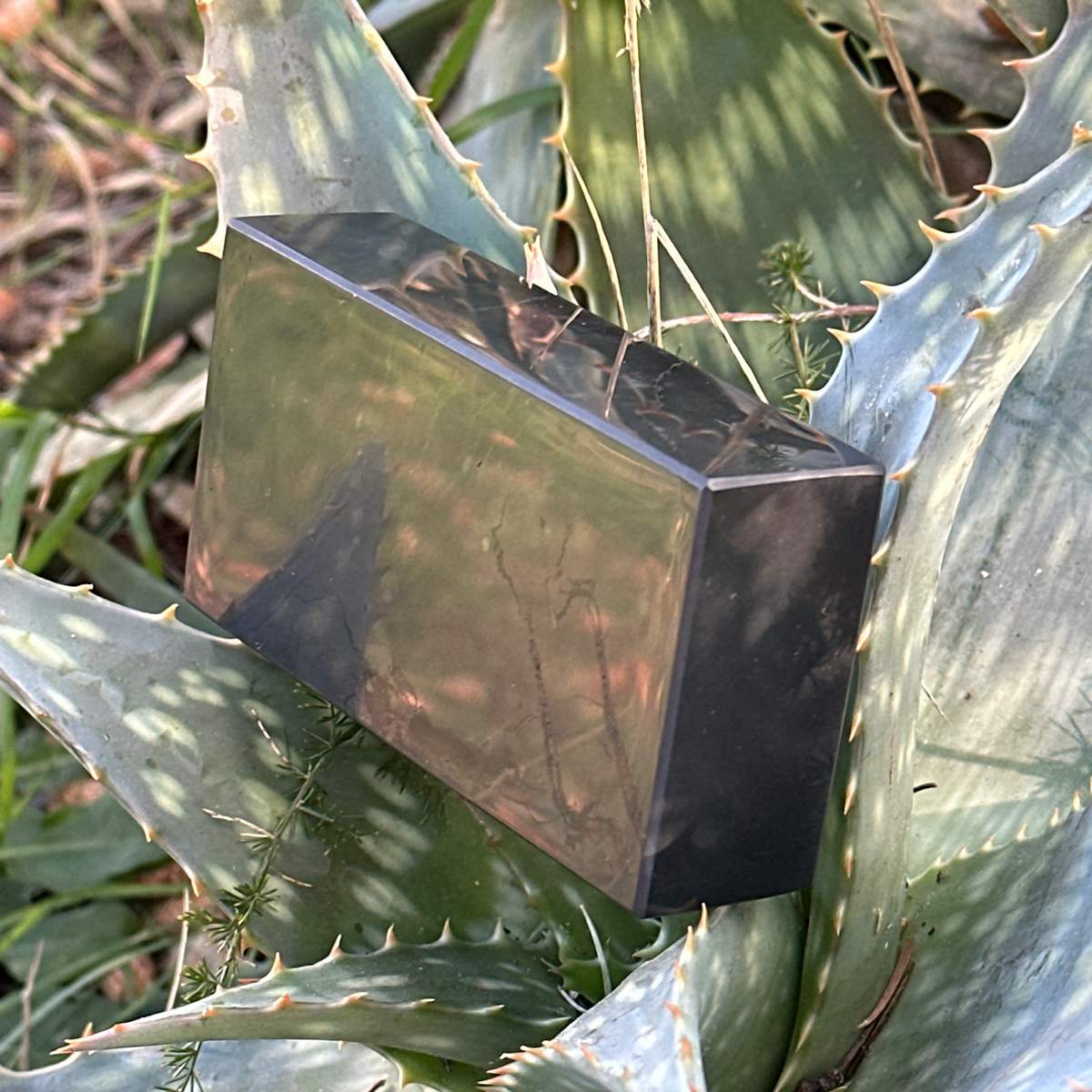
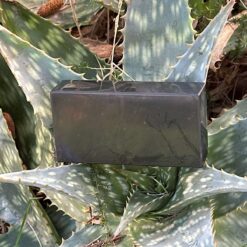
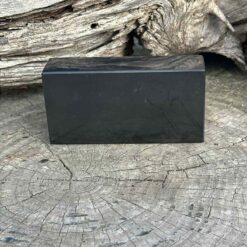
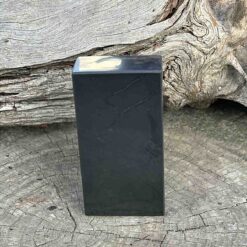
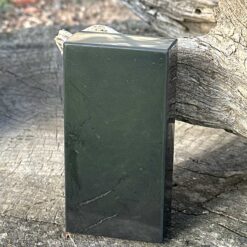
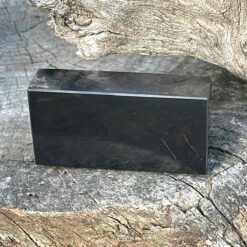
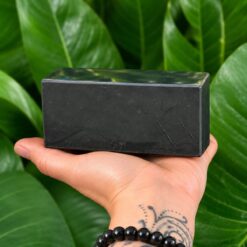
Small 12 cm shungite brick
36,00 € incl. VAT
Small 12 cm polished natural shungite brick. A simple, elegant decorative piece that’s easy to place on a desk, a shelf, or in any living space.
In stock
Stone(s): Shungite
Color: black
Dimensions: 12 cm x 6 cm
Approximate weight: 329 to 350 g
Number of stones: stone sold individually
Shape: polished brick – Traces on the stone’s surface are its natural veins, not scratches.
Non-contractual photos.
Classification: No classification recognized by the International Mineralogical Association. Amorphous carbon mineral.
Mohs hardness: 3.5 – 4
Density: 2.1-2.4
Origin: Russia
Care instructions: Unless the stone is polished, it leaves black marks on hands, which are easily washed off with water. Polished bricks may leave black marks on the edges. Shungite is fragile, handle with care.
Origins and minéralogy
Shungite: origin, formation and mineralogical properties
➤ Origin & formation of shungite
Shungite is a carbon-rich natural rock, primarily known for its deep black color and exceptionally ancient geological origin. It mainly comes from the Karelia region in northwestern Russia, where large deposits dating back approximately 2 billion years are found.
Unlike many stones used in jewelry and decor, shungite is not a crystalline mineral in the strict sense. It’s a natural carbon-based material found within rocks whose composition varies depending on the deposit.
Its appearance can range from matte black to glossy black, sometimes with metallic or silvery highlights.
Shungite’s scientific interest comes from several distinctive features: its age, the nature of its carbon, its internal structure, and its physical properties—especially electrical ones.
How was shungite formed 2 billion years ago?
The geological history of shungite dates back to the Paleoproterozoic, a very ancient period in Earth’s history, between approximately 2.5 and 1.6 billion years ago.
At that time, the area that is now Karelia experienced major geological activity, combining sedimentary basins, aquatic environments, and volcanic episodes.
In some of these basins, large amounts of organic matter accumulated within the sediments.
Geological studies indicate that this organic matter was mainly biological in origin, coming from ancient organisms living in aquatic environments.
Gradually buried under new layers of sediment, it underwent complex transformations under the effects of pressure, temperature, and the circulation of geological fluids.
These transformations led to carbon enrichment and reorganization, giving rise to the carbon materials now grouped under the name shungite.
Researchers have also highlighted processes of migration and concentration of carbon matter within certain rock formations.
Shungite formation therefore results from a complex geological history, combining organic matter accumulation, thermal transformations, and metamorphic processes.
Today, it stands as a valuable record of ancient Earth environments and the evolution of carbon throughout our planet’s history.
The composition of shungite: carbon and mineral matter
The uniqueness of shungite lies in its high proportion of natural carbon.
However, its composition varies considerably from one sample to another.
Some varieties that are especially carbon-rich can reach concentrations close to 98%, while rocks commonly sold as shungite generally have lower levels.
They also contain various mineral components, including:
- Quartz and other forms of silica
- Silicates and aluminosilicates
- Iron-containing minerals, sometimes pyrite
- Various elements present in low concentrations, depending on the rock’s origin and composition
These variations explain the differences in appearance, density, hardness, and electrical conductivity observed between specimens.
Carbon content is therefore an important criterion for characterizing different shungite categories, but it can’t be determined accurately from a stone’s appearance alone.
Fullerenes: a remarkable scientific discovery
Shungite is frequently associated with fullerenes, molecular structures consisting exclusively of carbon atoms.
These molecules have a particular organization, which can take the form of closed spheres.
The best-known fullerene, called C₆₀, consists of 60 carbon atoms arranged in a structure resembling a soccer ball.
Fullerenes were identified in the lab in 1985, opening up a new field of research into the different forms of carbon.
In 1992, researchers published in the scientific journal Science the discovery of C₆₀ and C₇₀ fullerenes in certain shungite samples from Karelia.
This observation marked an important step in the study of natural fullerenes.
However, a few clarifications are needed:
- Fullerenes have only been identified in certain shungite samples, generally in very small quantities.
- Their presence cannot be automatically considered a characteristic of all marketed shungites.
- Fullerenes have also been discovered in other natural materials, including certain rocks formed during lightning strikes and fossilized carbonaceous matter.
Fullerenes are currently the subject of much research, particularly in chemistry, materials science, and nanotechnology.
Some molecules in this family show interesting chemical properties under specific experimental conditions. However, their possible presence in shungite does not prove any antioxidant or therapeutic property for people who wear or use it.
The electrical properties of shungite
Shungite has interesting physical properties related to its carbon structure.
Certain varieties, especially those with a high carbon concentration, have relatively high electrical conductivity.
This characteristic explains their interest in research on conductive materials and certain industrial devices.
Studies have notably examined the use of finely ground shungite in the manufacture of technical composite materials.
In these applications, performance depends on many parameters, such as the composition, thickness, conductivity, and structure of the material.
This research concerns technical materials specifically designed and tested under determined conditions.
This distinction is important for understanding the real physical properties of shungite, without confusing them with certain commercial claims.
Mineralogical characteristics
- Nature: carbon-rich natural rock, containing non-crystalline carbon material
- Classification: carbonaceous rock, generally associated with metamorphosed sedimentary formations
- Main composition: carbon, in varying proportions depending on the variety
- Associated constituents: silica, quartz, silicates, and other minerals depending on the deposits
- Chemical formula: no single formula, due to its variable composition
- Crystal system: not applicable to the rock as a whole
- Hardness: variable depending on composition; material very rich in carbon has a hardness of about 3 to 4 on the Mohs scale
- Density: variable depending on carbon content and associated minerals
- Luster: matte to submetallic, sometimes very shiny
- Transparency: opaque
- Color: black, gray-black, sometimes accompanied by silver reflections
- Fracture: generally irregular, sometimes conchoidal in very carbon-rich materials
- Appearance: massive, compact, or showing carbonaceous zones and veins
- Special properties: variable electrical conductivity, adsorption capacity for certain compounds
Shungite is mainly appreciated for its characteristic black appearance, the diversity of its textures, and its exceptional geological history.
Main shungite deposits
The most famous and best-documented deposits are located in the Republic of Karelia, in northwestern Russia.
This region belongs to the Fennoscandian Shield, a particularly ancient geological complex consisting of rocks dating back several billion years.
The main areas associated with shungite are:
- Shunga: a village in the Lake Onega region, which gave shungite its name. It is the historical reference locality for the identification of this material.
- The Zaonezhye Peninsula: located in Lake Onega, it contains major carbon-rich geological formations dating from the Paleoproterozoic.
- The Kondopoga region: known for various occurrences of carbonaceous rocks associated with the ancient formations of Karelia.
- The Zaonega formations: these constitute a geological complex particularly studied for their significant accumulations of ancient organic matter.
Carbonaceous rocks with some similarities to shungite exist in other regions of the world. However, Karelia remains the historical and geological reference provenance for marketed shungites.
Classic shungite and Elite shungite: what are the differences?
In the mineral trade, two main names are primarily encountered.
Classic shungite
It generally has a matte to slightly satin black color and contains a variable proportion of carbon, along with other mineral components.
It’s often used to make polished stones, spheres, pyramids, cubes, pendants, and decorative items.
Its texture and look can vary depending on the rock’s composition and the quality of the polish.
Elite shungite
Also called noble or glossy shungite, this is a commercial term for a material that is especially carbon-rich, often marked by a metallic or silvery luster.
It stands out for its shiny look, sometimes conchoidal fracture, and relative fragility.
This variety is generally sold as rough fragments, as it’s less suited to making complex polished objects.
It’s important to note that the labels “classic” and “Elite” are mainly commercial. They don’t correspond to two different mineral species.
Quality, appearance, and composition can vary from one supplier to another.
➤ Discovery & history through the ages
🌍 Two-billion-year-old geological formations
The history of shungite begins long before human civilizations.
Karelia’s carbon formations date back around 2 to 2.1 billion years, a time when life on Earth was mainly made up of microscopic organisms.
These formations reflect a key period in our planet’s evolution, marked in particular by major changes in aquatic environments and the composition of the atmosphere.
The large accumulations of organic matter in these rocks are now of great interest to geologists studying ancient carbon cycles.
Shungite is therefore a remarkable material for understanding certain geological and biological processes that occurred during the Paleoproterozoic.
🏛️ 17th and 18th centuries: Karelian traditions and mineral waters
Long before its scientific classification, the black rocks of Karelia were known to local populations.
The region has a long history linked to natural springs and the traditional use of mineral waters.
In the early 18th century, under Tsar Peter the Great, Karelia became known in particular for the iron-rich waters of Marcial Waters, a spa resort founded in 1719.
Historical accounts and regional traditions sometimes link shungite to these old water-related uses.
However, it’s important to distinguish the documented history of Karelia’s mineral springs from claims that shungite was used with proven therapeutic effectiveness.
Traditional accounts are an interesting part of local heritage, but they do not scientifically establish the effects attributed to it.
🔬 19th century: scientific recognition of shungite
In the 19th century, the development of geology in Russia contributed to a better knowledge of the rock formations of Karelia.
In 1879, Russian geologist Alexander Inostrantsev introduced the term shungite to describe a black substance especially rich in carbon, observed near the village of Shunga.
Its name is directly derived from this locality.
The study of this material quickly reveals its unusual nature.
Unlike standard coal or graphite, shungite has a distinctive carbon structure and geological history.
Mineralogists then set out to understand its formation, composition, and the reasons behind its physical properties.
This period marks the beginning of its modern scientific study.
⛏️ 20th century: industrial exploitation and geological research
During the 20th century, shungite gradually attracted attention for its industrial applications.
Its carbon content, structure, and the properties of certain associated rocks made various uses possible.
It has been studied or used in particular in:
- Metallurgy, as a carbonaceous material in certain applications.
- Manufacture of composite materials, notably to modify certain physical properties.
- Water treatment, thanks to the adsorption properties of certain rock constituents.
- Manufacture of conductive materials, due to the electrical characteristics of certain varieties.
Geological research conducted in Karelia also allows for a better understanding of the relationships between shungite, ancient sedimentary formations, and metamorphic transformations.
This work confirms the exceptional nature of the carbon accumulations found in the Lake Onega region.
⚛️ 1992: the discovery of natural fullerenes
The year 1992 marks an important milestone in the scientific history of shungite.
Researchers published the identification of fullerene molecules in samples from Karelia in the journal Science.
This discovery caught the scientific community’s attention, as fullerenes had been identified in the lab just a few years prior.
It demonstrates that some of these molecular carbon structures can also be present in natural geological materials.
Subsequent studies furthered the search for fullerenes in shungite and other geological environments.
However, this work shows that their presence is variable and the quantities identified are generally very low.
🌐 Contemporary era: a material studied for its physical properties
Today, shungite continues to be studied in geology, chemistry, and materials science.
Its age and carbon structure make it an interesting subject for understanding how organic matter evolves over geological time.
At the same time, scientists are exploring certain technical applications for materials containing shungite, especially for pollutant adsorption and the manufacture of conductive composites.
It’s important to note that adsorption properties do not guarantee shungite is safe for purifying water intended for drinking.
Studies have notably shown that some samples could release metallic elements into water. A decorative shungite stone should therefore not be considered a drinking water purification device.
In the mineral trade, shungite remains appreciated for its distinctive black look and is sold as stones, bracelets, pendants, pyramids, spheres, cubes, and decorative items.
➤ Shungite maintenance: natural stones and jewelry
Shungite has variable resistance depending on its composition and structure.
Carbon-rich varieties can be relatively soft and fragile, while rocks with more mineral components have different characteristics.
Gentle care is therefore recommended to preserve their look and polish.
Maintenance of pebbles and decorative objects
To clean a shungite pebble, sphere, or pyramid, use a soft, dry, or slightly damp cloth.
If needed, gently wipe with a cloth dampened with clean water, then dry the stone immediately.
Avoid prolonged soaking, harsh detergents, acidic products, and ultrasonic or steam cleaning.
Some shungites may leave slight black marks when in contact with fingers or fabric. This can be linked to carbon particles on the surface.
For especially shiny and fragile varieties, including Elite shungite, opt for gentle dusting without excessive rubbing.
Caring for shungite jewelry
For shungite bracelets, necklaces, and pendants, use a soft, slightly damp cloth.
Avoid prolonged contact with water, perfumes, cosmetics, and household products.
Jewelry with elastic cords, metal settings, or glued elements should not be immersed.
It’s also recommended to store them separately from harder stones to limit scratches.
Finally, avoid heavy impacts, which could damage the surface of certain shungite elements.
➤ Well-being & energies: the symbolism of shungite
In contemporary lithotherapy traditions, shungite is mainly associated with protection, grounding, and inner stability.
Its deep black color and ancient geological origin give it a symbolism of strength, stability, and connection to the Earth.
According to lithotherapy practices, shungite is said to be appreciated in particular for:
- Protection: it symbolizes a shield against negative influences and energies.
- Grounding: it is associated with stability, security, and a symbolic connection with the Earth.
- Inner harmony: it represents inner calm and the search for serenity.
- Concentration: it symbolically accompanies activities requiring attention and clarity of mind.
- Vitality: it is associated with inner strength and perseverance.
- Renewal: it symbolizes the ability to find balance during periods of change.
Shungite is mainly associated with the root chakra, traditionally linked to grounding and stability.
Some people choose to place shungite objects in their workspace or home, or wear it as a bracelet or pendant, as part of a symbolic well-being approach.
Geometric shapes such as cubes, spheres, or pyramids also have an appreciated decorative dimension.
In certain lithotherapy practices, shungite is presented as a symbolic protective stone, with no demonstrated effect.
These effects are not scientifically proven.
Warning: the energetic properties mentioned are based on lithotherapy beliefs. They are not scientifically proven. Using minerals for well-being is not a medical treatment and cannot replace medical advice or follow-up.
Cleansing and recharging shungite in lithotherapy
In lithotherapy traditions, cleansing and recharging are symbolic rituals, separate from the physical care of the stone.
Purification:
Shungite is sometimes presented as a stone that doesn’t require regular cleansing.
For those who still wish to perform a symbolic ritual, gentle smoke cleansing with white sage or palo santo can be used.
Light a sage or palo santo stick, then gently pass your stone near the smoke, without exposing it directly to the flame.
Be sure to do this in a well-ventilated room.
Recharging:
In contemporary lithotherapy practices, shungite is sometimes associated with sunlight or moonlight.
It’s common to place it for a few hours in a bright spot, avoiding high heat.
Other symbolic practices involve placing the stone:
- In a quartz geode
- On a quartz cluster
- On an amethyst druzy
- On a selenite plate
These practices are part of lithotherapy traditions and do not change the physical or chemical properties of shungite.
Lithotherapy is based on tradition and does not replace medical advice.
Expédition : 48 à 72 heures, hors week-ends et jours fériés, après confirmation du paiement.
Livraison offerte dès 60 € en France métropolitaine.
Droit de rétractation : 14 jours pour nous signaler votre décision.
You may also like…
Minerals
Mineral Points


Purification and recharging


Related products
Cubes/Bricks


Cubes/Bricks


Minerals

Minerals