

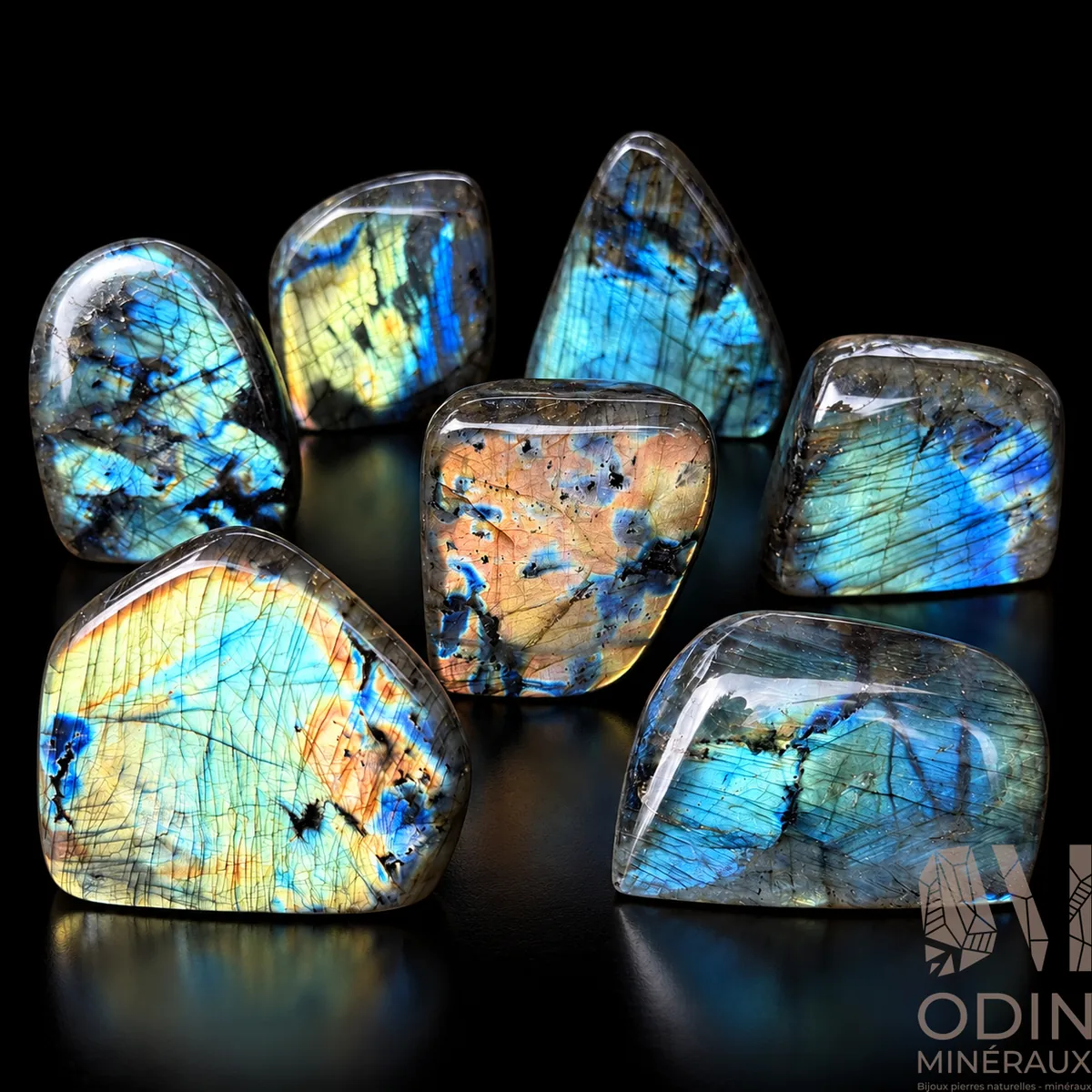
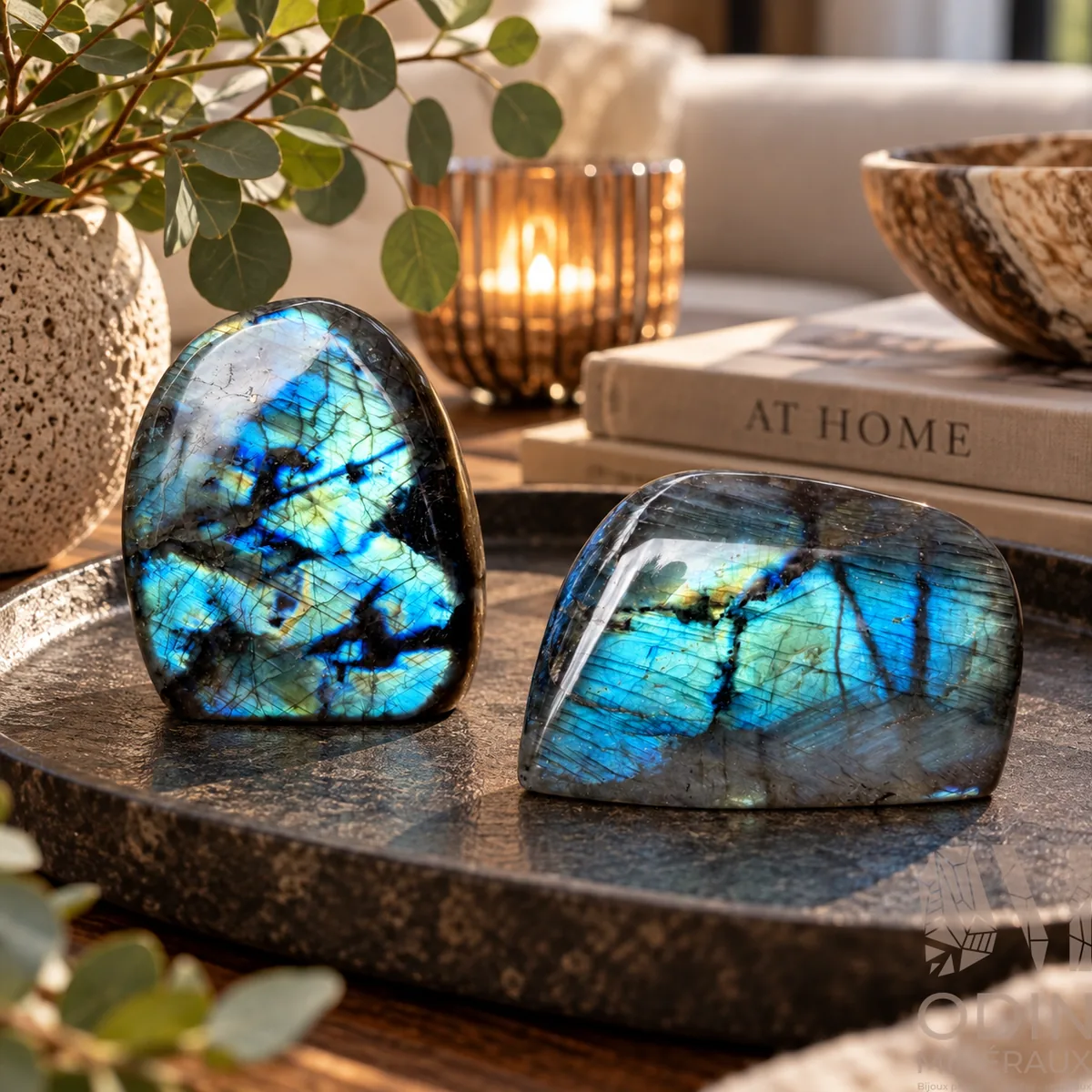
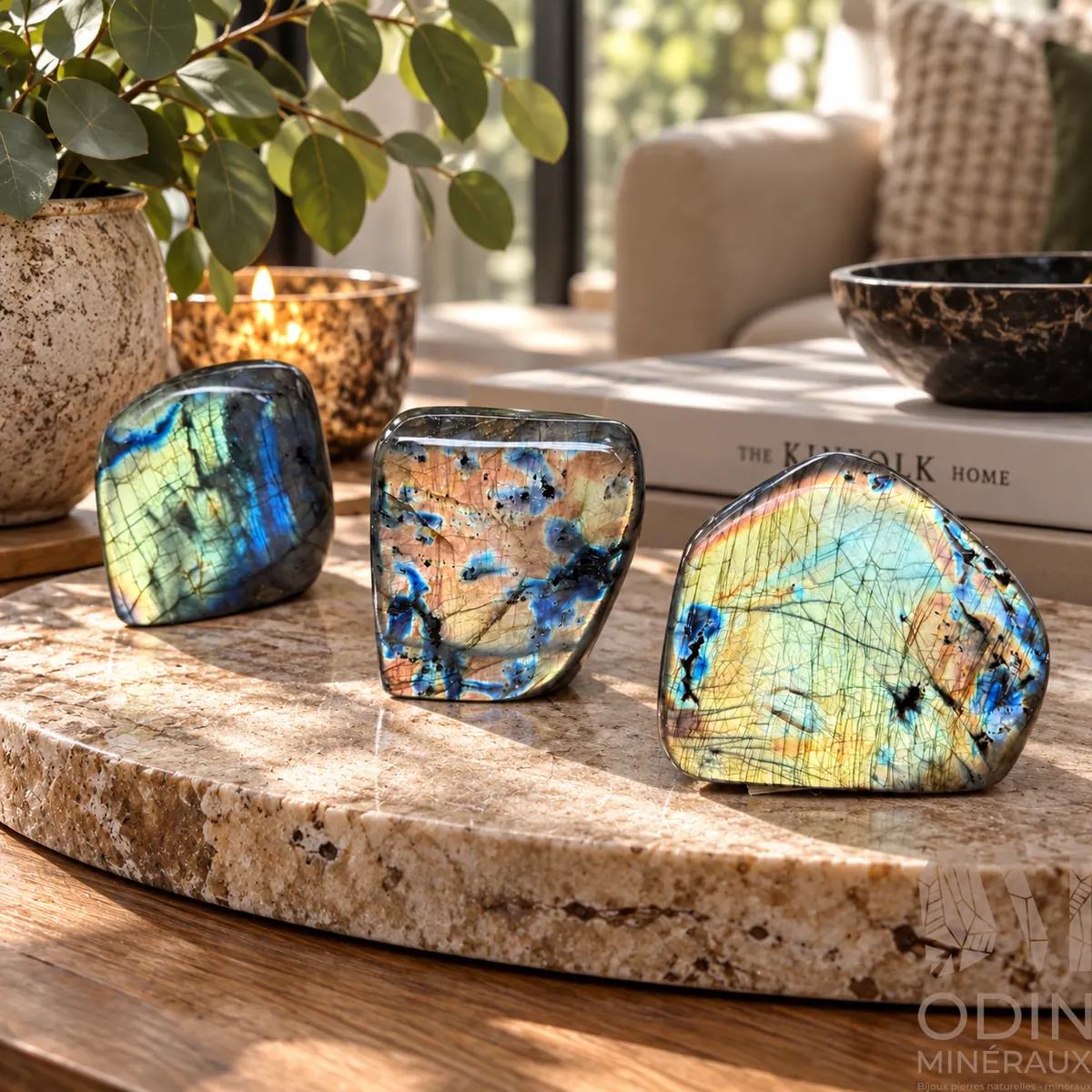
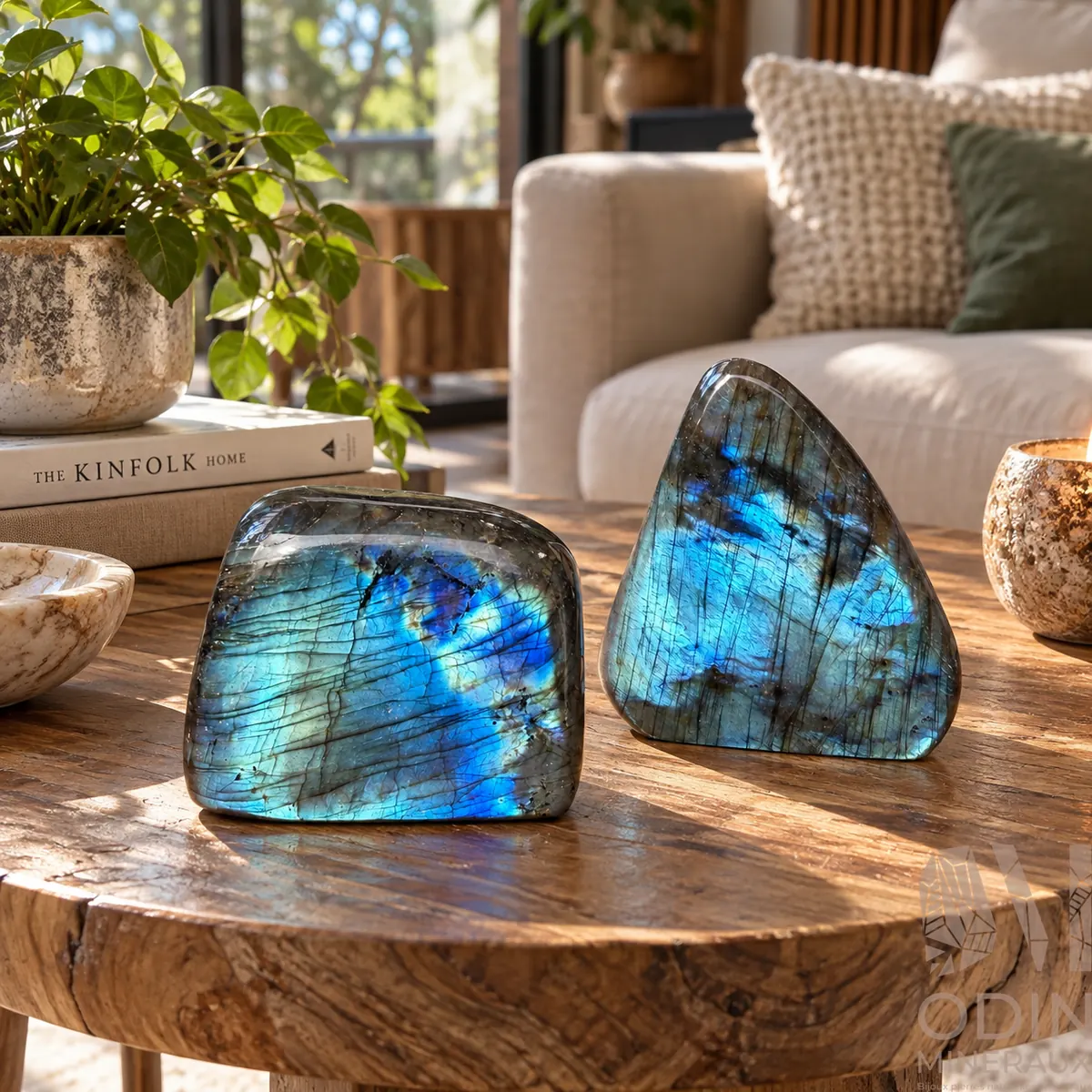
Polished Blue Labradorite 300 to 400 g
59,90 € incl. VAT
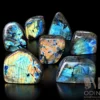
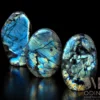
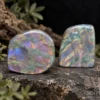
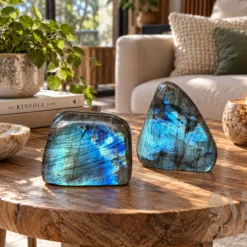
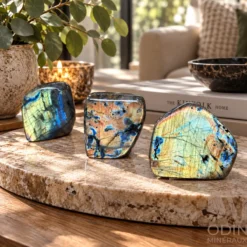
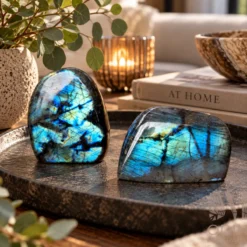
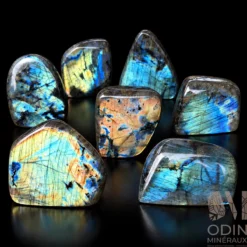
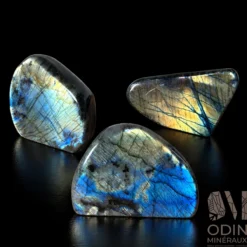
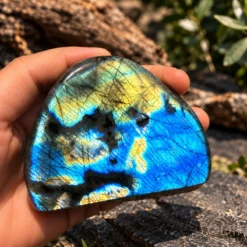
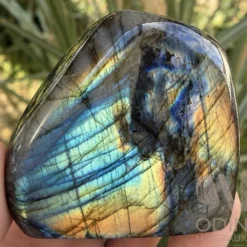
Polished freeform labradorite of extra quality from Madagascar. Magnificent blue and green flashes. Each piece of 300 to 400 g is unique.
Stone(s): labradorite
Color: gray with blue and green iridescence
Dimensions: Piece 1: H.8.5cm x W.6cm approx., Piece 2: H.6cm x W.7.5cm approx., Piece 3: H.7cm x W.6cm approx., Piece 4: H.5.5cm x W.8cm approx., Piece 5: H.7cm x W.6cm approx., Piece 6: H.8.5cm x W.8cm approx., Piece 7: H.7cm x W.7cm approx., Piece 8: H.9.5cm x W.7.5cm approx.
Approximate weight: 300 to 400 g
Number of stones: stone sold individually
Shape: freeform polished stone
Binding photographs. The labradorite selected is the one that will be sent. Items sold individually
Classification: Feldspar group
Mohs hardness: 6 – 6.5
Density: 2.70
Origin: Madagascar
Care instructions: no specific maintenance is required. To preserve the flashes of the labradorite, you may rinse it periodically with clear water and dry it with a soft cloth.
ORIGINS AND MINERALOGY
Labradorite belongs to the feldspar family, a group of silicates abundant on Earth. What distinguishes labradorite from other minerals is its ability to exhibit a unique optical phenomenon called labradorescence. This characteristic allows the stone to shine with a range of colors from blue to green, including yellow, orange, and sometimes even red, creating an almost magical effect when well lit.
Origin and Formation of Labradorite
Labradorite forms mainly in volcanic and plutonic rocks, particularly in environments rich in calcium and sodium. Its name comes from the Labrador Peninsula in Canada, where it was first discovered in the late 18th century.
The formation of labradorite is the result of magma evolution under high pressure and temperature. As feldspar crystals form, labradorite develops a particular crystalline structure that captures and refracts light, giving rise to its spectacular play of colors. This phenomenon is due to the interaction between different crystalline layers and submicroscopic inclusions that change how light is reflected inside the crystal.
Deposits and Geographical Distribution
The main deposits of labradorite are found in geological regions where volcanic and plutonic formations are present. Canada, where the stone was discovered, remains one of the largest producers, notably in the regions of Labrador and Newfoundland. It is also found in Russia (Siberia), Finland (under the name “spectrolite”), Norway, as well as India, where labradorite is particularly prized for its beauty and spiritual properties. Certain more recent deposits have also been discovered in Africa, particularly in Madagascar.
Use Across Civilizations
The Inuit of Canada attributed mystical powers to labradorite. According to legend, when the aurora borealis, called “the dance of spirits,” fell to Earth, it crystallized to give birth to labradorite. This is why the stone is sometimes nicknamed “stone of the northern lights” or “stone of spirits.”
It is said that some indigenous peoples believed the mystical light of labradorite was a window to a spiritual world, and it was used in rituals and healing ceremonies.
In Europe, labradorite was already being used in the 19th century by jewelers and artisans. It was considered a protective stone, capable of repelling negative energies. In the Middle Ages, legends circulated that labradorite offered visions and strengthened intuition, particularly in the context of divination.
Legends and Symbolism
In some traditions, labradorite is seen as a stone of protection, acting as an energy shield against harmful external influences. Its luminous glow symbolizes hope and spiritual evolution, serving as a guide in moments of doubt or confusion. It is also said that labradorite allows one to connect with cosmic forces and explore deeper dimensions of consciousness.
Labradorite is highly valued by energy therapists. It is also very useful for people in professions that involve contact with the public.
Labradorite promotes energy flow in the chakras.
It is said to restore energy during periods of great fatigue, whether physical or intellectual.
Labradorite soothes fear and stress. It is said to alleviate anxiety and feelings of insecurity.
It stimulates the imagination and promotes the development of new ideas and the creative process.
It promotes the development of friendships and can prove very beneficial for solitary, introverted people who find it difficult to reach out to others.
It is a stone that supports change and transformation, communicating strength and perseverance to the wearer.
It is also said to promote intuition and premonitory dreams.
Warning: this product is not intended for therapeutic use and cannot substitute for medical follow-up.
Purification and recharging:
Purification:
Labradorite can be purified by soaking it in water for a few minutes. You can also purify it by smudging with a palo santo stick or with white sage. Burn the palo santo or sage and pass the labradorite over the smoke released. Remember to ventilate the room well after smudging.
Recharging:
Labradorite can be recharged by placing it in the sun for a few hours, preferably when the rays are less intense.
If the labradorite is small, it can also be placed in a quartz geode or an amethyst druse.
Expédition : 48 à 72 heures, hors week-ends et jours fériés, après confirmation du paiement.
Livraison offerte dès 60 € en France métropolitaine.
Droit de rétractation : 14 jours pour nous signaler votre décision.
You may also like…
Labradorite Blocks
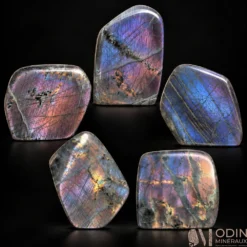
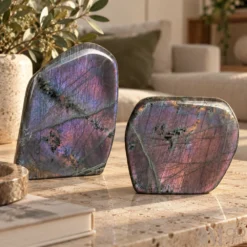
Freeform Minerals


Purification and recharging


Related products
Freeform Minerals


Labradorite Blocks


Labradorite Blocks
Labradorite Blocks