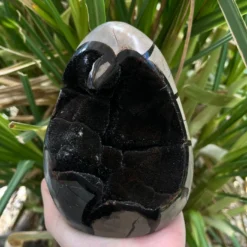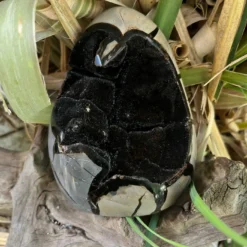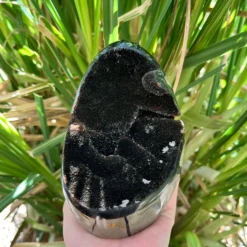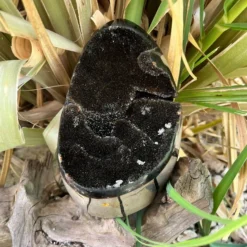


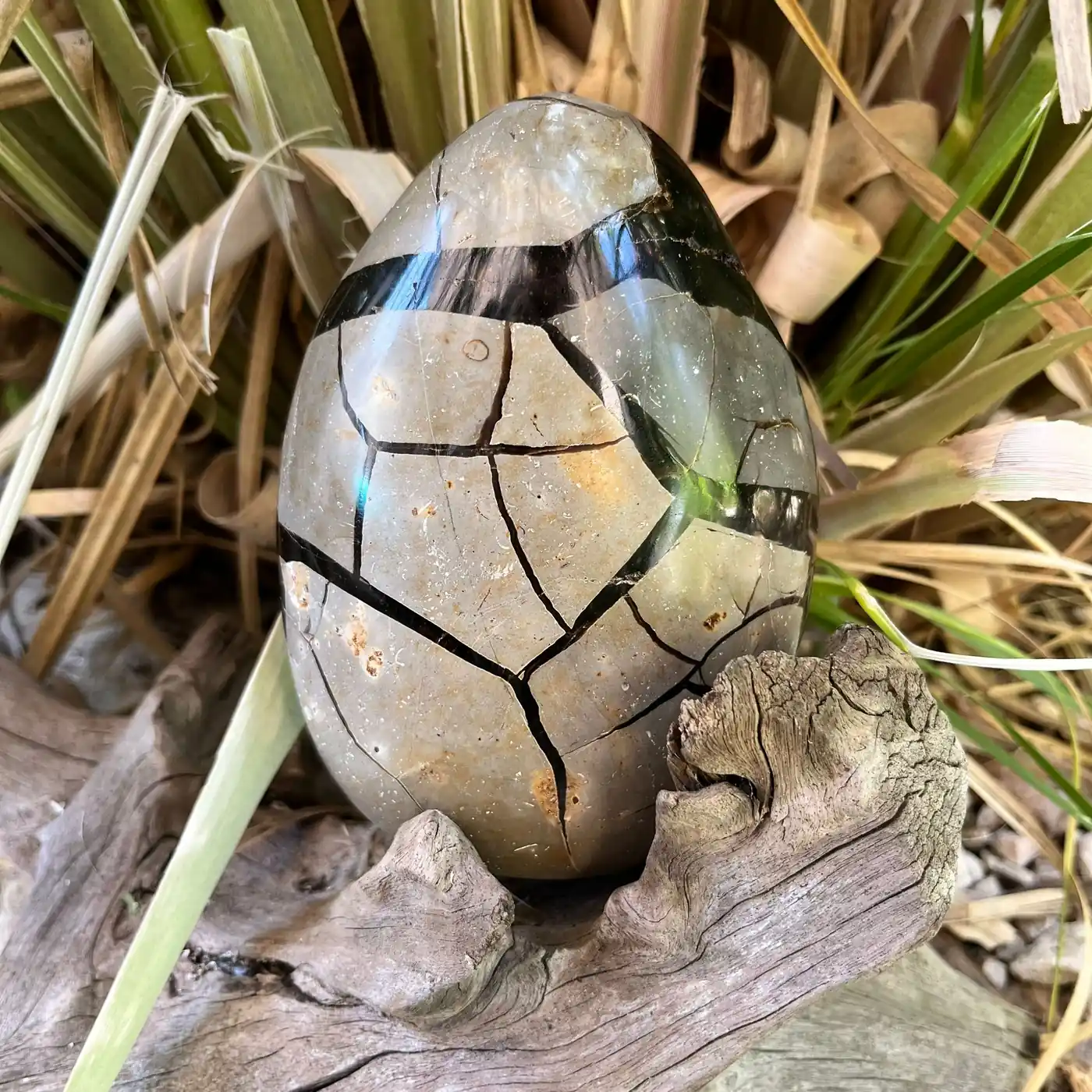
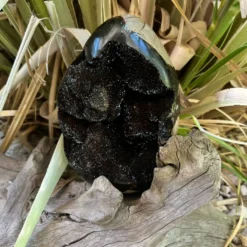
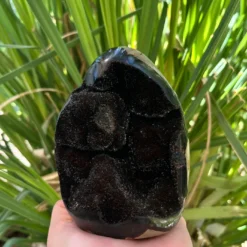
Natural Septarian Egg 939 g – 13 cm
108,00 € incl. VAT
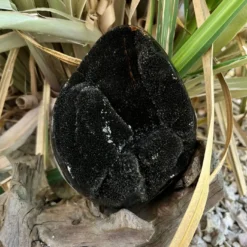
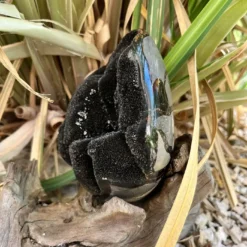
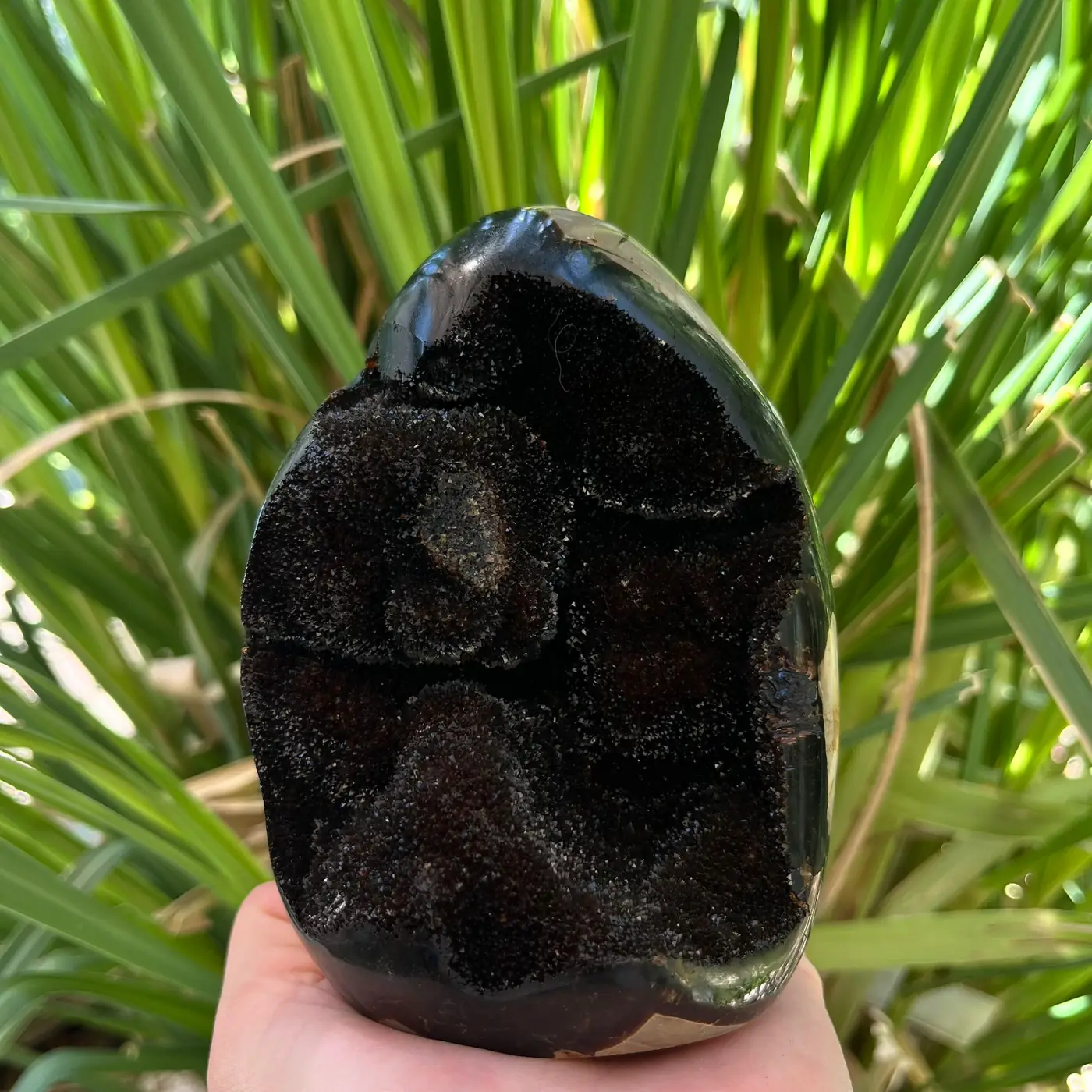
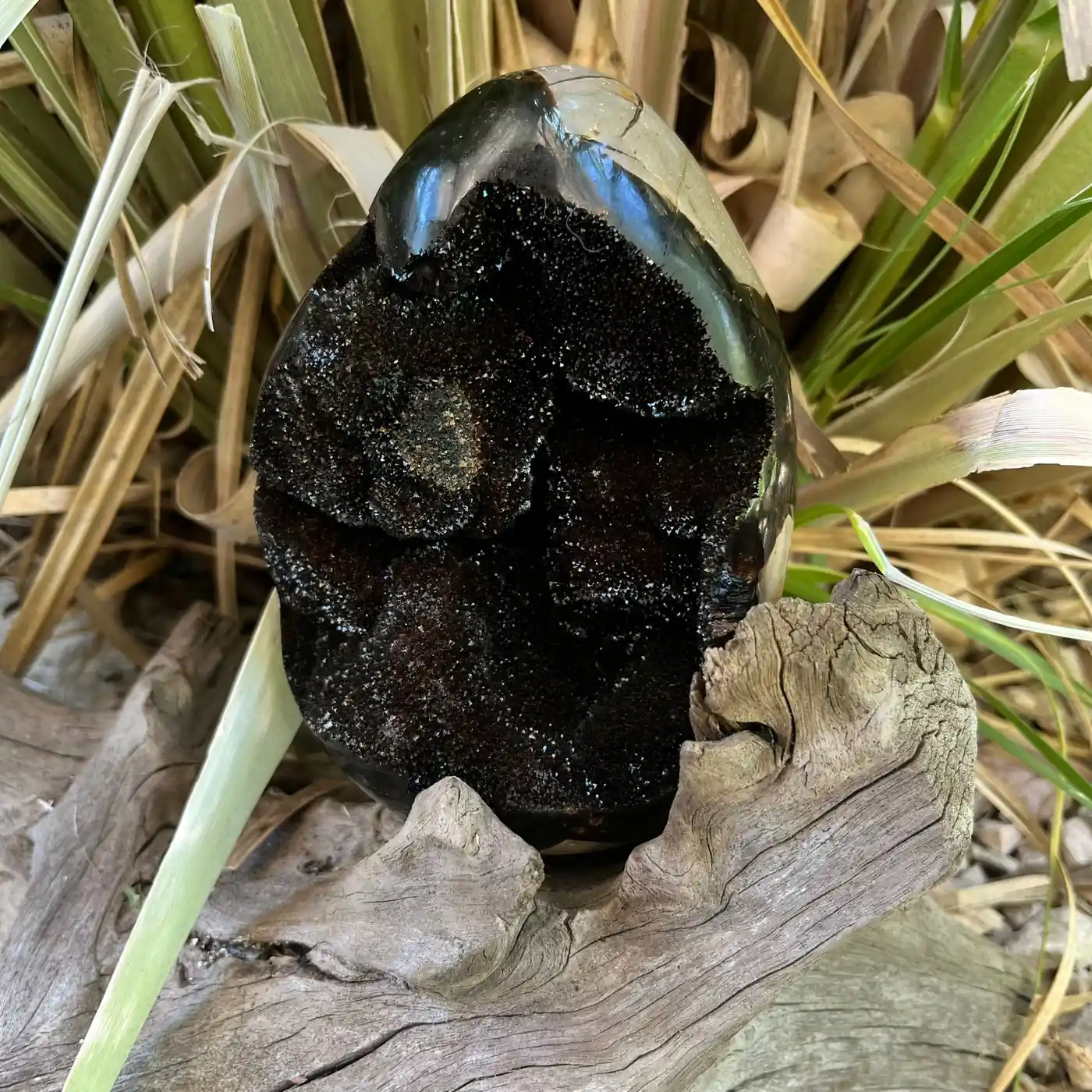
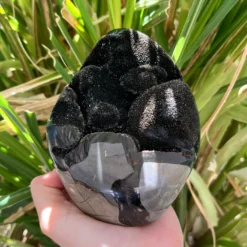
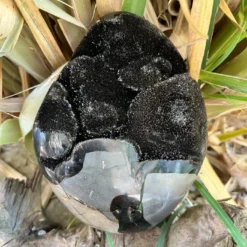
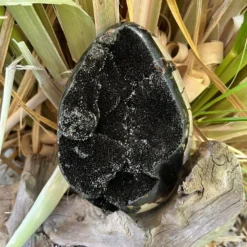
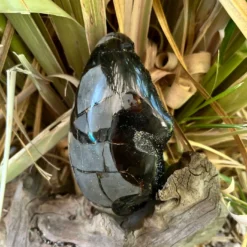
Semi-polished natural septarian egg, 939 g, 13 cm high. Its flat base allows it to stand without a support. High-quality crystals.
In stock
Stone(s): Wild Septarian, superior quality
Color: black
Dimensions: H. 13 cm x W. 10 cm
Approximate weight: 939 g
Stone size: polished egg
Contractual photos.
Classification: no classification. Septarian is a sedimentary concretion formed by a complex mixture of minerals (silica, calcite, etc.). It is not an officially recognized mineral species, but rather an aggregate of various minerals.
Mohs Hardness: Intermediate hardness. Composed of various minerals: on the Mohs hardness scale, chalcedony is at 7 and calcite at 3.
Density: 2.5 to 2.7, variable depending on the proportion of minerals
Origin: Madagascar
Care tips: use a soft cloth and lukewarm water for cleaning. Handle with care to avoid scratches or impacts, as some minerals like calcite can be sensitive.
Rough Septarian Egg 939g – 13cm: Mineralogical Notes
Septarian is a sedimentary concretion: a nodule of clay and limestone whose desiccation cracks have filled with calcite. Its yellow vein patterns come from this infilling.
Dimensions: H.13cm x W.10cm, approx. 939 g.
To compare with other models, check out the Egg category.
Origins and minéralogy
Septarian, a fascinating stone at the heart of geological and historical mysteries, originates in marine and semi-marine environments, where slow sedimentation processes have shaped its unique characteristics. Composed of siliceous nodules filled with fissures often containing calcite or other minerals like aragonite, celestine, and barite, septarian is the result of geological phenomena that unfolded over millions of years. In France, for example, these nodules form in Jurassic and Cretaceous marls, periods dating back approximately 170 to 120 million years. These radial fissures, which give septarian its characteristic shape, are the product of desiccation processes, where water present in the rock slowly evaporates, leaving these natural ‘compartments’.
Septarian generally forms under specific conditions, where the slow accumulation of marine sediments mixes with fossilized mud deposits. Over time, erosion exposes these concretions and polishes them, often until they take on an almost spherical shape. The case of the Moeraki Boulders in New Zealand, a spectacular formation of giant septarian, illustrates this process well. These rocks, which can reach three meters in diameter, were discovered on the east coast of the island. They are estimated to have formed about 60 million years ago and were sculpted by waves and erosion. According to Maori legend, these concretions are the petrified remains of a canoe and its occupants, shipwrecked during a storm.
Septarian Across Civilizations
Throughout the ages, septarian has been perceived not only for its geological peculiarities but also for its mystical and symbolic properties. Ancient civilizations often attributed spiritual and magical meanings to stones, and septarian was no exception. Its unique structure, marked by its calcite-filled fissures, made it a symbol of protection. It was used in purification and grounding rituals, aimed at strengthening ties with the earth.
In ancient civilizations, such as in Egypt and Mesopotamia, stones and crystals were often incorporated into ritual objects, amulets, and jewelry. Although septarian itself is not specifically mentioned in ancient texts, similar stones were often worn for their supposed power to protect against negative forces. In the Mediterranean, civilizations such as the Greeks and Romans recognized the mystical powers of stones in general, and it is likely that stones like septarian were included in their practices.
Closer to us, in traditional cultures, septarian has also been part of popular beliefs. For example, in the legends of Polynesian peoples, such as the Maori of New Zealand, the Moeraki Boulders were considered mystical witnesses to the creation of the world, a reminder of the divine origin of land and sea. These rocks symbolized the connection between sky and earth, and the Maori revered them almost as sacred artifacts.
Septarian in Lithotherapy
In lithotherapy, septarian is a highly prized stone for its energetic and spiritual benefits. This stone, which draws its energy from the natural elements of the earth, is mainly used for its grounding and stabilizing properties. Thanks to its association with the root chakra (Muladhara), septarian helps strengthen the bond between the individual and the earth, bringing a sense of security, stability, and protection. In the lithotherapy tradition, it is associated with refocusing and clarity of mind, for moments of confusion or agitation.
In lithotherapy, septarian is believed to help:
- Promote grounding and emotional stability: By providing a sense of security and support, septarian is particularly recommended for people who feel an emotional disconnection or inner instability.
- A symbol of balance: in the lithotherapy tradition, it is associated with harmony of energies and clarity of mind.
- Strengthen self-confidence: By allowing a better understanding of one’s needs and limits, septarian helps develop greater self-confidence and self-esteem.
- A symbol of comfort: in the lithotherapy tradition, septarian is associated with gentleness and emotional expression.
- Protect against negative energies: Like many stones in the silicate family, septarian is used as a shield against harmful external influences and to protect the aura from negative energies.
Septarian is often placed in living or working spaces to foster a more harmonious environment. Some therapists also use it in meditation, placing it on the root chakra, to strengthen grounding and inner calm. Furthermore, due to its oval or egg shape, it is sometimes used as an object for visualization or concentration, allowing the person to refocus on their spiritual intentions.
Warning: this product is not intended for therapeutic use and cannot replace medical treatment or follow-up.
Cleansing and recharging:
Purification:
Septarian can be purified by fumigation with a palo santo stick or with white sage. Burn the palo santo or sage and pass the stone through the smoke produced. Remember to ventilate the room well after fumigation.
Recharging:
Septarian, like many other stones, can be recharged by full moon light. Expose it to the soft, soothing light of the moon for a few hours, preferably at night. Moonlight is gentle and revitalizing, ideal for restoring the stone’s properties without harming it.
Although some sensitive stones, like septarian, can deteriorate under prolonged sun exposure, a little light
Lithotherapy is based on tradition and does not replace medical advice.
Expédition : 48 à 72 heures, hors week-ends et jours fériés, après confirmation du paiement.
Livraison offerte dès 60 € en France métropolitaine.
Droit de rétractation : 14 jours pour nous signaler votre décision.
You may also like…


Purification and recharging


Related products